

Access and Info for Institutional Subscribers

Home
Toggle menu

  • Home
  • Editions
  • Images
    • Exhibits
    • Images
  • Teaching
    • Articles
    • Teacher Resources
  • How To
  • About COVE
    • Constitution
    • Board
    • Supporting Institutions
    • Talks / Articles
    • FAQ
    • Testimonials


Seamstresses


Type: Gallery Image | Not Vetted


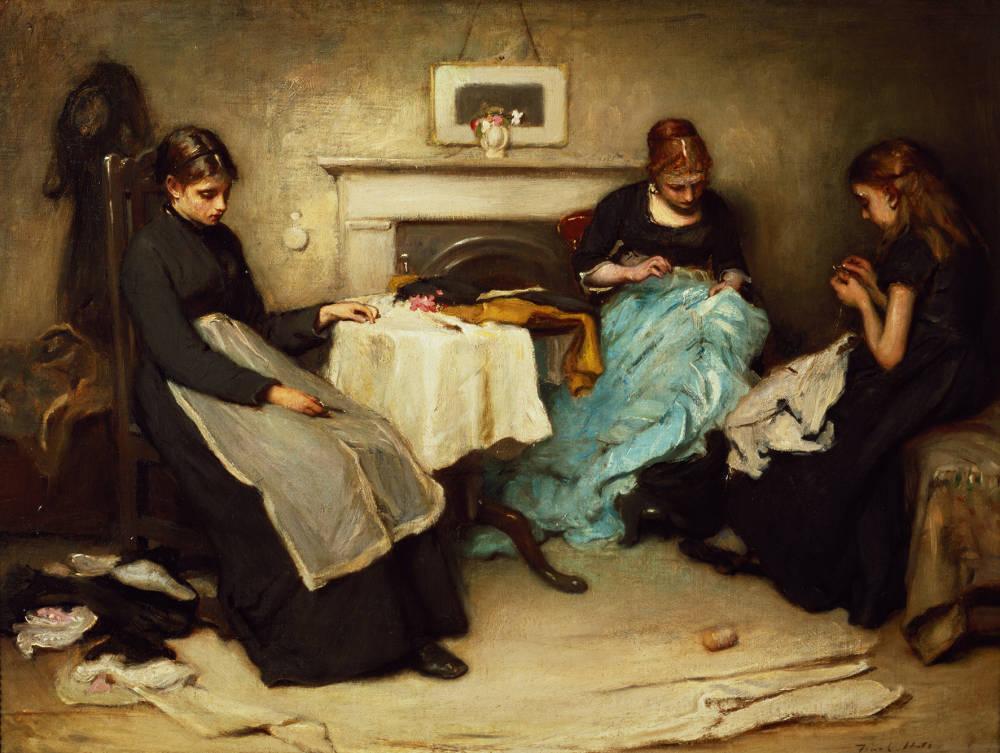
Seamstresses. Frank Holl. 1875. Oil on canvas. Courtesy of the Royal Albert Memorial Museum, Exeter. Catalogue no. 8 in the 2013 Watts Gallery exhibition, Frank Holl: Emerging from the Shadows.

"Needlework and teaching were seen as 'natural' profession for women. . . Virtually all women had the necessary experience for needlework" (Beth Harris). Needlework was a very popular profession for women of all classes in the nineteenth century. Those of the upper class who could afford to learn the trade often worked as dress makers, which was more highly esteemed. For those in lower social standing, however, conditions were not as favorable. We see in Dickens' Bleak House Charley's skill with the needle. Esther is trying to teach Charley how to write. She explains that Charley is very talented with her hands (including needlework), but her progress with a pen is very slow. 

http://www.victorianweb.org/gender/ugoretz1.html

Featured in Exhibit


Bleak House: Professions, Places, and Problems in London

Date


1875

Artist


Frank Holl


Copyright
©

Vetted?
No
Submitted by Cora Boll on Fri, 09/25/2020 - 18:14

Webform: Contact

About COVE

  • Constitution
  • Board
  • What's New
  • Talks / Articles
  • Testimonials

What is COVE?

COVE is Collaborative Organization for Virtual Education, a scholar-driven open-access platform that publishes both peer-reviewed material and "flipped classroom" student projects built with our online tools.

Visit our 'How To' page

sfy39587stp18