
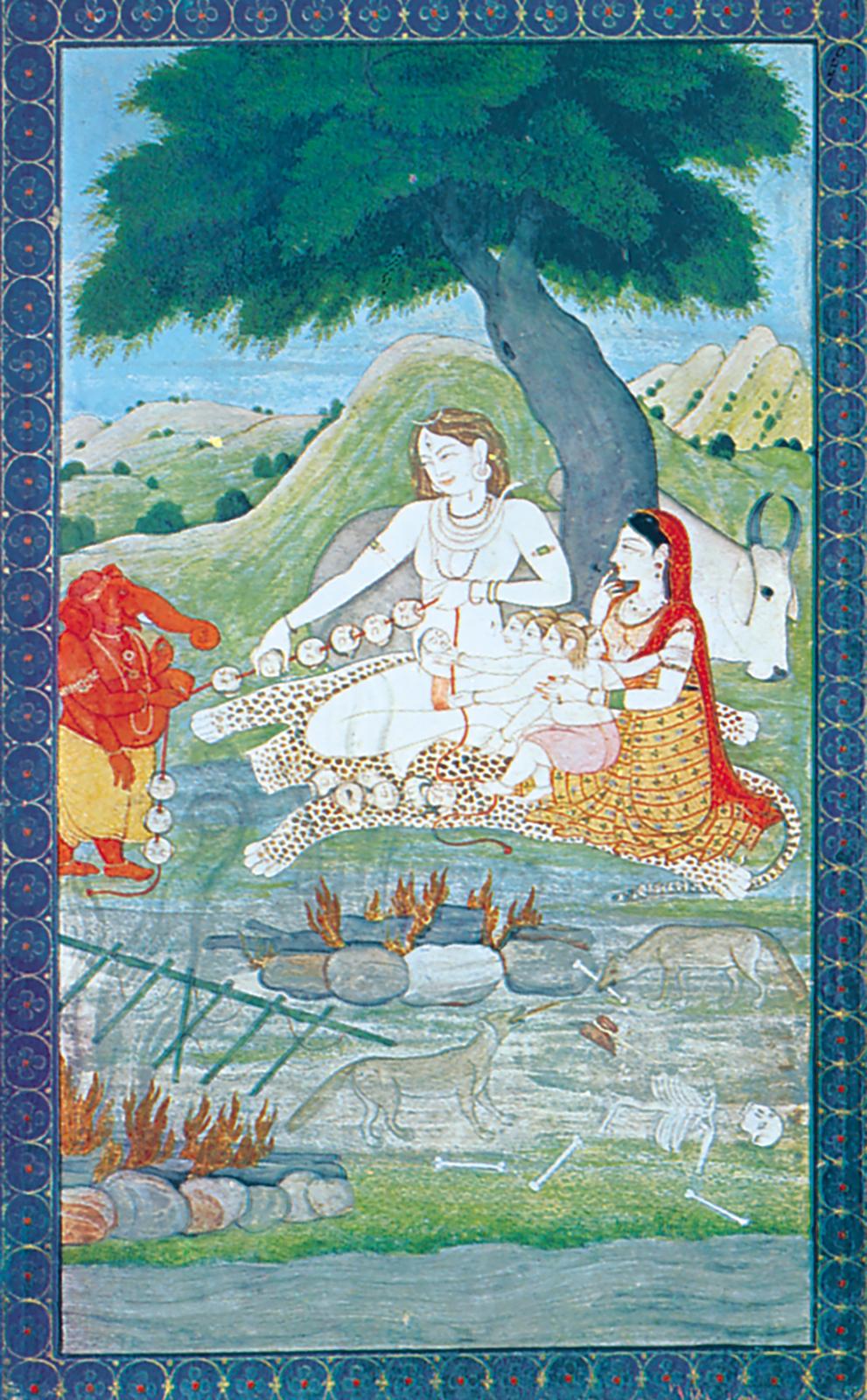
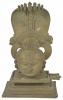
Siva (Sanskrit: "Auspicious One"), also spelled as Shiva or Siwa, is one of the main deities of Hinduism. He is both the great ascetic and the master of fertility. And he is both the master of medicine and poison. He is sometimes depicted as in a pacific mood and sometimes as threatening to destroy the world. Such combinations of seemingly conflicting roles arise from a tendency in Hinduism to see complementary qualities in a single ambiguous figure. Aside from Siva temples, Siva is also worshipped in the form of a lingam--a cylindrical votary object that is often embedded in a spouted dish.
The ambiguity of Siva's role in Hinduism is somehow paralleled in Haimabati Sen's autobiography. Before she departed for Calcutta, she had a brush with her loving "Aunt" over a Siva lingam: she was seriously critized for proping up a broken leg of her string bed with a Siva lingam. On the one hand, Sen's early life was characterized by stoicism (as she literally lost her husband and had to lead a frugal life). She was constrained by her identity as a widowed child bride: economically dependent on her husband's family, confined to a vegetarian diet dictated by traditions, etc. Her life was materially shaped by Indian culture, and she had little choice but to submit to her fate ("I have no idea where I will go or what I will do"). On the one hand, Sen was a rebel against Indian traditions, both internally and externally. Her insistence on learning, pursuit of economic independence, and fervent criticism of traditional practices suggest her longing for "destruction" as an individual. That is, her desire to destroy the fetters that Indian traditions imposed on her.
Sources:
https://www.britannica.com/topic/Shiva. Accessed 20 Feb. 2021.
https://www.invaluable.com/auction-lot/a-bronze-siva-lingam,-western-in…. Accessed 20 Feb. 2021.