
Buckingham Palace is an expansive structure set in both the London borough of Westminster and the center of the public eye. This property has been in royal possession since 1761 (Royal Residences: Buckingham Palace). After being converted into a palace in 1826, it has become a cultural landmark for people across the United Kingdom. Despite the significant amount of attention from the general population, very few are allowed through these exclusive doors, which makes Buckingham Palace an apt end to this literary tour of high-class London (Oram).
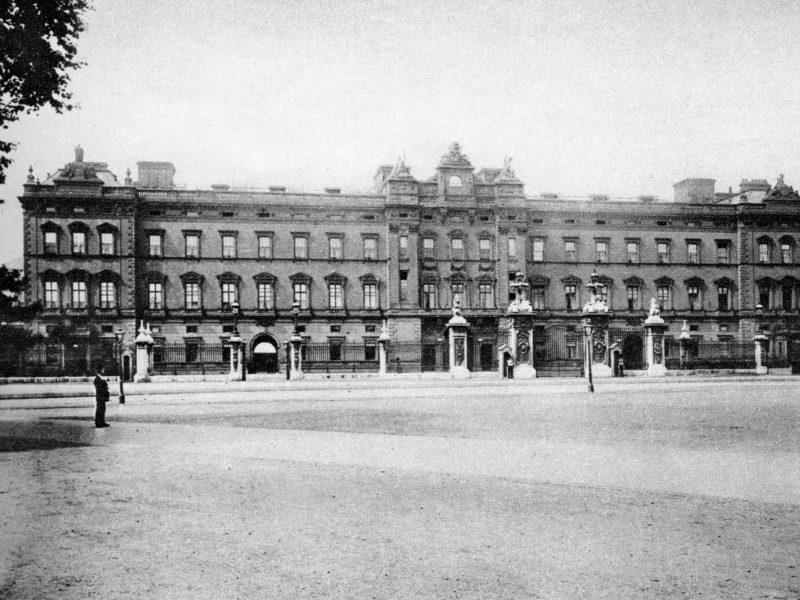
This is an image of Buckingham Palace in the year 1920, five years prior to the publication of Virginia Woolf’s, “Mrs. Dalloway in Bond Street.” When approaching the palace, Mrs. Dalloway mused, “There it stood four-square, in the broad sunshine, uncompromising, plain. But it was character she thought; something inborn in the race; what Indians respected.” Woolf does not remark on Buckingham Palace’s grandeur, but on the power, associated with ideas of white supremacy, it seemed to represent. For better or for worse, this location represented the British Empire as a whole, and it continued to do so in the novel Brick Lane, written by Monica Ali.

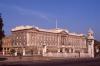
Brick Lane follows a woman named Nazneen, who moved from what is now modern-day Bangladesh to England. Bangladesh was considered a part of India during the time the British occupied the nation (Husain and Tinker). When Nazneen, whose family had been unable to “go on holiday” within their own city, finally got the chance to see Buckingham Palace, she did not admire it as Woolf ventured. To her, it was a symbol of the United Kingdom, but she was not impressed. In fact, she said that if she were queen, she would replace it with, “Something like the Taj Mahal.” The picture above is from the year 1990, close to the time Nazneen and her family would have made their trip to this iconic location (Mueller).
Despite the difference in social station, neither Nazneen nor Mrs. Dalloway was permitted behind these walls. Today, only the most important ambassadors, trusted advisors, and, of course, royalty, are regularly permitted inside these walls. In fact, the phrase “the royal family” is often replaced with “Buckingham Palace” as the titles have become interchangeable due to such a close association (Bowden). This emphasizes the ties of the location to one of the most powerful families of the United Kingdom and of the world.
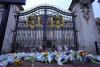
Queen Elizabeth II used Buckingham Palace as a personal residence and venue for celebration, commemoration, and political gatherings of the greatest importance (Royal Residences: Buckingham Palace). At this moment in history, discussion of the palace focuses primarily on events related to the late Queen’s death. An official notice of Her Majesty’s passing was posted on the gates of the residence, and the late monarch’s coffin was brought to Buckingham Palace for a short time prior to the funeral (Bowden). Tens of thousands of people surrounded the royal residence and its nearby streets, demonstrating the importance of this location to the most significant events and affairs of the United Kingdom.

Works Cited
Ali, Monica. Brick Lane. London, Doubleday, 2003. Accessed 20 Sept. 2022.
Bowden, George, et al. “Queen Elizabeth II Has Died.” BBC News, BBC, 8 Sept. 2022, http://www.bbc.com/news/uk-61585886. Accessed 20 Sept. 2022.
“Buckingham Palace in 1920.” 21 Vintage Photos Show What Life Was like in London 100 Years Ago, Insider Inc., 17 July 2020, www.insider.com/vintage-photos-london-century-ago-2020-7#of-course-buck…. Accessed 20 Sept. 2022.
Goodey, Emma. “Royal Residences: Buckingham Palace.” The Royal Family, The Royal Household, 26 Sept. 2022, http://www.royal.uk/royal-residences-buckingham-palace. Accessed 20 Sept. 2022.
Husain, Syed Sajjad and Tinker, Hugh Russell. "Bangladesh." Encyclopedia Britannica, 30 Aug. 2022, https://www.britannica.com/place/Bangladesh. Accessed 20 Sept. 2022.
Halpin, Padraic, and Angus Macswan. “Queen's Coffin Arrives at Buckingham Palace as Huge Crowds Line London Route.” Reuters, 13 Sept. 2022, https://www.reuters.com/world/uk/queen-elizabeths-coffin-be-flown-londo…. Accessed 20 Sept. 2022.
Kirsty, Oram. “Garden Parties.” The Royal Family, The Royal Household, 29 Apr. 2022, http://www.royal.uk/garden-parties. Accessed 20 Sept. 2022.
Mueller, Kevin. “Buckingham Palace.” Flickr, Flickr, 16 Mar. 2020, https://www.flickr.com/photos/37640374@N04/49828374712. Accessed 20 Sept. 2022.
“Visit Buckingham Palace.” Royal Collection Trust, The Royal Collection Trust, https://www.rct.uk/visit/buckingham-palace. Accessed 20 Sept. 2022.
Wigglesworth, Kirsty. “Flowers left at the gate of Buckingham Palace on Friday Morning.” What happens today? How the first day of national mourning will unfold in the UK after the Queen’s Death, Inews, 9 Sept. 2022. https://inews.co.uk/news/what-happens-today-first-day-national-mourning… Accessed 20 Sept. 2022.
Woolf, Virginia. Mrs Dalloway in Bond Street. London, The Dial Publishing Company, 1923. Accessed 20 Sept. 2022.