
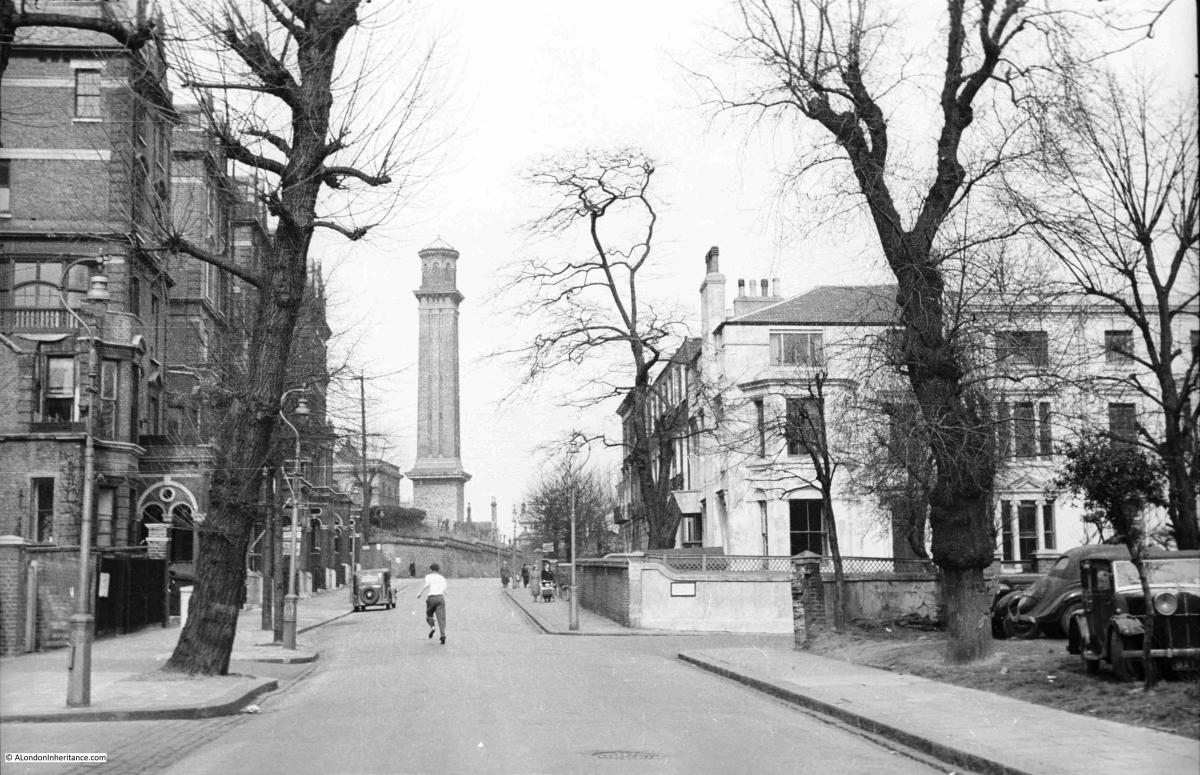


Campden Hill is located in the Royal Borough of Kensington and Chelsea in London, England. Aside from the ample history of the Victorian era, it is defined by the beautiful terraced houses and Victorian mansions (“Campden Hill Square Area”). Indeed, it is the perfect place to reflect on London’s history, specifically as an elite member of society. The area was inhabited by the upper class consisting of aristocratic families, industrialists, and others who desired the exclusivity and luxury of Campden Hill. Most of those families lived in grandiose homes, complete with servants, creating a distinct gap between them and the middle and working class.
One of the major influences of the architecture in Campden hill was the start of the Arts and Crafts movement which focused on highlighting craftsmanship and simplicity (“Arts and Crafts: An Introduction · V&A”). Other than the mansions known for their grandeur, some of the residencies incorporated elements of this aesthetic such as timber beams and glass windows. Reading Amy Levy’s novel Romance of a Shop, these characteristics are mentioned with Campden Hill describing it “more suggestive of comfort than of splendour” having “great windows, and rambling, nondescript proportions,” (Levy Ch. 1). Perhaps the stylistic elements of their house, even while the Lorimer’s were considered wealthy, were foreshadowing of how the sisters will learn to enjoy a more simplistic life, rather than one focused on luxury or ‘splendour’ as Levy describes the house to be lacking in. Noting the variety of different housing aesthetics in Campden Hill, there is something for everyone, from opulent to homely living spaces.
Campden Hill is only referenced one last time in chapter four, when Gertrude reminisces on her previous fascination with the “pulses of the great city” and the “comparative tameness” of Campden Hill. Other than the significance of the Lorimer’s fall from upper class, the ‘tameness’ of Campden Hill that lacks the bustle of the city adds to the elusivity of the location as being distinct from other parts of London, where middle and working class individuals inhabit (“Campden Hill, Kensington: A Victorian Artists' Colony. I: Early Development”). Again, a wonderful location to feel like a socialite exclusive to the upper class!
Campden Hill continues to be characterized by its upscale residential properties and is the home to many celebrities and diplomats. There are also more institutions that focus on the area’s heritage, such as the Design Museum, located close to the neighborhood (“The Artistic Heritage of 23 Campden Hill Square”). It focuses on contemporary design and innovation. Additionally, the neighborhood has a large art scene due to its heritage of artists as well. One notable individual is Harold Speed who lived in Campden Hill Square, and he was known for decorative landscapes and society portraits. As a whole, Campden Hill is rich in its history in the Victorian era’s upper class as well as its artistic innovations currently.
Works cited:
“The Artistic Heritage of 23 Campden Hill Square.” Sworders Fine Art Auctioneers, 27 Sept. 2023, www.sworder.co.uk/news/the-artistic-heritage-of-23-campden-hill-square/….
“Arts and Crafts: An Introduction · V&A.” Victoria and Albert Museum, www.vam.ac.uk/articles/arts-and-crafts-an-introduction. Accessed 22 Feb. 2024.
'Campden Hill Square area', in Survey of London: Volume 37, Northern Kensington, ed. F H W Sheppard (London, 1973), pp. 87-100. British History Online http://www.british-history.ac.uk/survey-london/vol37/pp87-100 [accessed 22 February 2024].
“London Characters Archives.” A London Inheritance, 4 Sept. 2022, alondoninheritance.com/category/london-characters/.
Levy, Amy. Romance of a Shop. Boston, Cupples and Hurd/ The Algonquin Press, 1889.
Nicholson, Shirley, and Carolyn Starren. Campden Hill, Kensington: A Victorian Artists’ Colony. I: Early Development, 30 July 2022, victorianweb.org/art/architecture/campden/1.html.