


In Linton Kwesi Johnson's poem "Inglan is a Bitch" the poet offers readers insight into the experience faced by Caribbean immigrants in England, with the speaker in particular mentioning their experience as a packing factory worker in a town called Brackley. Brackley itself is a smaller town with a rich history, and works as a specific example of wider English treatment of Caribbean immigrants at the time.
Brackley is a market-town located in the general southeast of England, and around seventy-five miles northwest of London. The town is currently a hub for tourism, often being sought out for its "miles of tranquil countryside" and buildings of "beauty and historical interest." (2024) The town is thought to have first came about as a Saxon settlement sometime between 550-650 AD, with a man named Bracca naming it after himself. Over the next few centuries the settlement grew and developed, eventually gaining a new road and plentiful trade along with it. This level of trade success lasted quite a while, and was only boosted due to Brackley being a crossroads during England's Civil War of the 17th century and the arrival of the stage coach. ("History of Brackley," Brackley Northants) Brackley's more contemporary commerce has been in the form of factory jobs, tourism, and today mainly through supporting a Formula One racing circuit. ("Brackley Our Home," Mercedes AMG)
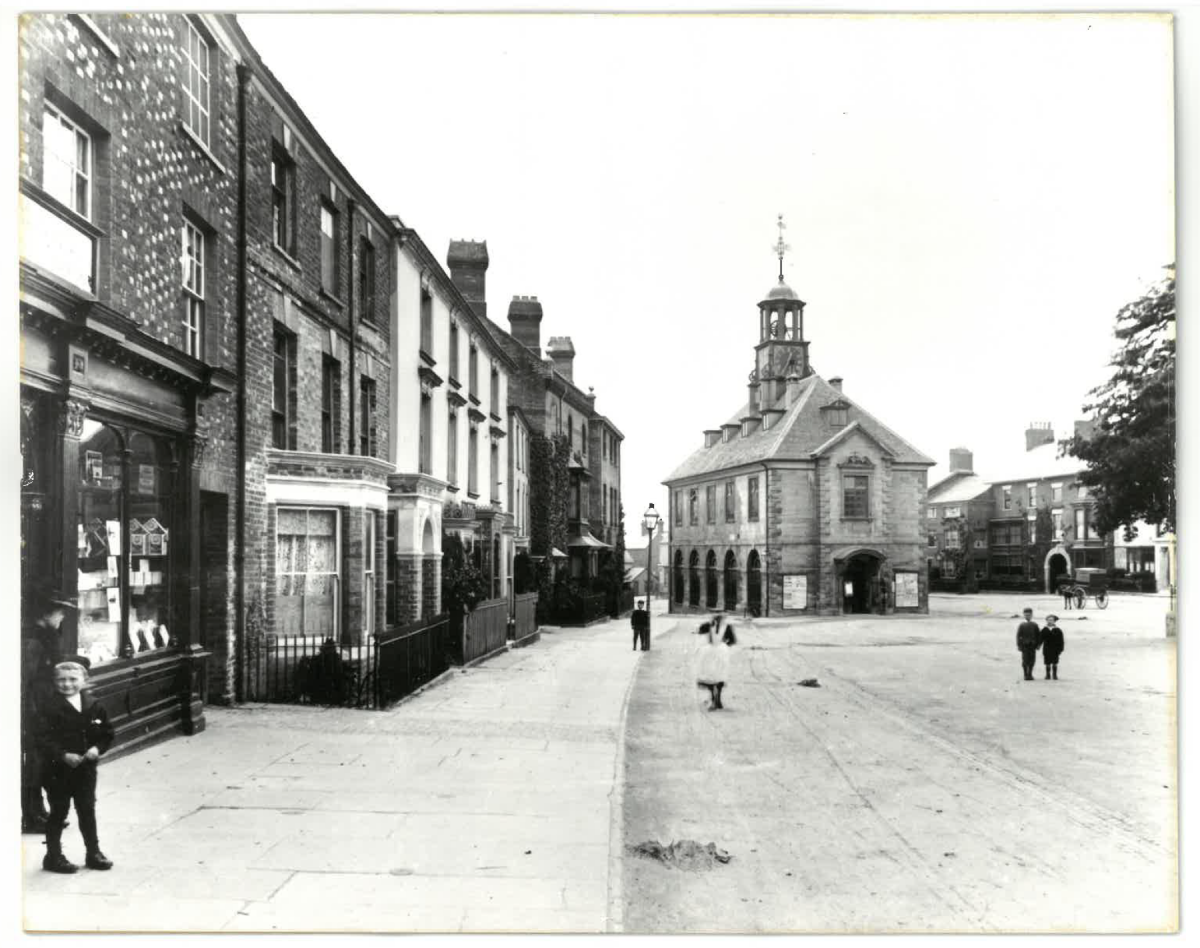
Modern Brackley retains much of its historical aspect due to buildings such as Brackley Town Hall, the Chapel of St. John and St. James, and the ruins of Brackley's own castle. The Town Hall is the true focal point of the market-town, offering tourists and natives a quaint and old public meeting place, still appearing much like it did after construction in 1707. ("Brackley Town Hall," Brackley Northants) The Chapel of St. John and St. James, built in the 12th-13th century, maintains use to this day as a secondary school used by many in the community. The ruins of the local castle are quite far gone from their conception, but offer tourists insight into the architecture and style of the late 11th century. ("About Brackley Market Town," brackley.co.uk)
The factories, some still active today, are what Johson alludes to in his poem "Inglan is a Bitch," with the speaker mentioning how "aftah fifteen years" they "fall out of fayvah." (line 46) This line is indicative of a wider issue seen by both Caribbean immigrants and laborers in general, being laid off of their jobs for little reason even with over a decade worked. Jamaica was under British rule during and shortly after World War II, with the post-war era seeing many Caribbean immigrants arriving to England as a means of helping the nation rebuild. Johnson, one such immigrant, arrived in his youth himself. Many Britons believed the immigrants would arrive and help the post-war effort, and then leave back to the Caribbean. Overtime, however, Britons realized the immigrants stayed and began to build lives in England themselves, leading to a rising anti-immigrant sentiment that saw many put out of work, of homes, or just generally being profiled. Such treatment led to Johnson's poem and sentiment towards England, revealing a side of Brackley and of England often not talked about. (Philo, 2018)
Work Cited
“Brackley Headquarters - Mercedes-AMG PETRONAS F1 - Mercedes-AMG PETRONAS F1 Team.” Mercedes-AMG PETRONAS F1 Team, www.mercedesamgf1.com/team/location/brackley.
“Brackley Town Council.” Brackley Town Council, www.brackleynorthants-tc.gov.uk/history-of-Brackley.
“Brackley Town Hall.” Brackley Town Council, www.brackleynorthants-tc.gov.uk/brackley-town-hall-1.
“Brackley Town Hall - Haverstock.” Haverstock, 16 Aug. 2023, haverstock.com/project/brackley-town-hall.
Philo, Kaila. “The Caribbean Immigrants Who Transformed Britain.” The New Republic, 16 Feb. 2024, newrepublic.com/article/149293/caribbean-immigrants-transformed-britain-windrush-generation.