
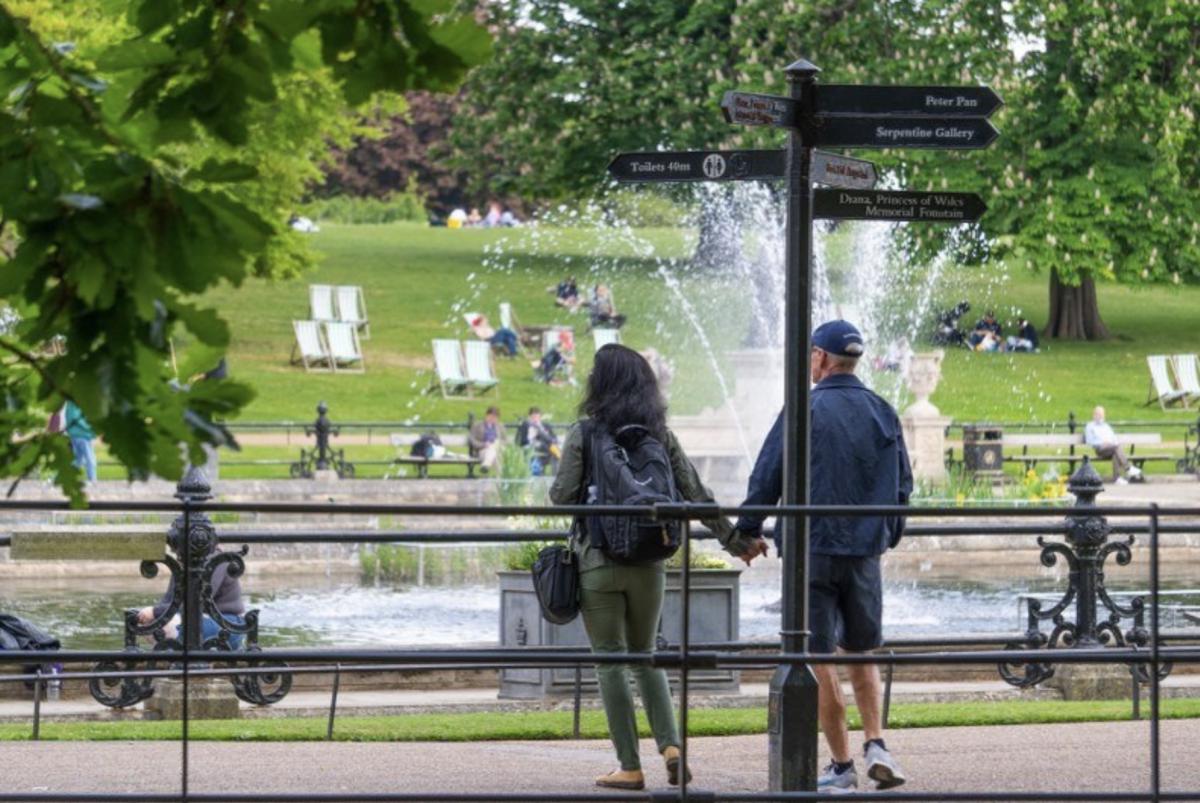
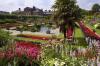
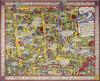
Kensington Gardens is one of the Royal Parks of London, located in the West End of the city. It was developed under Queen Anne and designed by Henry Wise and Charles Bridgeman around the early 18th century (“Kensington Gardens”). The gardens started as a "King's playground," acting solely as a royal-only hunting ground until the area was turned into a garden space by William III and Mary II in 1689. Today, Kensington Gardens features a Round Pond, a beautiful sunken Dutch garden, an Italian Garden, and many more gorgeous attractions. Kensington Gardens was opened to the public in 1841 after being known solely as a private, fashionable spot for wealthy Londoners throughout the 18th century (“Kensington Gardens”).
Virginia Woolf’s short story Mrs. Dalloway in Bond Street, published in 1923, features Clarissa Dalloway, an upper-class English housewife traveling through London. Although she lives a lavish lifestyle, Mrs. Dalloway is learning how to cope with the tragedy of World War I just like everyone else. Throughout her stroll down Bond Street, Clarissa Dalloway sees individuals, objects, places, and events that evoke memories and feelings in her, giving us insight into her mind and London’s post-World War I society. Woolf studies the world through Mrs. Dalloway’s eyes via the use of “stream of consciousness.” As she walks from place to place, we find out more about her mental state. Certain areas remind her of deceased acquaintances or the brutality she’s been surrounded by. She makes a stop at Kensington Gardens, an area frequented by the Queen. As she walks, Mrs. Dalloway begins to think casually about how her husband “...had met [the Queen of England] at lunch the other day,” revealing the Dalloway family’s social standing and providing further insight into the woman’s mind. Although she is obviously of high enough social standing to find a meeting with the Queen to be casual, she has been just as affected by the war as those who have less money than herself.
A major theme in Woolf’s short story is the social change brought about by World War 1. Many of London’s parks were used as camps, military training posts, and experimental bombing grounds. Kensington Gardens, however, had been used for the testing of the emerging science of camouflage (Seifalian). In Mrs. Dalloway in Bond Street, Kensington Gardens represents wealthy London society, and how even wealthy Londoners were heavily affected by the Great War. Even Royal parks such as Kensington Gardens, an area which had been used for the highest form of leisure, were disrupted and changed forever as a result of the war, just like the rest of the city of London.
Works Cited
First World War. (n.d.). https://londongardenstrust.org/features/WW1.htm
London Transport Museum. “Poster; Peter Pan Map of Kensington Gardens, by MacDonald Gill, 1923 | London Transport Museum.” London Transport Museum, www.ltmuseum.co.uk/collections/collections-online/posters/item/1983-4-1….
Liss Llewellyn. “Study for Kensington Park, 1923 - Liss Llewellyn.” Liss Llewellyn, 11 Jan. 2024, lissllewellyn.com/product/study-for-kensington-gardens-1923.
The Editors of Encyclopaedia Britannica. “Kensington Gardens | Royal, Palace, London.” Encyclopedia Britannica, 14 Feb. 2024, www.britannica.com/place/Kensington-Gardens.
“The Sunken Garden.” Historic Royal Palaces, www.hrp.org.uk/kensington-palace/whats-on/the-sunken-garden/#gs.5bl4cs.
WalkMeBlog. “8 (FREE) Things in Kensington Gardens You Should See (Kensington Gardens Walking Tour With a Map)-London by An.” LONDON BY AN, 21 Feb. 2023, www.walkmeblog.com/tips-for-sightseeing-in-london/kensington-gardens.