
Bond Street was created in the 1720's, and its reputation was that of a socializing and place of leisure for the upper- class residents of Mayfair. It was known for its celebrated residents and wealth of antiques, fine jewels, expensive stores, and latest fashion trends ("Bond Street, Mayfair"). That was its reputation in the 1700's, and it remains so today as the street is filled with luxury retailers such as Chanel, Cartier, Hermès, Louis Vuitton, and Prada. Going back to its earliest days, Bond Street was born after the construction of an enormous mansion for the Earl of Clarendon just north of Piccadilly in the late 1660's. After a severe fire, the property was sold to investors at £36,000. The remains of the Clarendon house were demolished, and a set of streets were laid out each named for one of the investors: Albemarle, Dover, Stafford, and Bond streets were soon to be born. The streets ran north from Piccadilly into Mayfair, whose active socialites would later become the main occupants of the area. In its most original form, Bond Street was about two- hundred yards in length running from Piccadilly to Burlington Gardens, and it was completed in 1686. After this moment, the area and surrounding buildings and shops of Bond Street only grew as it became the place of socializing that it was known for then and still is today. The people who walked Bond Street did so to see and be seen ("London's Bond Streets").
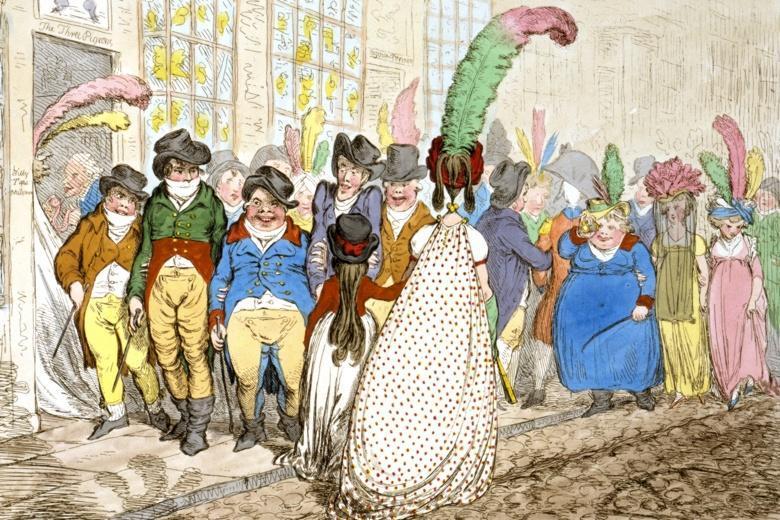
Bond Street is a location that rings in many minds with images of the high class and bourgeoisie in their lives of luxury and leisure. Virginia Woolf's choice of this setting combined with her intense stream of consciousness writing adds meaning and a story behind each of this seeming meaningless shops or faces passed by. It is her brilliant idea to choose the setting of a well- known place in London that might be associated with the superficial. In 1784, Georgina Cavendish, demanded that the upper- class boycott Covent Garden since its residents had voted out Charles James Fox, and she encouraged people to move their shopping activities to Bond Street. As Bond Street grew in popularity, eventually there became a group called the Bond Street Loungers ("Bond Street, Mayfair"). They wore expensive wigs as they walked up and down the street in their privilege and luxury. Now with this historical context, the reader can compare the Bond Street Loungers to Clarissa in Mrs. Dalloway in Bond Street. As Clarissa walks down the street, her experience is anything but mindless, the description some might give to the daily experience of the Bond Street Loungers.
Bond Street might have been associated with the superficial and the shallow; however, Virginia Woolf's stream of consciousness writing allows for the reader to really connect and understand Clarissa, who might from an outside perspective look just like another face in the upper class. It is the juxtaposition in the plot of Clarissa looking for new gloves for a party all the while her mind is running through flashbacks of her childhood while also attempting to cope with the consequences of the war. It is in the quickness of a van passing that Clarissa thinks about, "how people suffered, how they suffered," and "thinking of Mrs. Foxcroft at the Embassy last night decked with jewels, eating her heart out, because that nice boy was dead" (Woolf). In this scene, Woolf is able to convey the point that even the wealthiest of these locals to Bond Street were not immune to the suffering and pain of the war. No matter how many jewels adorn their neck there is no escaping grief.
Woolf continues her style of putting a story behind each face that strolls Bond Street with the mention of her great- grandfather. She does this by creating the dual experience for the reader of both observing the face but also hearing the emotions, thoughts, and memories evoked by this person. Because it was only "a hundred years ago her great- grandfather, Seymour Parry, who ran away with Conway's daughter, had walked down Bond Street" (Woolf). In this sentence he is both a face walking down this infamous street, but additionally, he is a cornerstone to Clarissa's family heritage and a complex one at that. In the next line, Clarissa's thoughts make a larger argument about the entire environment of Bond Street and the people who occupy it by saying, "down Bond Street the Parry's had walked for a hundred years and might have met the Dalloways going up" (Woolf). This quote encapsulates the idea that while the street is associated with the appearance of those walking down it, it is truly the stories, connections, and experiences of these people that truly matter. And it is through connections like the one of her great grandfathers from which the true beauty and meaning of life is derived.
Virginia Woolf's stream of consciousness writing allows the reader to see into the mind of Clarissa, a member of the wealthy and upper class who frequented Bond Street and argue that all of humanity shares in the same thoughts, emotions, sufferings, and joys no matter their wealth.
Works Cited:
“Bond Street, Mayfair.” Mayfair, 23 Mar. 2016, https://royalarcade.london/bond-street/.
“Bond Street.” Wikipedia, Wikimedia Foundation, 12 Apr. 2022, https://en.wikipedia.org/wiki/Bond_Street.
“London's Bond Streets: Old and New.” The Regency Redingote, 9 Dec. 2011, https://regencyredingote.wordpress.com/2011/12/09/londons-bond-streets-o....
Limited, Alamy. “An Engraving Depicting Long's Hotel, Bond Street, London. Dated 19th Century Stock Photo.” Alamy, https://www.alamy.com/an-engraving-depicting-longs-hotel-bond-street-lo….
Pharcide, Mary Evans /. “H P Truefitt Ltd, Hairdressers, 13 and 14 Old Bond Street, London W.” Agefotostock, 15 Sept. 2017, https://www.agefotostock.com/age/en/details-photo/h-p-truefitt-ltd-hair….
Woolf, Virginia, and Jo-Ann Wallace. Mrs. Dalloway. Broadview Press, 2013.