
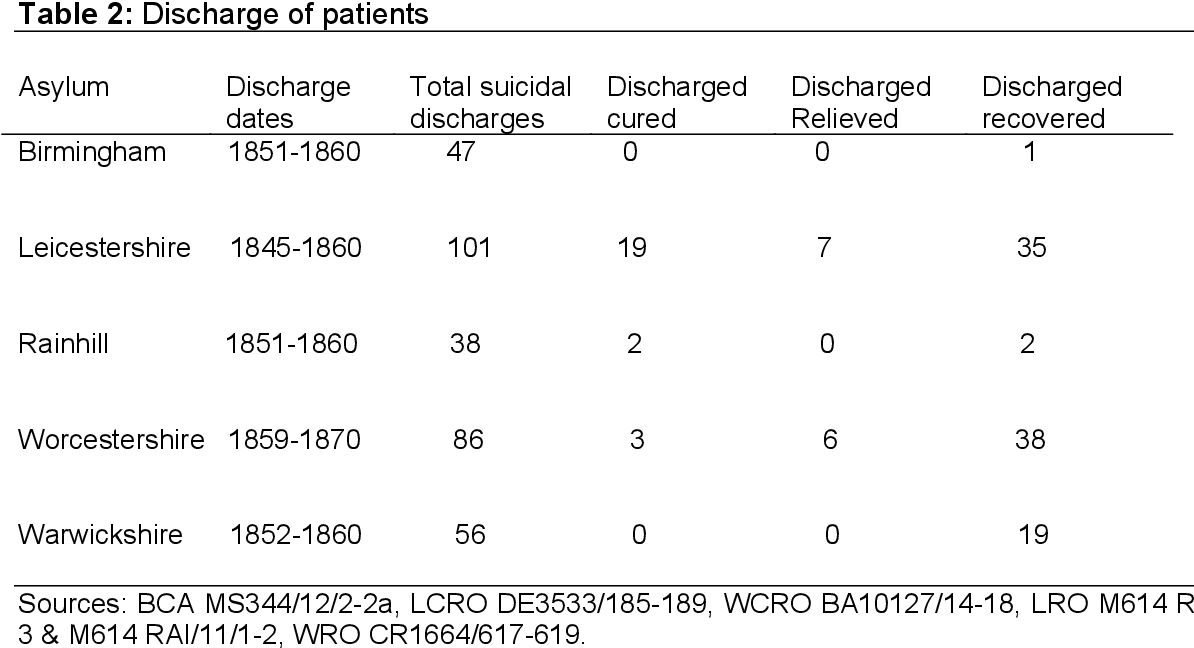

Suicide is a passive, but yet prominent topic within the Bleak House novel. Most notably, there is the discussed suicide of Mr. Tom Jarndyce, but further along within the novel, passingly, there is discussion of fellow friends of George and Mr. Tulkinghorn. With this topic's hidden prominence, it can be noted of an overarching theme of desperation of these characters throughout the novel. A desperation to not solely move forward and rid tasks and predicaments in front of them, but also a desperation to uncover what is hidden. When that desperation is not countered with success, hopelessness drowns any possibility of recovery when the threshold of suicide is reached. In 19th century England, suicidal behavior within individuals was met with admission to asylums; however, as demonstrated within the table, most "releases" were not due to recovery, but ultimately of suicide of these patients. Research has revealed that this data is reflective of the counteractive treatment received in these asylums for these suicidal patients. This has been observed due to political and social influence that impacted proper treatment and prevention, but also of the treatment and handling of these patient almost mimicked the risk and danger that these patients engaged in before admission. In correspondence to Bleak House, it can be suggested that the perception of suicide and how it was approached differed greatly in how it is approached in today's society. This seemingly passive but looming nature of it within the novel displays the ignorance of how to approach loved ones who are lost in hopelessness, but also of the weightiness of it upon those who lost those loved ones to the deadly hand of suicide as they contemplate the significance and prominence of it within their lives. The notion is around, but with its prominence, how do they approach it, is the question that can only be answered within the depths of the character.
For information: York, Sarah. “Suicide, lunacy and the asylum in nineteenth-century England.” (2010). For Image Table 2. Discharge of Patients. Table from York, Sarah. “Suicide, lunacy and the asylum in nineteenth-century England.” (2010).