
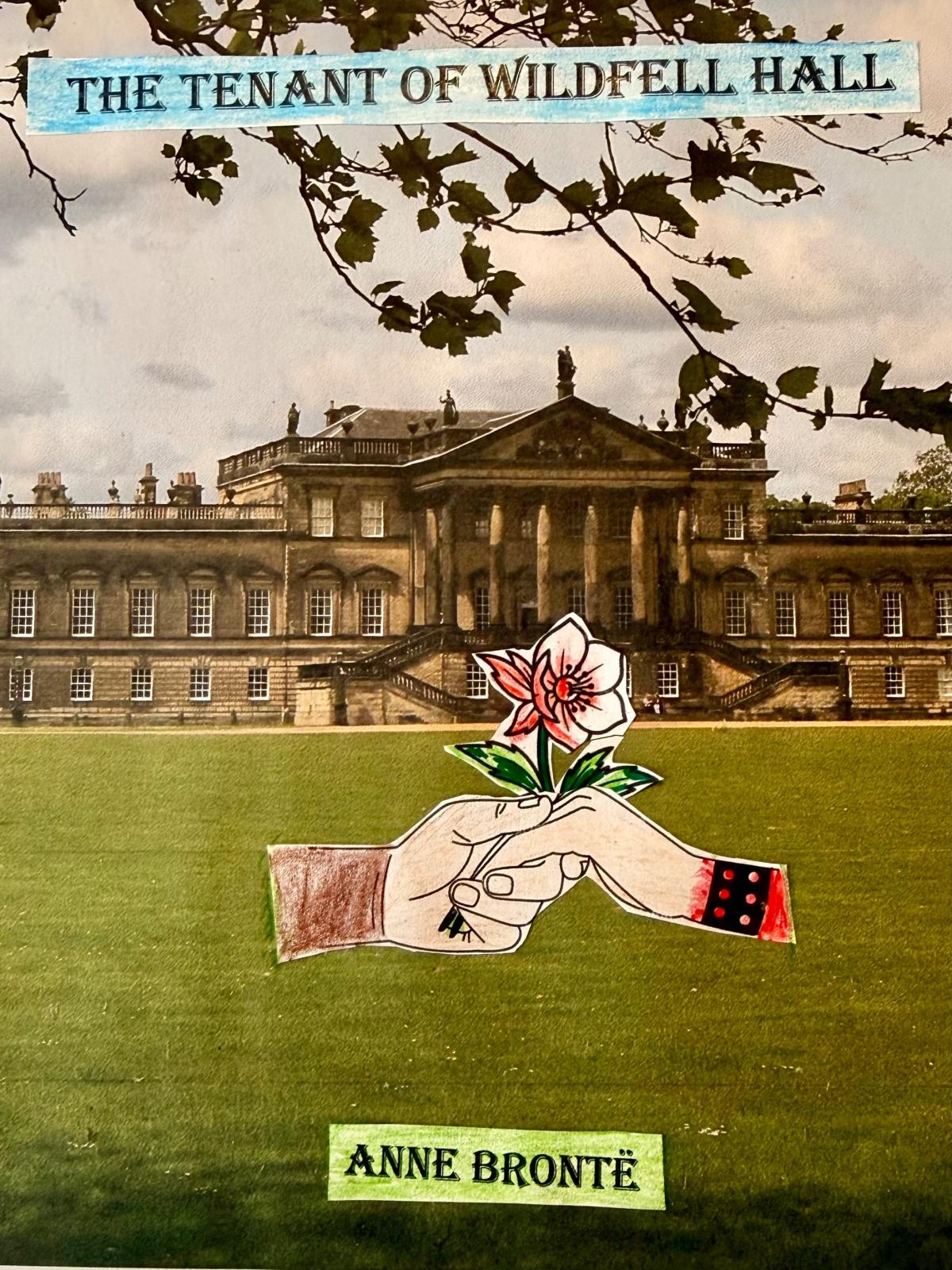

Anne Brontë's The Tenant of Wildfell Hall (1848) takes place in a number of great houses, occupied and previously vacant. The novel opens and closes at Staningley, the house that belongs to the heroine's aunt. Helen leaves this home to marry the handsome but dissolute Arthur Huntingdon of Grassdale Manor. Desperate to escape an unhappy marriage, Helen Graham (née Lawrence) poses as a widow and escapes with her son, young Arthur, to Wildfell Hall, a mansion close to the property of Gilbert Markham, a prosperous local farmer who falls in love with Helen. When Gilbert Markham presses his suit to marry Helen, she gives him her diary, allowing us to learn of her past and that her husband is still alive. Although Helen returns to nurse a dying Arthur, she ends the novel at Staningley, now Helen's estate, where she reconnects by chance with Gilbert. This book cover uses a great house in the backdrop, which stands not only for Staningley but also the other great homes she occupies. The close-up of the hands meant to symbolize Helen and Gilbert and the Christmas rose call attention to how Anne Brontë uses the Victorian language of the flowers to reconcile the lovers at long last. Helen offers Gilbert a Christmas rose, pictured here, which means "relieve my anxiety." This symbol speaks to the happy ending of the novel while the imposing home signals the journey among grand and darkly imposing houses that Helen will take in order to eventually find happiness with Gilbert.