
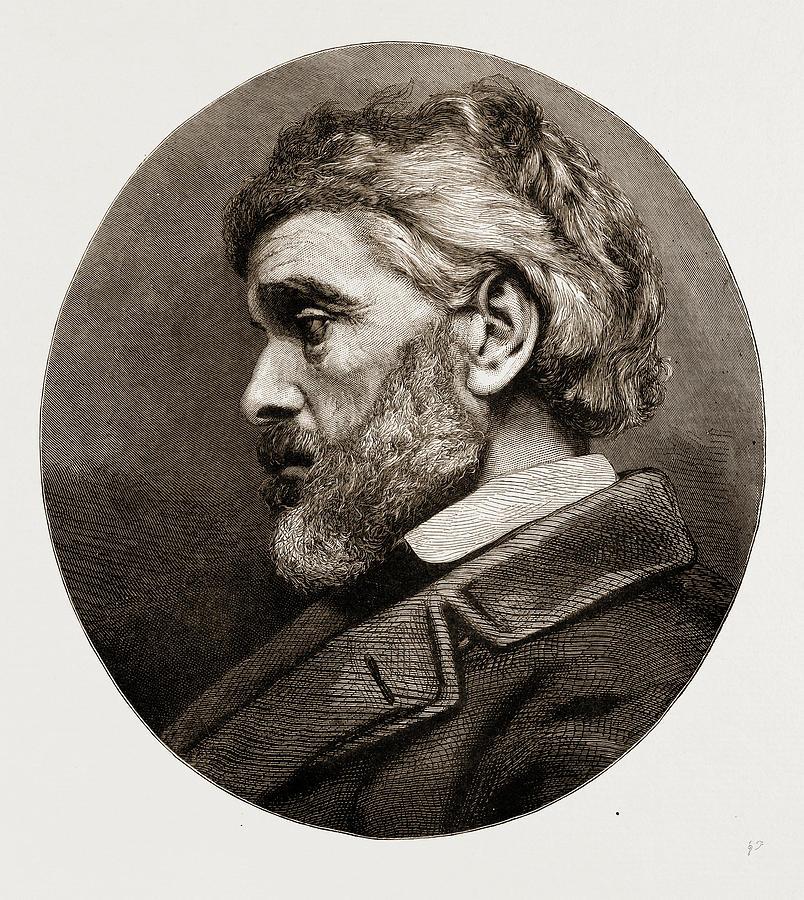
Thomas Carlyle (1795-1881) was a highly controversial Victorian essayist and historian. His major works included The French Revolution; On Heroes, Hero-Worship, and the Heroic in History; and The History of Friedrich II of Prussia, Called Frederick the Great.
Carlyle was born in rural Southwest Scotland to a pair of pious Calvinist parents. Many elements in his writings could be attributed to this experience: a Calvinist obsession with order, duty, work, and destiny; a fear of anarchy; a feeling that the times were morally degenerate; a narrow view of international affairs; and an anti-intellectual view of the fine arts. Carlyle also drew inspiration extensively from his reading in German, including Goethe, Schiller, Kant, Richter, and Novalis. Mill wrote about Carlyle’s denunciation of their “age of unbelief”, and interpreted Carlyle’s protests as favoring old modes of belief. He described Carlyle’s impact on him as such: “the good his writings did me was not as philosophy to instruct but as poetry to animate.” The two’s modes of thought were distant from each other and did not grow closer over time, but they maintained their friendship.
Mill also mentioned that the materials he collected about the French Revolution eventually contributed to Carlyle’s writing of The French Revolution. They discussed the work frequently as it progressed, but in 1835 Mill’s servant accidentally burned Carlyle’s manuscripts. Carlyle forgave Mill and rewrote the draft, while Mill compensated him financially.
Sources:
“Thomas Carlyle”. Poetry Foundation. https://www.poetryfoundation.org/poets/thomas-carlyle
“Thomas Carlyle”. Encyclopedia Britannica.
https://www.britannica.com/biography/Thomas-Carlyle
Mill, John Stuart. Autobiography.