Access and Info for Institutional Subscribers

Home
Toggle menu

  • Home
  • Editions
  • Images
    • Exhibits
    • Images
  • Teaching
    • Articles
    • Teacher Resources
  • How To
  • About COVE
    • Constitution
    • Board
    • Supporting Institutions
    • Talks / Articles
    • FAQ
    • Testimonials


Gallery Exhibits


Displaying 271 - 300 of 450 Exhibits

Not Vetted

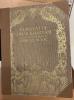
Gordon Ross's Unique Art in The Rubáiyát of Omar Khayyám 1941 Pocketbook by Brontae Sodeman

This edition of the Rubáiyát of Omar Khayyam was published in 1941 with the first and fifth translation by Edward Fitzgerald. 

From Persia to Ireland to America - The Rubá'iyat has many homes, the Rubá'iyat is beloved

This exhibit centers The Rubá'iyat of Omar Khayyam, translated by Irish scholar George Roe, and published as The Rubá'iyat of Omar Khayyam: A New Metrical Version Rendered into English From Various Persian Sources.

The exhibit consists of five galleries - the first provides a detailed description of the book, the second is a reflection upon and analysis of gift books and Orientalism, the third is my own translation of one stanza of the Rubá'iyat in comparison to Roe and Edward…

The Little Red Rubáiyát, Cassidy Malick

Once part of a collection of thirty books, this pocket-edition of the Rubáiyát  of Omar Khayyám is now a part of the Dr. Sigurd H. Peterson Memorial Collection at Oregon State University. This gallery explores the physical attributes and publication history of the Litte Luxart Library edition of the Rubáiyát, as well as a close reading from the book and a piece of critical fabulation about the gifting of this book. 

Past Remnants of The Soul's Rubáiyát

"Past Remnants of The Soul's Rubáiyát" examines Amelia Woodward Truesdell's edition of The Rubáiyát of Omar Khayyam. The topics of the virtual exhibit include physical descriptions and a close reading of a stanza.

The Rubáiyát of Omar Khayyám First Edition 1946 - Examined by Ginnie Sandoval

Exhibit by Ginnie Sandoval

Rubáiyát of Omar Khayyám First Edition 1946


Painting the Rubáiyat of Omar Khayyám in a New Light

Rubáiyat of Omar Khayyám: The First and Fourth Renderings in English Verse

by Edward Fitzgerald with Illustrations by Willy Pogány

Published by New York: Thomas Y. Crowell Company (1930s)

The Oursler-Perkins Rubáiyat of Omar Kháyyám (1916?) - examined by Kyle Hutchins

tbd

Examining The Rubiyat of Bridge by Carolynn Wells (1906)

  This exhibit focuses on The Rubaiyat of Bridge written by Carolyn Wells in 1906. Throughout this exhibit, we examine the Rubaiyat as a whole, the relationship it has with orientalism, how the edition was made, and focusing on any archival speculation surrounding the rubaiyat.

O, How Dry I am! [1922's Rubaiyat of Ohow Dryyam] presented by Mira Batti

Rubaiyat of Ohow Dryyam by J.L. Duff

Illustrated by Benj. Franklin [not of Philadelphia]

Published in 1922

Frank Brangwyn's illustrated Rubaiyat of Omar Khayyam (1910)

This version of The Rubáiyáy of Omar Khayyám was produced in 1910 and features beautiful, unique artworks from Frank Brangwyn. Each version of The Rubáiyát is different, how is this one different from the rest?

A Deep Dive into "The Rubáiyát of Omar Khayyam, The Astronomer Poet of Persia (190?)," with illustrations by Abanindro Nath Tagore

 The Rubáiyát of Omar Khayyám, translated by Edward Fitzgerald, became a common gift in the West during the nineteenth and early twentieth centuries. Whether this was more due to a growing rejection of the church, which aligns with Khayyam's teachings of reveling in leisure and activites such as drinking and intimacy, or because of a growing Orientalism that shrouded the East in a mystical haze, this edition, The Rubáiyát of Omar Khayyam, The Astronomer Poet of Persia (190?)…

The Rubáiyát Seen Through A Scottie's Eyes! Examining Parodies

The Rubáiyát of a Scotch Terrier, 1926

Written and Illustrated by Sewell Collins.

Rubaiyat of Omar Khayyam (1909) examined by Michaela Bauer

An exhibit of the 1909 edition of The Rubaiyat by Omar Khayyam. Translated by Edward Fitzgerald and illustrated by Edmund Dulac.

Omar Khayyam by Edward Fitzgerald with Photogravures after Gilbert James (1905) Sukhjot Sal

An examination of the 1905 edition of Omar Khayyam's Rubaiyat translation by Edward Fitzgerald, embellished with photogravures after Gilbert James.

Education: Forming and Reforming Minds in Harrisburg, 1823 - 2023

This exhibition is focused on the history of education for students from pre-kindergarten through 12th grade in Harrisburg, Pennsylvania. Harrisburg is, and has been, home to a rich variety of schools, educators, and students, and this class is designed to study and document their presence, achievements, and current needs in order to design a service project that can support them in the present day. The cases in this exhibition each offer a unique, student-created topical study; we…


The Evolutions of Emotions in Grade School Students

Over these 4 photos we will talk about the emotions in grade school children and their competence. In more recent years I have found a bunch of articles and research of how the government and schools are implementing plans to teach children emotions and how to regulate them. We will see how over the past couple hundred years how children have evolved and their emotional intelligence.

Immigration to the United States

This Exhibition will talk about the different races that immigrated to the United States during the 19th and 20th centuries. Some examples include Italians Russian and Jewish, I was also able to find more races but not being able to post them due to how small the file was. My main topic was education in English as a Second language but was unsuccessful to find a gallery for it so I only focus on the Immigration part of it. the images include articles talking about how each ethnicity began…

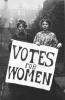
Journey to Female Suffrage

test

Drug Use and Its Representations in Literature in Different Centuries

The project can be regarded as an exemplary digital source showing that drug use is still prevalent, and its representations are commonly seen in several literary sources from 18th, 19th, and 20th centuries.

From scientific perspective, it can be said that drug use related to addiction and substance abuse are important health problems that have negative outcomes. Accordingly, it can be claimed that this action has become an important part of the lives of those who are addicts or…

Instruction

Tests

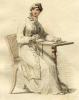
Recreating Regency Letter Writing and the Austen Canon

                                                                                               Period illustration from "The Regency Reader"

Today we communicate through texting, email, FaceTime, and telephones. Writing a letter may seem quaint…

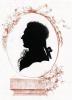
Recreating the Regency Silhouette and the Austen Canon

      .                                                                                             Silhouette Portrait of the Late 18th Century

The silhouette--a profile typically done in black and mounted on white--was a…

Phyllis Lorimer's Commonplace Book

This is Phyllis Lorimer's Commonplace Book os Phyills Lorimer. Editorial commentary by Umi Pak.

Lord Watergate's Commonplace book

This is the Commonplace book of Lord Watergate. Editorial commentary provided by Drew Molinari.

Lucy Lorimer's Commonplace Book

Lucy Lorimer's Commonplace Book, Editorial commentary by Riley Scoggins

Frank's Commonplace Book

This is Frank's Commonplace Book. Editorial commentary provided by Joseph Lippe

The Girl of the Period's Commonplace Book

This is The Girl of the Period's (as described by Eliza Lynn Linton) Commonplace Book. Editorial commentary provided by Ava Stavola.

Aunt Caroline's Commonplace Book

This is Aunt Caroline's Commonplace Book. Editorial commentary provided by Emma Greene.

The New Woman's Commonplace Book

This is the New Woman's Commonplace Book. Editorial commentary provided by Kaitlyn Hamlette.

Sidney Darrell's Commonplace Book

This is a commonplace book from Sidney Darrell, an artist during the Victorian Era. His writing reveals the role of art and travel in 19th century English society, as well as the strict societal expectations at the time. Editorial commentary provided by Brooke Gary.

Pagination

  • First page « First
  • Previous page ‹ Previous
  • …
  • Page 6
  • Page 7
  • Page 8
  • Page 9
  • Current page 10
  • Page 11
  • Page 12
  • Page 13
  • Page 14
  • …
  • Next page Next ›
  • Last page Last »

Webform: Contact

About COVE

  • Constitution
  • Board
  • What's New
  • Talks / Articles
  • Testimonials

What is COVE?

COVE is Collaborative Organization for Virtual Education, a scholar-driven open-access platform that publishes both peer-reviewed material and "flipped classroom" student projects built with our online tools.

Visit our 'How To' page

sfy39587stp18