
By Jeffrey Moran
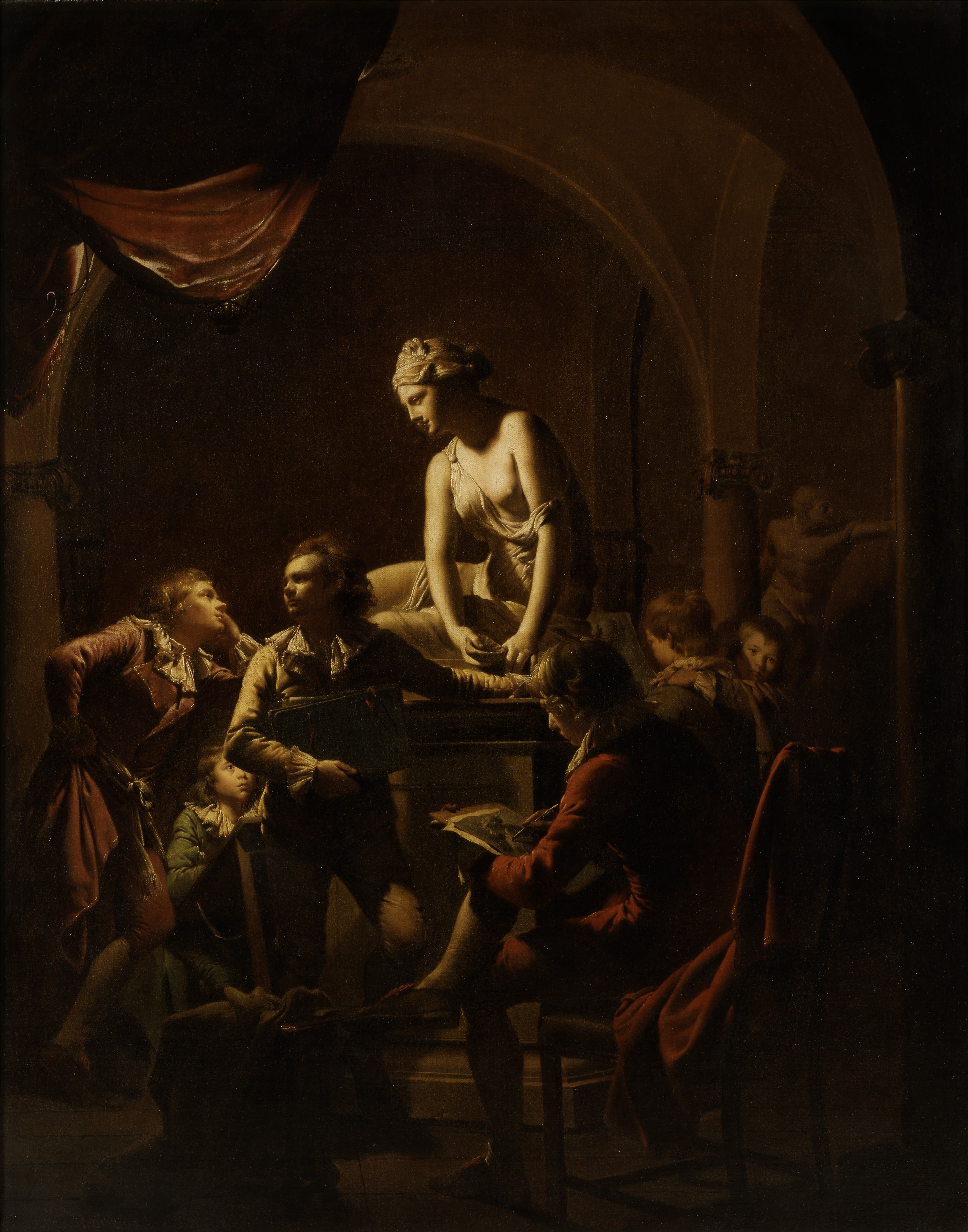
Joseph Wright's Academy by Lamplight makes a statement against the Academies and their purposes as stated by Reynolds. Where Reynolds displays the academics' stance of inspiration coming from something above humans and should be done through imitation, specifically with younger artists copying only parts of classical statues they would study. Wright's painting shows contrasts to the three ideals put forth by the academy. The three ideals put forward were Status, Training, and Exhibition. In Zoffany's group portrait titled The Royal Academy of Arts, these ideals are to be expressed through the group of gentlemen gathered together and studying nude models. The painting shows the three ideals in the men's dress, their discussions of the nude models, and the exhibition of classical statues across the walls of the room. However, Wright challenges this in his painting by having the students there both following the ideals more closely and showing a different form of inspiration. They dress in fine clothing to exemplify status, however, it is their training that differs greatly. While the gentlemen in the Academy of Arts all look in different directions, the students in Lamplight shift their focus entirely to the statue they are gathered around. The students also show greater focus on the statue, either placing their gaze on it or to their sketch pads as they actually train their artistry. The boy in the center, however, is the only student really looking elsewhere in the painting. This view elsewhere is what challenges the academy's idea of inspiration. While the rest of the students observe and copy the fundamentals of art, in line with the academy's view or inspiration through imitation, the boy is contemplating what he has seen in order to form more innovative work. The lighting further's this by showing the reflection of light on his forehead, insinuating contemplation and thought.