
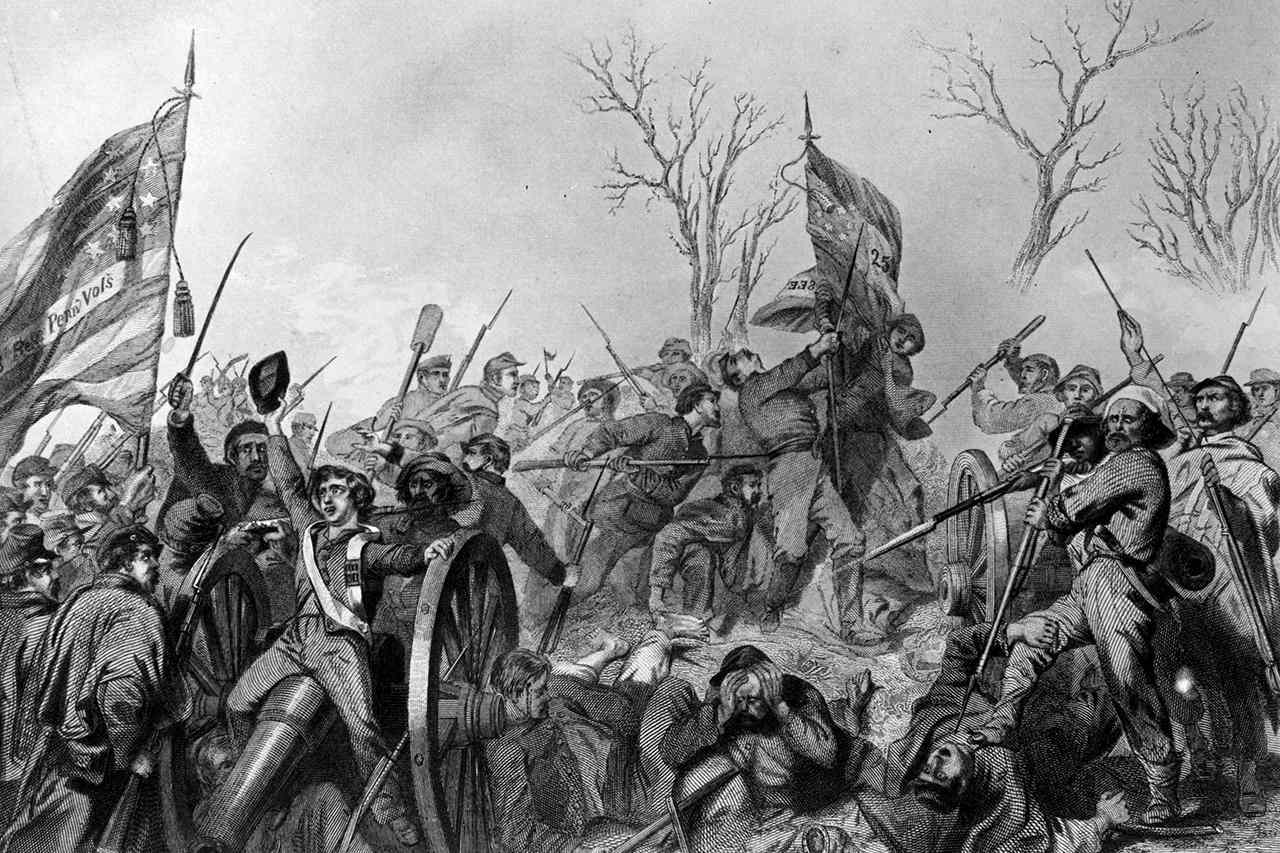
After Abraham Lincoln’s election in 1860, eleven Southern states seceded from the Union and formed the Confederate States of America, largely to protect the institution of slavery. The war began on April 12, 1861, when Confederate forces fired on Fort Sumter in South Carolina. Over four years, Union and Confederate armies clashed in major battles including Bull Run, Antietam, Gettysburg, and Vicksburg. In 1863, Lincoln issued the Emancipation Proclamation, redefining the conflict as a fight to end American slavery and opening the Union army to Black soldiers. Ulysses S. Grant’s sustained offensives and William T. Sherman’s march through Georgia gradually crushed Confederate resistance, and Robert E. Lee eventually surrendered at Appomattox Court House on April 9, 1865. The war claimed approximately 620,000 lives, preserved the Union, and led to the abolition of slavery through the Thirteenth Amendment. President Lincoln was assassinated days after the surrender, leaving the challenges of Reconstruction to his successor, Andrew Johnson.