
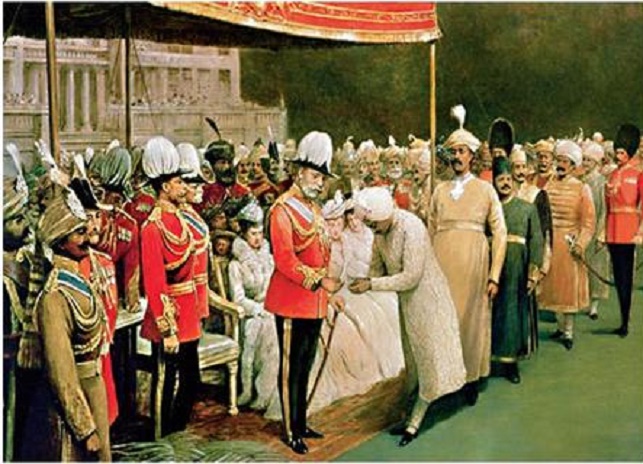
In the year 1600, India was officially brought under the control of the British with the creation of the British India Company, which had originally begun under the pretense of interacting with the trade of spices and other goods. They would eventually grow in power as they acquired control of other regions, such as Bombay and Delhi. Through a series of actions, Britain would make India into a subordinate territory. It is acknowledged by historians that “British rule brought both modernization and exploitation, leading to mixed consequences for Indian society” (para 15). The British would eventually relinquish their control over India, but the effects of their control still continue to be made clear in India. In the post-colonial atmosphere in the novel A Guardian and a Thief, readers can see the poverty-stricken India that has been left behind, most especially through the eyes of Boomba, who is the least privileged out of the protagonists. He is the best example of the underprivileged: an initially honest and pure-hearted person who is working hard to provide for his family, only to have unfortunate circumstances beat him down. The wealth disparity and lifestyle differences between the rich and the poor are portrayed throughout the novel as well, showing off how much the British have stolen from Indian’s labor and goods for so many years. It could very likely be said that in the universe in which the British did not take control of India, the protagonists would have found themselves to be in a much different scenario, one that very well might be better than their current positions within the world.
Sources:
“Colonial Period in India.” Historical Encyclopedia, 2024. https://globhistory.org/en/article/indiya/kolonialnyy_period_v_indii (Accessed 19 Apr 2026).
Mamjundar, Megha. A Guardian and a Thief, Penguin Random House, 14 Oct 2025. (Accessed 19 Feb 2026).