
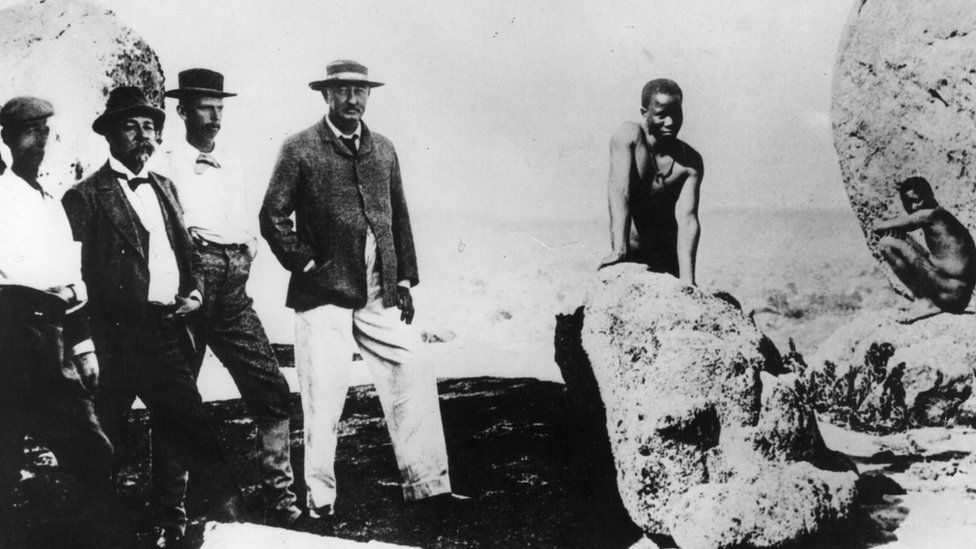
Tsitsi's Nervous Condition is based on her experience in Zimbabwe due to Colonialism as well as Gender roles. However, I wanted to focus on the colonization of Zimbabwe and it's effects.
The colonialism of Zimbabwe led to the integration of the English language as well as building schools to teach English history as well as the language. However, colonization often causes a loss of original language as well as the history of the area being forgotten. Abbas calls the colonization of Zimbabwe, "a colonial system that's damaging and dangerous, but still attractive in important ways for individuals who wish to abandon traditional ways of doing things in favor of a white and Western definition of success" (Paragraph 1). We often see in the text when Tambu has to deal with, not only the aftermath left by the English settlers, but also the change in her tone when referring to the settlers. We also see the condition of the land that she is living on is sandy and hard to harm on, limiting Tambu and her family's source of income. It also shows Tambu's difficulty in farming corn to help pay for her schooling. The overall presence of the colonizers helps contribute to the reason that Tsitsi wrote this account, pairing this with the gender inequality that Tsitsi also faced, and we can see the summery of Nervous Conditions.
Abbas, Fatin. "Nervous Conditions Themes: Colonialism." LitCharts. LitCharts LLC, 10 Jan 2019. Web. 26 Feb 2026.