Neither authors nor their literary texts exist in a vacuum. Both are inspired by and engage with the social and political events of their time. This timeline represents (or will represent!) major historical events that shape literary texts by women writers from India, Africa, and the Americas from the late 19th century to the present. By the end of the semester, we will have a unified timeline representing a range of significant global events as they took place over time.
Timeline
Table of Events
| Date | Event | Created by |
|---|---|---|
| 1838 | Trail of DeathBotanist and author Robin Kimmerer is a member of the Citizen Potawatomie Nation. In 1838, the U.S. government rounded up the tribal members from their lands in the Michigan area and forcibly moved them to a reservation in Kansas. The journey was called The Trail of Death because more than forty members of the tribe died in transit. Later, the tribe was again forcibly removed from their homes and led onto a smaller reservation in Oklahoma. Kemmerer works today to revive the dying language of her people because it is intrinsic to the Traditional Ecological Science that she promotes. Most of the elders who speak the language live on or near the reservation. The language provides the subtlties and poetry that are the basis for the English words Kimmerer uses in he essays and her science writing. Traditional Ecological Science is the patient knowldege of the environment that her people have practiced for hundreds of years. Smith, Dwight L. “Jacob Hull’s Detachment of the Potawatomi Emigration of 1838.” Indiana Magazine of History, vol. 45, no. 3, 1949, pp. 285–88. JSTOR, http://www.jstor.org/stable/27787780.
|
David Stinson |
| 1859 | Creation of the Gila River Indian CommunityThe Gila River Indian Community was established by Congress in 1859 during the Westward Expansion shortly after the Gadsden Purchase took place in the United States where present-day Arizona and New Mexico are located. This made it the very first Indian reservation in Arizona that now resides in the Gila River Valley. The people who live on the reservation primarily speak Mojave. The community remains peaceful and hopeful for the Gila River to run through their community again because the dam built by other farmers back in the 1870s-1880s prevented the water from flowing freely like it once did. The Native Americans that lived here where they once could farm were going through starvation periods along with famine. Conditions have only gotten a bit better since this happened more than a century ago. They continue fighting for an irrigation system that will solve this problem for them along with the generations that come after them. The government has also helped with improving the community by helping build health centers, schools, and new houses, showing that the community has a good future ahead. The Mojave-American author of "When My Brother Was an Aztec" Natalie Diaz is currently enrolled in the Gila River Indian Community. Her goal in this small group composed of adults and children is to keep the Mojave language their ancestors spoke many years alive. She is a key figure in her community who is trying to preserve the language by continuing to discuss the language for future generations to learn so it will never be forgotten again. Source Used: "History." Gila River Indian Community. https://www.gilariver.org/index.php/about/history |
Breanna Beltran |
| circa. 1872-1949 | The Suffragette MovementAn Overview of the Event: - In the 19th century, women in Chile considered the education to not be equal and were upset that they were not allowed to attend higher education (Ramos-Vera et al. 2). There were some women who were the first to submit applications to universities, Professor Antonia Tarragó was one of them and her application was denied (Ramos-Vera et al. 2). But in 1872, Tarragó “wrote the first formal application by a woman to the Comisión Universitaria [University Commission] in Chile to have exams for women’s entry into vocational training approved and validated” (Ramos-Vera et al. 2). The National Women’s Council wanted to gain the right to vote for women, first they wanted to start with municipal elections and then go onto presidential elections, this started in 1922 (Ramos-Vera et al. 7).
A brief analysis of why this event is significant for the author or text at hand: - The Suffragette Movement is important to The House of the Spirits by Isabel Allende because it adds to the fact that this is a feminist book. The focus of the book in on the women and their interactions and experiences with the patriarchy so Clara seeing her mother participate in the suffragette movement was important because it adds to her character and how she interacts with the patriarchy later in the story. Clara’s mother was part of the suffragette movement, and Clara would often join her mother and her friends on their trips to factories where they would preach about equality to the women working there, as well as the bosses who just laughed at them. Clara saw the difference between her mother and her friends who were dressed nicely and had money, and the women they were preaching to who were hardworking. This could be where Clara was first introduced to feminism, and it passed down from her mother to her and then through Clara to the later generations of women in her family.
Works Cited: Ramos-Vera, José, et al. “Amanda Labarca and the First Feminist Institutions in Chile (1910-1922).” Estudos Feministas, vol. 30, no. 3, 2022, pp. 1–12. JSTOR, https://www.jstor.org/stable/48706752. |
Kate Ridgeway |
| 1890-1980 | Colonialism in ZimbabweTsitsi's Nervous Condition is based on her experience in Zimbabwe due to Colonialism as well as Gender roles. However, I wanted to focus on the colonization of Zimbabwe and it's effects. The colonialism of Zimbabwe led to the integration of the English language as well as building schools to teach English history as well as the language. However, colonization often causes a loss of original language as well as the history of the area being forgotten. Abbas calls the colonization of Zimbabwe, "a colonial system that's damaging and dangerous, but still attractive in important ways for individuals who wish to abandon traditional ways of doing things in favor of a white and Western definition of success" (Paragraph 1). We often see in the text when Tambu has to deal with, not only the aftermath left by the English settlers, but also the change in her tone when referring to the settlers. We also see the condition of the land that she is living on is sandy and hard to harm on, limiting Tambu and her family's source of income. It also shows Tambu's difficulty in farming corn to help pay for her schooling. The overall presence of the colonizers helps contribute to the reason that Tsitsi wrote this account, pairing this with the gender inequality that Tsitsi also faced, and we can see the summery of Nervous Conditions.
Abbas, Fatin. "Nervous Conditions Themes: Colonialism." LitCharts. LitCharts LLC, 10 Jan 2019. Web. 26 Feb 2026. |
Lily Boyd |
| 1890-1931 | The Fort Mojave Indian SchoolThe Fort Mojave Indian School was founded in 1890 with the intention of assimilating young Mojave and Hualapai children with American culture. The school was established where the Fort Mojave Military Facility was previously located. The school's founding in 1890 is a major milestone in the history of assimilation. The school’s method of assimilating the young Mojave and Hualapai children included cutting the Native children’s hair; teaching them English, math, and geography; and instructing males and females on different things dependent on gender. For example, girls would be taught to cook or sew while boys would learn farming, carpentry, or blacksmithing. The impact of this would seem largely negative as these Indian boarding schools would begin to struggle with frequent runaways. The school would eventually close in 1931 following a long period of activists and reformist critiquing these Indian boarding schools, arguing that these schools alienated children from their culture and left them stranded between the American culture they were being forcibly taught and the culture they were born into, Mojave or Hualapai. Despite its closing, the Fort Mojave Indian school would have a long-lasting impact on the Mojave tribe. The Fort Mojave Indian school is important to the poet Natalie Diaz as it plays a massive role in the Mojave language’s endangerment. Natalie Diaz cites the endangerment of the Mojave language and the hardships that the Mojave tribe, which she is a member of, as a major inspiration in her writing. So, it is easy to draw a connection between assimilation and Natalie Diaz’s writing. Assimilation spanned a long period, making it difficult to point to a single event that caused the endangerment of the Mojave language as it was a series of events that led to the language being in the state it is today. However, if one was to point to an event, it would likely be the founding of the Fort Mojave Indian School. Work Cited Fort Mojave Indian School Records, 1890-1923. MS-00034. Special Collections and Archives, University Libraries, University of Nevada, Las Vegas. Las Vegas, Nevada. The. “Friends of Avi Kwa Ame National Monument.” Friends of Avi Kwa Ame National Monument, 6 Nov. 2025, www.friendsofavikwaame.org/goldbeam/onlinefeatures/fort-mojave-indian-s…. |
Tyler Hamilton |
| 1910 | The Mexican Revolution - A Solid HomeThe Mexican Revolution was a war that ended the rule of dictator Porfirio Díaz and altered Mexico's politics and social systems. It began in 1910, when leaders such as Francisco I. Madero called for democratic reforms. Factions led by people such as Emiliano Zapata and Pancho Villa advocated for a redress of land and social inequalities. The ten-year war was very violent and caused many economic issues as well as deaths. As a result, the Constitution of 1917 was established with the intention to protect the rights of workers and equalize the distribution of wealth. The characters are stuck in the family crypt, and are unable to escape their psychological confinement after death. This reflects the way that not all people were liberated by the Mexican Revolution. The house represents privilege, as well as its downfall beyond repair. This symbolizes the same downfall suffered by Mexico post-revolution.
|
Paige Scarlett |
| C. 1935 | Emergence of Magical Realism in Latin AmericaThough exact dates are debated by scholars as to the appearance of Magical Realism in Latin American literature, the publication of Jorge Borges short-story collection “Historia universal de la Infamia” ( A Universal History of Infamy) in 1935 was a landmark moment for the genre. Angel Flores, the first person to use the term “magical realism”, set its origin point at the publication of Borges collection. Borges, and the genre of Magical Realism at large has had a profound effect on Latin American literature and culture, providing a culturally distinct lens through which Latin American authors, poets, and playwrights have explored themes of colonialism, identity, and political turmoil. Isabel Allende’s novel The House of the Spirits is a considered a major work of Magical Realism, and we see her utilizing the genre to achieve her thematic goals throughout the text, using genre conventions to explore themes of political unrest and women’s issues specifically. The magical powers that characters such as Clara possess (clairvoyance, predicting the future) locate the novel within the genre and also serve as a comment on the role of women in society in Latin America. Furthermore, Allende uses magical elements as political symbolism throughout the novel, portraying the forces of fascism as almost working “against” the magical elements and characters within the text. Flores, Angel. “Magical Realism in Spanish American Fiction.” Hispania, vol. 38, no. 2, 1955, pp. 187–92. JSTOR, https://doi.org/10.2307/335812. Accessed 5 May 2026.
https://en.wikipedia.org/wiki/A_Universal_History_of_Infamy#cite_note-1 |
Henry Wells |
| 1939 | 1939 Chilean EarthquakeAn Overview of the Event: - January 24, 1939, an earthquake hit in Chile, it started around 11:35pm, and was around a 7.8 magnitude (Gil, 776). Many buildings were destroyed, with many trapped inside them. It’s not known how many people died during the earthquake, some believe it to be around five thousand to thirty thousand, but it’s more likely that around eight thousand people died (Gil, 776). The Reconstruction and Assistantship Corporation and the Production Development Corporation were created by the state for the reconstruction effort (Gil, 776).
A brief analysis of why this event is significant for the author or text at hand: - The 1939 Chilean Earthquake is significant to the book The House of the Spirits by Isabel Allende because it showed that Esteban wasn’t always powerful, he had to rely on those he looked down on, but it is also important in that it shows the good hearts of the workers. They help Esteban even after everything he’s done. The earthquake is predicted by Clara and when it happens, she rushes to find Blanca. During the earthquake their house snaps in half, collapsing on Esteban. They had to wait till light before they could dig up the dead and those still alive. Esteban is saved by those who work for him, and he must rely on them to save his life. During the earthquake, Esteban’s bones are badly broken, and he must rely on Pedro Garcia, his foreman’s father, to set his bones.
Works Cited: Gil, Magdalena. “Disasters as Critical Junctures: State Building and Industrialization in Chile after the Chillán Earthquake of 1939.” Latin American Research Review, vol. 57, no. 4, 2022, pp. 775–93. JSTOR, https://www.jstor.org/stable/27401344. |
Kate Ridgeway |
| 1945 | The Introduction of Methamphetamines to the USMethamphetamines were first invented in 1893 by a Japanese scientist. However, the drug was not introduced to the United States until World War II to keep troops awake. The drug was initially used to treat asthma, narcolepsy, and as a weight loss drug. However, following World War II use of the drug would spike in the United States and eventually get banned in 1973. However, this ban did little to stop the use of methamphetamines. It spread quickly in the United States due to it being both highly addictive and relatively easy to create as well as it being versatile since you can snort, smoke, or drink it. The United States began to fiercely fight the rise in methamphetamines usage in the 1980s however would ultimately be unsuccessful as drug use would skyrocket in the 1990s and early 2000s and by 2006 the United Nations called it the most abused hard drug on Earth. The introduction of meth to the United States would play a massive role on poet Natalie Diaz’s life. Diaz’s brother, the subject of her book ‘When My Brother was an Aztec”, was for a long period addicted to meth. Much of Diaz’s writing, such as “When My Brother was an Aztec”, focuses on the impact that her brother’s drug use would have on her and her family.
Work Cited History.com Editors. “History of Meth - Crystal, Bust & Timeline | HISTORY.” HISTORY, 7 June 2017, www.history.com/articles/history-of-meth. |
Tyler Hamilton |
| Celebrated from October 31-November 2 | Mexico's Day of the DeadIn 1958 Elena Garro published her play Un hogar sólido, about an extended family who are buried in the same crypt. The play is most believed, but never specified, to have taken place in Mexico City. In Garro's play the occupants of the crypt hear the chanting speech of those honoring the dead. From context this appears to be a burying ritual, or some funeral, and the vocabulary seems to be distinctly catholic. Brandes, Stanley. “Sugar, Colonialism, and Death: On the Origins of Mexico’s Day of the Dead.” Comparative Studies in Society and History, vol. 39, no. 2, 1997, pp. 270–99. JSTOR, http://www.jstor.org/stable/179316. Accessed 22 Apr. 2026.
|
Aaron Stone |
| circa 1960- circa 1979 | Tsitsi's (Tambu's) experience with Nyasha's suicidal behavior.The colonization of Zimbabwe not only affected those colonized in terms of culture, socialization, dress, and more, but it also affected mental states. A great example of this could be Tambu's interactions with Nyasha. During Tambu's dive into studies and refusal to leave besides her interactions at school, Nyasha sends her letters expressing her emotions with a particular one admitting that Nyasha was not fitting in well with the other students at the school. Tambu sees this more when she returns home to see Nyasha is such a malnourished state. When Nyasha is shown to enter a suicidal state, Tambu urged for Babamukuru to take Nyasha to a white psychiatrist. However, the psychiatrist brushes the issue off by saying, “Africans did not suffer in the way [he] … described.” This showcases, the neglect for not only the state of living of the people in the colony, but also the lack of mental care that was provided to them. Tsitsi shows this to help attribute to the distain she felt towards the colonizers and her own neglect towards her cousin. Work cited DayDreamin’ Comics. “Write up on Tsitsi Dangarembga’s Nervous Conditions.” DayDreamin’ Comics, 3 May 2025, https://ddcomics.org/2025/05/03/write-up-on-tsitsi-dangarembgas-nervous…. |
Lily Boyd |
| Fall 1960 | Nigeria gains independence from Great BritainOn October 1st, 1960, Nigeria was granted independence from Great Britain after nearly a hundred years of colonial rule (Udo). For decades, British rulers exploited the labor of Nigerians, interfered in their long-held traditions, and limited their ability to participate in politics. Repeated non-violent protests led by Nigerian citizens pressured the British government into granting the nation independence. Newspapers like The Lagos Weekly Record and The West African Pilot played a significant role in voicing the opinions of Nigerians. Some of the most pivotal movements during Nigeria’s struggle for independence include the Nigerian Union of Railwaymen protest, the General Strike of 1945, and the Egba Women’s Revolt (Vincent-Anene). While Nigerian citizens celebrated their long-awaited separation from the empire, the conflict was far from over. When England took control of Northern and Southern Nigeria, they failed to recognize the many differences between Nigeria’s ethnic groups, forcing British education and religion onto its diverse population. The British government’s widespread influence caused tensions to rise between Nigeria’s ethnic groups in the decades prior to its independence, eventually resulting in the Nigerian Civil War of 1967 (Lee). There is still significant division between Nigeria’s religious groups today, demonstrating the longstanding impact colonialism can have on a nation. In Akata Witch, a novel set almost eighty years after Nigeria gained independence, we can still see the impacts of British colonialism in Sunny’s everyday life. Sunny remarks that the Power Holding Company of Nigeria (PHC) cannot keep the electricity on through the night, an experience that she is still not used to after leaving the United States (Okorafor 1). This detail is indicative of Nigeria’s lagging infrastructure; because of Nigeria’s long struggle for order since gaining independence, important systems are developing at a slower rate than other independent nations. Works Cited Lee, Alexandria. “British Colonization in Nigeria: Past and Present Impact.” The Organization for World Peace, 4 Aug. 2025, theowp.org/reports/british-colonization-in-nigeria-past-and-present-impact/ Udo, Reuben Kenrick. “Independent Nigeria.” Britannica, 19 Apr. 2026, www.britannica.com/place/Nigeria/Independent-Nigeria. Vincent-Anene, Prince. “The Nigerian Struggle for Independence.” The Nonviolence Project, University of Wisconsin-Madison, 9 Oct. 2022, thenonviolenceproject.wisc.edu/2022/07/11/the-nigerian-struggle-for-independence/. Young kids support Nigerian independence in 1960. National Archives of the Netherlands, Wikimedia, Oct. 1960. https://commons.wikimedia.org/wiki/File:Young_kids_celebrate_Nigeria%27s_independence_in_1960.png |
Shayna Autwell |
| circa 1961 intermittently until circa 1980 | The Significance of Tsitsi Dangarembga’s Life AbroadWhen Tsitsi Dangarembga was a toddler, her family moved from South Rhodesia, present-day Zimbabwe, to London so that her parents could pursue the benefits of higher education that London offered (George et al. 309). During her time in London, Dangarembga learned English, and later on in Cambridge, she learned the value of education, and about the racial and gendered divide in educational settings. This gave Dangarembga an exterior perspective of both South Rhodesia and the Western world which prompted the creation of Nervous Conditions to shine a light on her native cultures’ perspective of European education versus cultural values, during a period of civil war for freedom from colonization. Dangarembga’s stay in London is important to Nervous Conditions as her experiences give particular insight to Babamukuru’s family structure, and the differences between life in London versus life in the countryside of Rhodesia. Dangarembga could be compared to Nyasha in that she was the child of educated Zimbabwean parents who was encouraged to pursue her own education. But Dangarembga also compares to Tambu through her admiration for her native culture. Both perspectives show Dangarembga’s personal theory that the desire for liberation, “has been a problem for some young women of my generation who needed some kind of liberating theory to guide us, and then it was good, at that time, to have the Western theories there” (George et. al. 315). This dual perspective, that aligns with both main female characters of the novel, in key ways, gives Dangarembga the necessary information to display both the educated and the native perspectives of South Rhodesia in the mid-1900’s. Works Cited George, Rosemary Marangoly, Scott, Helen, and Tsitsi Dangarembga. “An Interview with Tsitsi Dangarembga.” NOVEL: A Forum on Fiction, 26.3 (1993), 309–19. https://doi.org/10.2307/1345839. |
Julia Nesmith |
| Summer 1964 to Winter 1979 | Freedom From Colonization and Nervous ConditionsThe Rhodesian Bush War, that lasted from July 1964 to December 1979, is a significant event that provided historical context to Tsitsi Dangarembga when writing Nervous Conditions because the war prompted the end to the colonization of South Rhodesia. This freedom from colonization gave South Rhodesians freedom to express their native values without the pressure to confirm to Western ideology. Though this freedom brought countrywide healing, the remnants of colonization were still felt in the form of education. This aligns with Nervous Conditions as it is set within the timeframe of the war, on the cusp of freedom. Dangarembga demonstrates this through Nyasha’s “rebellion” when she was “going through a historical phase” (Dangarembga 141). By framing Nyasha’s interest in the world as a rebellion against her native culture, Dangarembga connected Nervous Conditions to the real-life events of the time and showed that Nyasha’s desire for knowledge was her way of gaining a sense of herself in the changing world. In this way, Dangarembga presents education as a valuable tool for her countrymen, by asserting that education about the current situations in their country could help them heal from the ideology that colonization enforced. Rufus Ruth Livingston Jakki and Dr. B. Chandra Shekar describe this healing as “sporadic, fragmented, and primarily symbolic. It is not depicted as a chronological or comprehensive process, but rather as an attempt to restore voice and agency” (3), to demonstrate how Dangarembga presents education as a force that would give the Rhodesians their individual native culture back. Works Cited Dangarembga, Tsitsi. Nervous Conditions. London: Women's Press Limited, 1988. Print. Jakki, Rufus Ruth Livingston and Dr. B. Chandra Shekar. "Survival, Resistance, and Healing in Tsitsi." International Journal for Multidisciplinary Research 7.2 (2025): 1-4. https://www.ijfmr.com/papers/2025/2/41374.pdf. |
Julia Nesmith |
| Summer 1967 to Winter 1970 | The Nigerian Civil WarThe Nigerian Civil War, also known as the Nigerian-Biafran War, was the culmination of years of mounting conflict between Nigeria’s ethnic groups. These groups maintained control of three large geographic regions despite boundaries drawn by the federal government: the Yoruba people controlled the west, the Igbo people controlled the east, and the Hausa-Fulani people controlled the north. Educational and economic inequality between the groups fueled conflict, and in 1966, ethnic massacres of the Igbo people resulted in a final, unsuccessful attempt between federal and local governments to create peace (Falola). The civil war began with the creation of Biafra, a successionist state that declared independence from Nigeria; this state was in the eastern region and primarily inhabited by the Igbo people. Nigeria’s federal government took this act as rebellion against the nation. Conflict between the militaries of Biafra and Nigeria lasted from May 1967 to January 1970. The region Biafra claimed shrank considerably, and eventually supplies could only be brought in by air. Starvation, disease, and violence during the war resulted in an unknown number of mortalities, but estimates range from 500,000 to 3,000,000 (“Biafra”). Nnedi Okorafor’s life and identity was heavily influenced by the Biafran War. In 1969, her Igbo Nigerian parents fled to the United States, and she was born in Cincinnati, Ohio five years later. Her hybrid identity as an American-born Nigerian is a source of significant inspiration for her science-fiction and fantasy works; this inspiration is especially prevalent in Okorafor’s Akata Witch, a young adult novel about a magical Igbo Nigerian-American girl (Okorafor).
Works Cited “Biafra.” Britannica, 26 Feb. 2026, https://www.britannica.com/place/Biafra Falola, Toyin. “Nigerian Civil War.” Britannica, 19 Apr. 2016, https://www.britannica.com/topic/Nigerian-civil-war Okorafor, Nnedi. “Nnedi Okorafor speaks on Africanfuturism for Minds Wide Open Series.” The Denisonian, By Diana Mafe, 9 Apr. 2025, https://denisonian.com/2025/04/features/nnedi-okorafor-speaks-on-africanfuturism-for-minds-wide-open-series/ Reitveld, Aart. End of the Nigerian civil war with Biafra. Wikimedia Commons, 1970, https://commons.wikimedia.org/wiki/File:ASC_Leiden_-_Rietveld_Collection_-_Nigeria_1970_-_1973_-_01_-_093_New_Nigerian_newspaper_page_7_January_1970._End_of_the_Nigerian_civil_war_with_Biafra.tif |
Shayna Autwell |
Nervous Conditions by Tsitsi DangarembgaIn November 1968 Tambu's brother, Nhamo died. His death came from having mumps. He notified Maiguru on Tuesday that he was not feeling well and that he had a slight pain in his neck. He ended up not feeling better on Wednesday, so Babamukuru and Maiguru ended up taking him to their clinic. The doctor suggested that he was suffering from mumps, but was not sure of this diagnosis and said that Nhamo should stay overnight. On Thursday morning Babamukuru checked on him and saw that he was fine, but despite saying that he was fine that morning he ended up dying later that night. This event is significant to Nervous Conditions because not only does it mark the beginning of the story, but it is also the event that changes Tambu’s life. Nhamo’s death leads to her being able to get an education, which causes her to leave the homestead and live at the mission. Due to these actions it leads to her worldview being expanded and becoming aware of the fact that not only are the other women in her life affected by the patriarchy like herself, but she also learns about colonialism and sees the effects it has on Zimbabwe and the people. Therefore his death plays a significant role in allowing Tambu to have the experience and the education to speak on and share the stories of the double oppression that she and the other women faced and how such oppression can either build a person or destroy a person. Dangarembga, Tsitsi. Nervous conditions: A novel. Graywolf Press, 2021. |
Makayla Collins | |
| 1970 | Salvador Allende becomes the 1st Socialist president of ChileSalvador Allende is Isabel Allende’s uncle who won by a small margin, 36% to 35% and 28% on September 4th of 1970. (Ayala) On that day, he became the first socialist president of Chile. As a socialist, he sought to redistribute wealth and to give access to resources like milk and education to everyone, “The program that Allende and the Unidad Popular proposed to the people of Chile was revolutionary: social, economic and political measures to transform the country…The process sought the peaceful transformation of Chilean society, from underdeveloped capitalism to a socialist one, in a gradual way, that would expand and conquer the majority support of the middle sectors.” (Ayala) He knew it would be a struggle against the opposition including the United States, and he won the election contrary to what others have expected. (Ayala In The House of the Spirits, Salvador Allende is represented as “The President”, a figure beloved by the public because he gave hope to the poor and to the working of a wealth distribution. Tercero, Blanca’s lover, was a musician that sang songs of hens chasing after the fox that abused them and an example of Allende using her characters to give her readers a perspective of why the people favored “The President.” It can be described as a slow burn to the events that transpires from the president’s win to chapter thirteen’s events. Miguel and Alba’s activism, Jamie’s assistance are also characters that give insight to the people that favor the president but also the people who did not agree, figures of authority such as the cops, politicians like Esteban Trueba, and the rich elite. Works Cited Ayala, Fernando. “Salvador Allende and the Chilean Way to Socialism.” Meer, Meer.com, 31 Oct. 2020, www.meer.com/en/63839-salvador-allende-and-the-chilean-way-to-socialism. “Salvador Allende Goosens.” Biblioteca del Congreso Nacional de Chile. https://www.bcn.cl/historiapolitica/resenas_parlamentarias/wiki/Salvador_Allende_Gossens |
Judith Casillas |
| 1973 | General Augusto Pinochet Vgarte stages a coupOn September 11, 1973, General Augusto Pinochet led a military coup that bombed the presidential palace where Salvador Allende was located. (The Associated Press) Allegedly, the president committed suicide during the assault and thus ended his three-year run as president. Pinochet and the military took over Chile resulting in a 17-year authoritarian rule. (Devine 27) According to Jack Devine, who had a 32-year career at the CIA, they did not know the extent of Pinochet’s brutal regime until years later, “…official Chilean investigations revealed that the Pinochet regime had murdered more than 2,200 people for political reasons and had imprisoned more than 38,000, many of whom were tortured.” (Devine 34) The United States, even though Devie states that the coup was not from the United States; The United States does have a hand in trying take Allende both out of the presidential race he won and getting him out of presidency during Allende’s run by sabotaging the Chilean economy and cutting off multilateral aid. (Kedar 717-18) In The House of the Spirits, the readers get a more intimate perspective of the events through Jamie. Jamie was at the presidential palace with the president as it was under assault, and once he got out without the president, he was told to say that “The President” committed suicide but he refused because that may not be true, and it renders the faith of the people to the ground. Through Alba, do the readers witness some of the atrocities that may have been committed in those torture camps. The point is that Isabel Allende spoke of real-world events through the eyes of her characters in The House of the Spirits and made social commentary. The readers understand through her characters that what happened in Chile was not fair to the country nor the people. Works Cited Devine, Jack. “What Really Happened in Chile: The CIA, the Coup Against Allende, and the Rise of Pinochet.” Foreign Affairs, vol. 93, no. 4, 2014, pp. 26–35. JSTOR, http://www.jstor.org/stable/24483554. Accessed 27 Apr. 2026. KEDAR, CLAUDIA. “Salvador Allende and the International Monetary Fund, 1970–73: The Depoliticisation and Technocratisation of Cold War Relations.” Journal of Latin American Studies, vol. 47, no. 4, 2015, pp. 717–47. JSTOR, http://www.jstor.org/stable/24544135. Accessed 27 Apr. 2026. The Associated Press. “AP PHOTOS: 50 Years Ago, Chile’s Army Ousted a President and Everything Changed.” AP News, 6 Sept. 2023, apnews.com/article/chile-dictatorship-photo-gallery-50-years-84a3047f4301f7d6661deb4d02c757ec. Ugarte, Marco. “Gen. Augusto Pinochet Exits His Home, Surrounded by Security Guards in Santiago, Chile, Sept. 7, 1986, the Day after He Survived an Assassination Attempt by the Guerrilla Group, Manuel Rodríguez Patriotic Front.,” The Associated Press, 6 Sept. 2023, apnews.com/article/chile-dictatorship-photo-gallery-50-years-84a3047f4301f7d6661deb4d02c757ec. |
Judith Casillas |
| September 23, 1973 | Death of Pablo NerudaPablo Neruda, a nobel-prize winning Chilean poet and politician died on September 23, 1973, from complications of prostrate cancer. Though some would question the circumstances surrounding his death, there was no doubt regarding his close association with Salvador Allende, the former socialist president of Chile whose government was overthrown by a military coup. A known communist and support of Allende, Neruda became not only a symbol of national pride but of resistance to the Pinochet military-dictatorship following his death. Neruda and his work had a profound effect on Isabel Allende, particularly in her novel The House of the Spirits, where Neruda is represented by a character simply referred to as “the poet”. This is not the only depiction of Neruda as a character within Latin American literature, as Gabriel Garcia Marquez would go on to include Neruda as a protagonist in his 1992 short story “I sell my dreams”. As a forerunner to the explosion of Latin American literature that would occur in the late 20th century, a political player involved in the events of the military coup, and a symbol of Chilean identity, Neruda has an undeniable significance to the thematic concerns of The House of the Spirits and its surrounding contexts. Long, Gideon. “Pablo Neruda: Chilean Poet’s Death Still Shrouded in Mystery.” BBC News, BBC, 23 Sept. 2023, www.bbc.com/news/world-latin-america-66853120. Maurya, Vibha. “Power of Poetry and Pablo Neruda.” Indian Literature, vol. 47, no. 5 (217), 2003, pp. 180–87. JSTOR, http://www.jstor.org/stable/23341498.
|
Henry Wells |
| 1978 | American Indian Religious Freedom ActThe American Indian Religious Freedom Act (AIRFA) is a federal law that was enacted to protect the rights of Native American groups to their religious practices (Native American Rights Fund [NARF] 2). While Native American religions are theoretically protected under the First Amendment, they have historically been devalued; non-indigenous lawmakers have pointed to these religions’ stark difference from Western faiths and great plurality of beliefs as justifications for denigrating them (NARF 2). While some government regulations of Native practices had legitimate reasons (e.g., restrictions on hunting endangered species such as eagles and buffalo), most amounted to "forced assimilation" (NARF 2; Citizen Potawatomi Nation). Missionaries and government agencies worked to extinguish not only Native religion, but also culture and language; the persecution was so severe that in 2021, the total of surviving first-language Potawatomi speakers was estimated to be less than 10 (Kimmerer 5; Citizen Potawatomi Nation; Spears).
In “Learning the Grammar of Animacy,” Robin Wall Kimmerer discusses how the unique structure of the Potawatomi language—how it acknowledges the agency and the state of being of nature—can enrich our relationship with the living world (9). While Kimmerer recognizes that English and other Western languages are valuable in their own right, she laments that Western forces have nearly eradicated Potawatomi, and along with it, the instinctual, linguistic understanding of the world as a living place to be enjoyed and respected (5-6, 8). The English language, Kimmerer argues, is a thing-oriented language, a system focused on classifying more than understanding (6). While there is certainly utility and even beauty in this, our culture as a whole has suffered because English has subjugated indigenous languages (6-8).The AIRFA did not completely end this subjugation. Simply undoing systematic oppression does not undo the legacy of silence—the "missionary wraiths" looming over Kimmerer's learning efforts (8). However, this law did represent an important first step in making the US more receptive to Potawatomi and other, non-dominant ways of understanding the world.
< Caption: Modern technology, such as voice translators, are aiding in the revival of endangered Native languages (Prairie Band Potawatomie Nation).
Works Cited: Citizen Potawatomi Nation. “Language classes begin today at Citizen Potawatomi Nation Cultural Heritage Center.” 4 Feb. 2013, https://www.potawatomi.org/blog/2013/02/04/language-classes-begin-today…; Kimmerer, Robin Wall. “Learning the Grammar of Animacy.” The Leopold Outlook, 2012, https://xenoflesh.wordpress.com/wp-content/uploads/2017/03/robin-wall-k…; Native American Rights Fund. "’We Also Have A Religion’ The American Indian Religious Freedom Act and the Religious Freedom Project of the Native American Rights Fund.” 1979, narf.org/nill/documents/nlr/nlr5-1.pdf. Prairie Band Potawatomie Nation. "Language." https://www.pbpindiantribe.com/language. Spears, Nancy Marie. “Tribal Efforts to Preserve Languages Get Boost from COVID Relief Funds.” Cronkite News, 31 Mar. 2021, cronkitenews.azpbs.org/2021/03/31/tribal-efforts-to-preserve-languages-get-boost-from-covid-relief-funds/. |
Zach Evans |
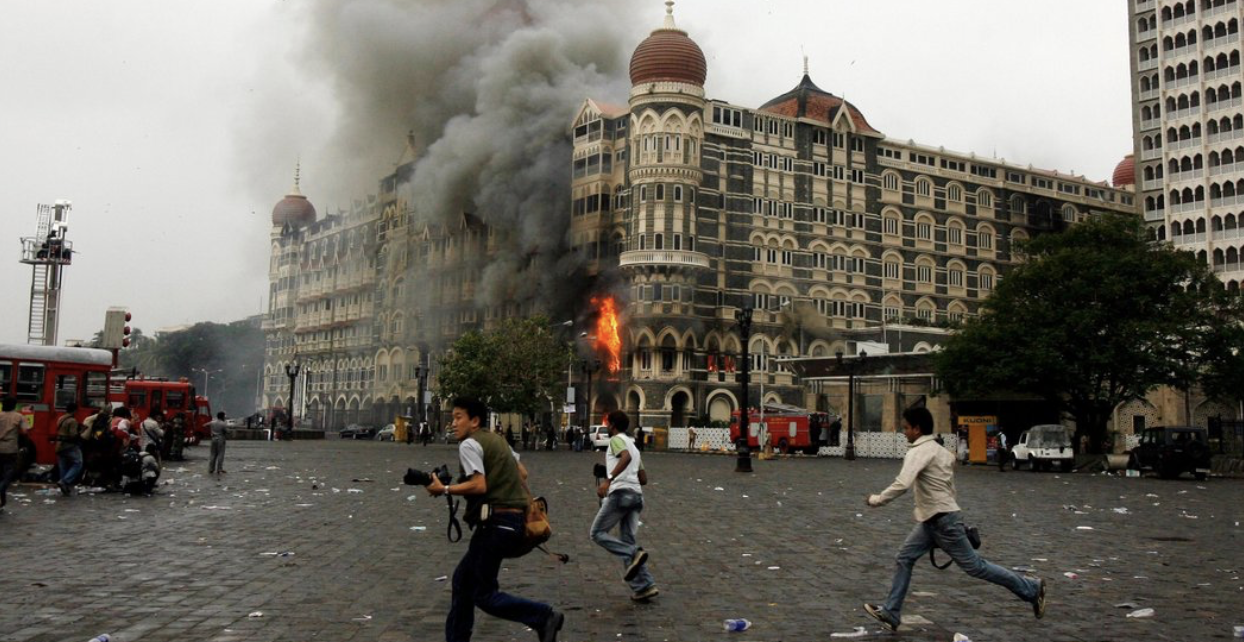
| 2008 | The 2008 Mumbai AttacksThe 2008 Mumbai attacks were a series of coordinated attacks carried out over the course of four days by a group of terrorists in India’s largest city, Mumbai. Ten gunmen associated with the militant group Lashkar-e-Taiba targeted specifically public locations, like hotels, railway stations, restaurants, and a Jewish community center. According to Encylopaedia Britannica the attacks resulted in over 160 deaths and hundreds of injuries to civilians. This resulted in mass widespread panic and international attention. The events were broadcast live, causing panic among populations and placing immense pressure on Indian authorities to respond quickly. This significance of this event for A Guardian and a Thief lies in how the novel reflects the atmosphere of fear, suspicious, and rapid judgement that follows acts of mass violence. In the aftermath of the Mumbai attacks, questions were raised on security, national identity, and blame. This directly lead to heightened suspicion towards marginalized communities. This dynamic is reflected in Majumdar's story, where a ‘terrorist attack’ on the rich millionairebecomes the catalyst for the wrongful generalization of Kolkata’s entire populace. This novel shows how fear can override careful investigation, just like that of the 2008 Mumbai attacks. Additionally, the attacks demonstrate how media coverage shapes public perception in almost every case. In both the real world and Majumdar’s narrative world, information spreads rapidly and awkwardly, influencing public opinion before facts are fully confirmed. Societies want security, results, and haste. Not uncertainty and a lingering since of fear- resulting in many grabbing at any information they are presented with and running with it, spreading the word no matter how dishonest it may be simply to sway their own sense of anxiety over the situation. This contributes to the story’s larger critique of systems of power, justice, and representation, where truth is secondary to urgency and narrative control. By understanding the 2008 Mumbai attacks, readers gain a deep insight into the environment that is created in the aftermath of a national-level threat. An unfortunate reality where violence, media, and political pressure intersect to shape how justice is pursued and how individuals end up being judged. People are so desperate for answers and a sense of security that they will do anything if it means they feel safer. Works Cited
D’souza, Shanthie Mariet. “Mumbai Terrorist Attacks of 2008 | Events, Death Toll, & Facts.” Encyclopædia Britannica, 2019, www.britannica.com/event/Mumbai-terrorist-attacks-of-2008.
Datta, Arko. “2008 Mumbai Attacks Plotter Says Pakistan’s Spy Agency Played a Role,” Https://Www.nytimes.com/2016/02/09/World/Asia/David-Headley-Mumbai-Attacks.html, 27 Nov. 2008.
|
Vera Peace |
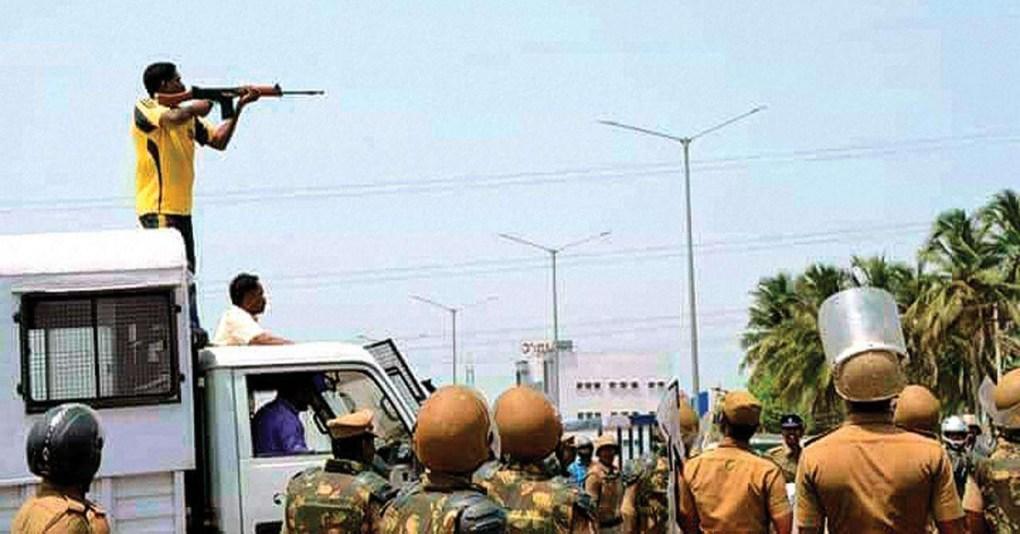
| 2018 | The Thoothukudi MassacreThe Thoothukudi Massacre occurred in the southern city of Thoothukudi (also known as Tuticorin) on May 22nd-23rd 2018. Locals had been expressing concerns about environmental and water pollution connected to a copper smelting plant. As protests intensified, thousands of unarmed civilians gathered to demand the plants closure. According to reports from Encylopaedia Britannica and major international news coverage, police responded with deadly force, using live ammunition to kill over 13 people and injure hundreds more. The incident sparked widespread outrage across India and raised serious questions about state violence and police brutality. The significance of this event for A Guardian and a Thief rests in its reflection of how state power is often exercised against vulnerable communities, particularly marginalized groups and those protesting inequality. In Majumdar'snovel, systems of authority always play a central role in shaping the lives of the populace, especially those with limited opportunities or resources. The Thoothukudi Massacre highlights how quickly peaceful protests can be met with overwhelming force, reinforcing the story’s theme of imbalance and entrenched systems of power. In the aftermath of the massacre, debated emerged over police accountability, government accountability, and medias representation of protesters. Similarly, Majumdar detailed how public perception and responses from those in power can influence the blame, ensures whose protected, or outright get rid of the case all together via coverups. By situating the story alongside real events like the Thoothukudi massacre, readers can better understand how Majumdar’s work engages with broader patterns of state authority, inequality, and the vulnerability of marginalized communities.
Works Cited
N, Neelanbaran. “Thoothukudi Massacre,” Https://Peoplesdispatch.org/2019/05/23/One-Year-of-Thoothukudi-Massacre/, 23 May 2019.
Saul. “Vedanta, and the Thoothukudi Massacre - London Mining Network.” London Mining Network, 25 June 2018, londonminingnetwork.org/2018/06/vedanta-and-the-thoothukudi-massacre/. Accessed 17 Apr. 2026.
|
Vera Peace |
| Spring 2026 | ENGL A396 runs spring 2026Global Women Writers runs as a course! |
Julie Wise |