
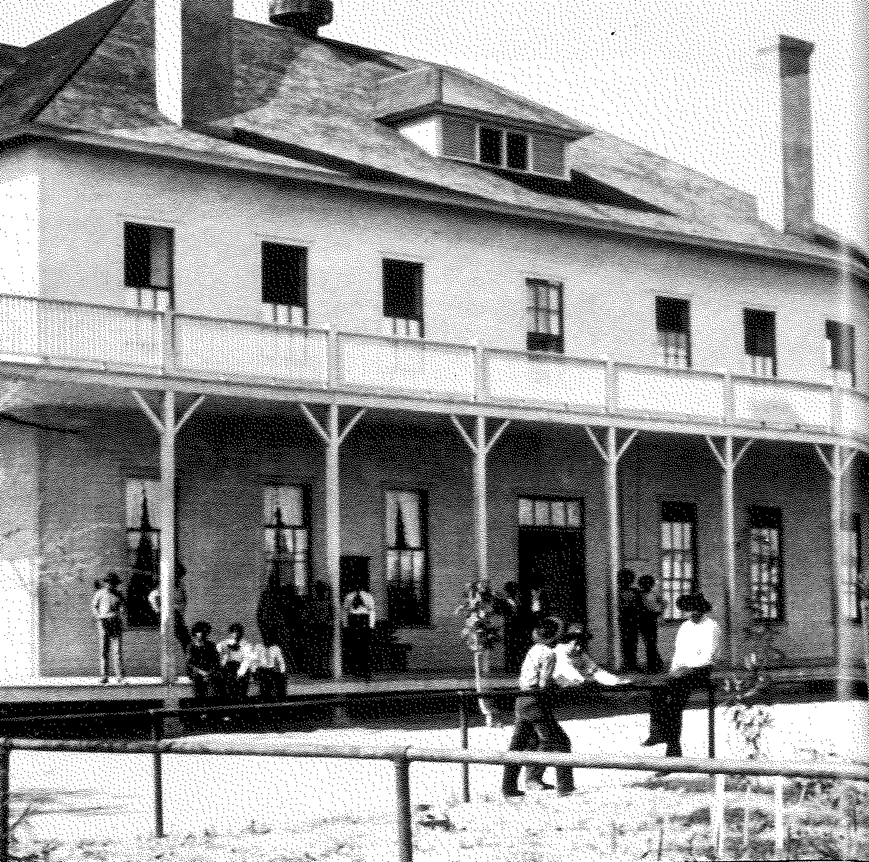
The Fort Mojave Indian School was founded in 1890 with the intention of assimilating young Mojave and Hualapai children with American culture. The school was established where the Fort Mojave Military Facility was previously located. The school's founding in 1890 is a major milestone in the history of assimilation. The school’s method of assimilating the young Mojave and Hualapai children included cutting the Native children’s hair; teaching them English, math, and geography; and instructing males and females on different things dependent on gender. For example, girls would be taught to cook or sew while boys would learn farming, carpentry, or blacksmithing. The impact of this would seem largely negative as these Indian boarding schools would begin to struggle with frequent runaways. The school would eventually close in 1931 following a long period of activists and reformist critiquing these Indian boarding schools, arguing that these schools alienated children from their culture and left them stranded between the American culture they were being forcibly taught and the culture they were born into, Mojave or Hualapai. Despite its closing, the Fort Mojave Indian school would have a long-lasting impact on the Mojave tribe. The Fort Mojave Indian school is important to the poet Natalie Diaz as it plays a massive role in the Mojave language’s endangerment. Natalie Diaz cites the endangerment of the Mojave language and the hardships that the Mojave tribe, which she is a member of, as a major inspiration in her writing. So, it is easy to draw a connection between assimilation and Natalie Diaz’s writing. Assimilation spanned a long period, making it difficult to point to a single event that caused the endangerment of the Mojave language as it was a series of events that led to the language being in the state it is today. However, if one was to point to an event, it would likely be the founding of the Fort Mojave Indian School.
Work Cited
Fort Mojave Indian School Records, 1890-1923. MS-00034. Special Collections and Archives, University Libraries, University of Nevada, Las Vegas. Las Vegas, Nevada.
The. “Friends of Avi Kwa Ame National Monument.” Friends of Avi Kwa Ame National Monument, 6 Nov. 2025, www.friendsofavikwaame.org/goldbeam/onlinefeatures/fort-mojave-indian-s….