
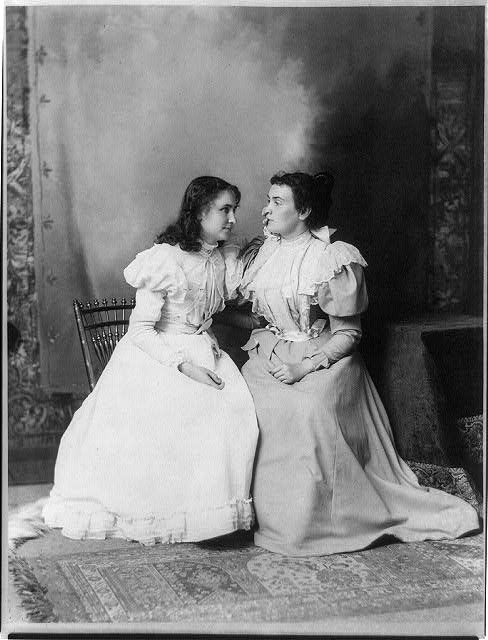
Both mental and physical disabilities in Victorian England are best characterized as being “highly visible, yet deeply misunderstood” (“Disability…”). Many disabilities were heavily stigmatized and medical/institutional treatments, such as asylums, became more and more frequent. Though many people with disabilities were characterized as this “other,” this era proved to be more progressive in righting societal wrongs. In 1886, despite its blunt name, The Idiots Act was passed, which allowed for specialized education and care for those with learning disabilities. Although the “othering” of people with disabilities created a stigma surrounding disability (one that still echoes today), its happening during the progressive Victorian era is likely what led to numerous advancements in disability rights and equality.
“Disability in Victorian England – Disability in Victorian Literature.” Uic.edu, 2026, rebekkabud.digital.uic.edu/?page_id=2.
"Helen Keller and Anne Sullivan - Victorian Era" by Notman is licensed under Public Domain
Historic England. “Disability History Glossary | Historic England.” Historicengland.org.uk, 2024, historicengland.org.uk/research/inclusive-heritage/disability-history/about-the-project/glossary/.