
By Caroline Pontiff
The Grand Tour was “the main form of leisure travel” in the early eighteenth century (Vaughan, 186). It served as the last part of a (usually British) nobleman’s education and generally lasted about two years (though some tours went on for several years). The tour typically made stops in France and Italy and ended in Rome or Venice. Other popular stops along the route included Paris, Naples, Florence, and Milan. Particularly of interest were places where landscapes and classical ruins could be observed; this was essentially the only way noblemen could view these scenes, as there were very few museums at this time, and the views in England were quite different from those in Italy. The noblemen who went on the Grand Tour were usually accompanied by their English tutors, along with other people, some of whom provided the gentlemen with an introduction to Anglo-Italian society and arranged various activities. The tour gave the noblemen an opportunity to meet and form relationships with other noblemen, diplomats, and politicians.
With the rise of the Grand Tour came the rise of the topographical artist, such as Francis Towne (1739/40–1816). Topographical artists created art that accurately portrayed the scene at hand; for Francis Towne, this scene was Roman ruins, and the medium was watercolor. Many topographical artists also gave lessons to the noblemen on the Grand Tour, encouraging them to paint what they saw and experienced on their trip. Naturally, travelers had a desire to collect pictures of the places they toured, which led to the rise of vedutes, which directly translated means views. The vedutes were very detailed paintings of specific views; Venice native Canaletto (1697–1768) was known for creating vedutes of his city.
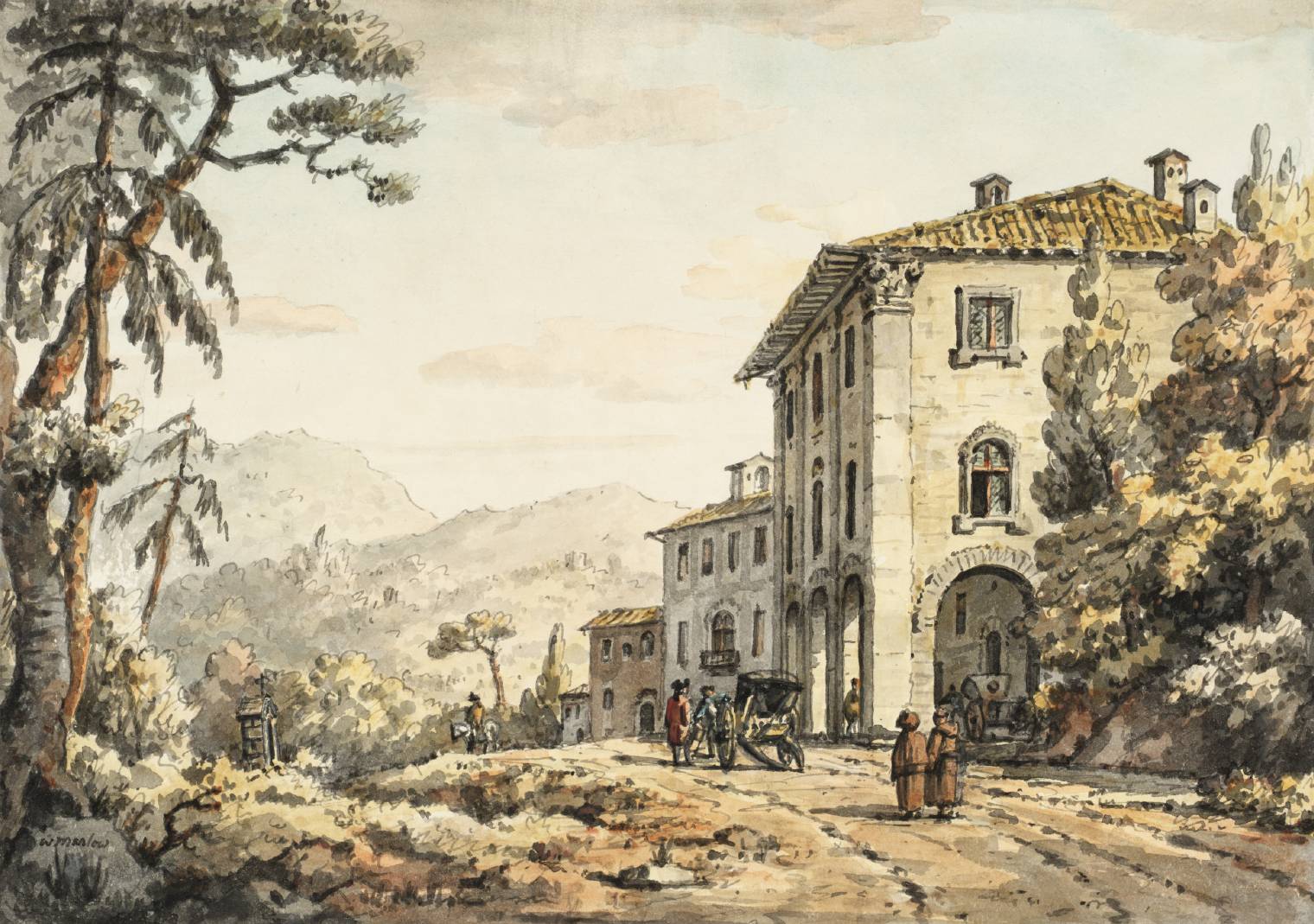
The attached watercolor painting is A Post-House Near Florence, painted by William Marlow in 1770. This is the kind of post-house that carriages would make stops at during the Grand Tour.