
This website is produced by the Roslin Institute, University of Edinburgh. This university did research that created the first cloned mammal, Dolly the sheep. The purpose of this website is to explain Dolly's creation, life, and the scientific evidence and importance of the evidence in an easy to swallow educational manner. I feel like the intended audience is students and maybe the general public because of the simple language and the definitions of the scientific terms used.
I think what stands out most to me is that the website shows how Dolly was a scientific breakthrough but, most importantly, still an animal. A real living animal. The article explained how Dolly was the first mammal cloned from an adult sheep cell, which was a scientific breakthrough in the understanding of a cell. Dolly's birth changed the minds of scientists because before this, they did not think that one single cell could create an entire living being. Even the lifestyle showed Dolly as a humane animal, instead of a scientific creation. Dolly had her own kids and lived with other sheep (not other cloned sheep like in Never Let Me Go).
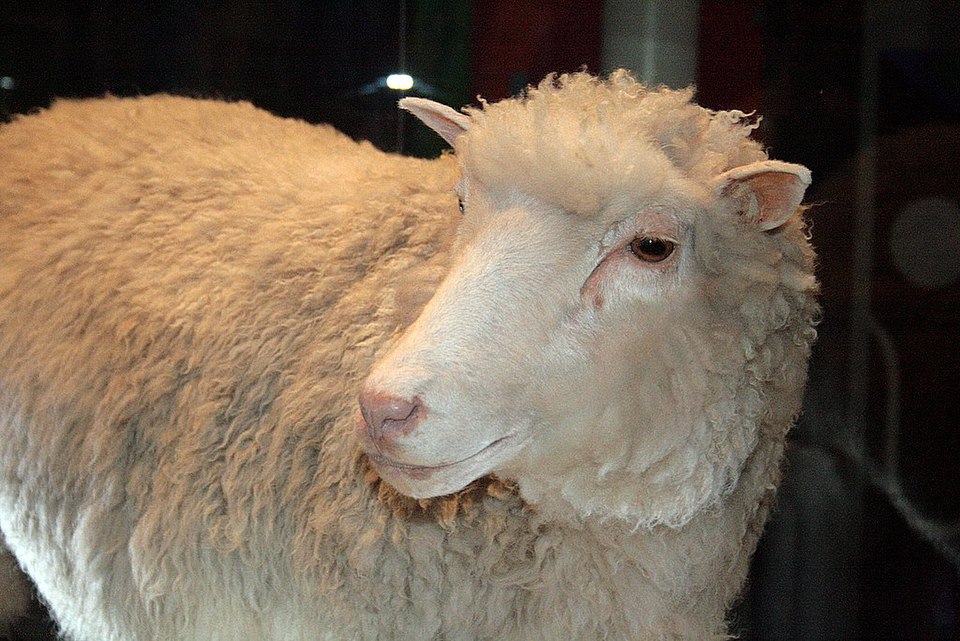
I thought it was very interesting that Dolly, even being a clone of identical genealogy, she looked different than her mother. Her mother had a black face, being a Scottish Blackface, whereas she had a white face. Side note, I also thought it was super cool that Dolly was named after Dolly Parton.
I would rate this website an 8 out of 10. I felt it was very easy to read and, with it being from the institute that made the study, very reliable.
“The Life of Dolly.” The Roslin Institute, University of Edinburgh, https://vet.ed.ac.uk/roslin/about/history/dolly/facts/life-of-dolly
The Taxidermy Mount of Dolly on Exhibit at the National Museum of Scotland in 2009 by Toni Barros is licensed under CC BY-SA 2.0.
