
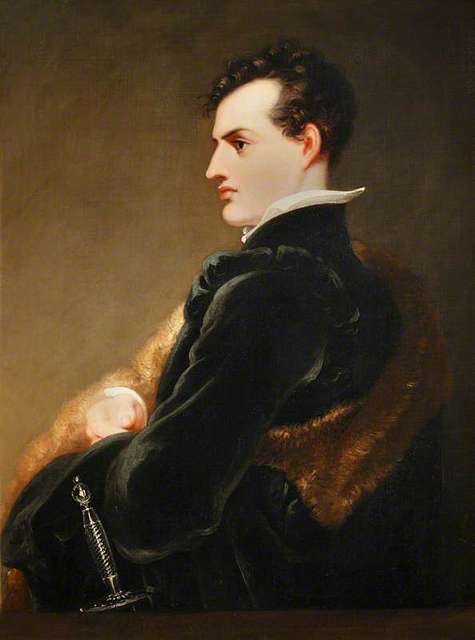
Author Alexander Larman brings to light how Byron interacted with many women, ultimately leading to a tarnished reputation. He notes that Byron’s attitude toward women tended to be “a mixture of contempt, violence and lordly dismissal” (Larman). Each of these women refused to take any of Byron’s impropriety; Caroline took revenge by writing a roman-a-clef (a novel with real people or events with altered names), a few women traveled the world as ‘free agents,’ and even his daughter ended up becoming very successful in mathematics and computer programming. These women prove that despite being torn down by a man, one can still find paths to success and personal fulfillment. Learning about how Byron has treated women, though I still enjoy reading his works, definitely makes me think less of him; it’s easy as readers to heroize authors, but as we are coming to learn, not all of them are saints.
Larman, Alexander. “Byron and His Women: Mad, Bad and Very Dangerous to Know.” Wordsworth Grasmere, 8 Sept. 2016, wordsworth.org.uk/blog/2016/09/08/byron-and-his-women-mad-bad-and-very-dangerous-to-know/.
"George Gordon (1788–1824), Lord Byron" by Richard Westall (1765–1836) is licensed under Public Domain, CC0