
It’s clear in her novel Frankenstein that author Mary Shelley wanted to call the readers’ attention toward racial issues and the role that race plays in society. Shelley, like her parents, was involved in both the political and academic spheres. She and her husband Percy came to oppose slavery and greatly detest Britain’s involvement in the slave trade. In fact, neither of them took sugar in their tea as a symbol of personal revolts against the slave trade. Though he’s made out of human parts, the creature in Shelley’s novel is detested by everyone he comes across and is made this “other” just because he is somehow different from everyone else. Her coding of the creature and him being socially outcast because of his appearance doesn’t seem like a coincidence giving the rise in calls for abolition at this time. Not only does being deemed an “other” create prejudices, but it’s evident in Frankenstein that it can also be very isolating.
Bird. “Frankenstein’s Monster: Telling of Race and Otherness.” Medium, 2 Feb. 2021, fig-whittler.medium.com/frankensteins-monster-telling-of-race-and-otherness-3e72fcbf2e61.
Martyris, Nina. “How Percy Shelley Stirred His Politics into His Teacup.” NPR, 4 Aug. 2015, www.npr.org/sections/thesalt/2015/08/04/429363868/how-percy-shelley-sti….
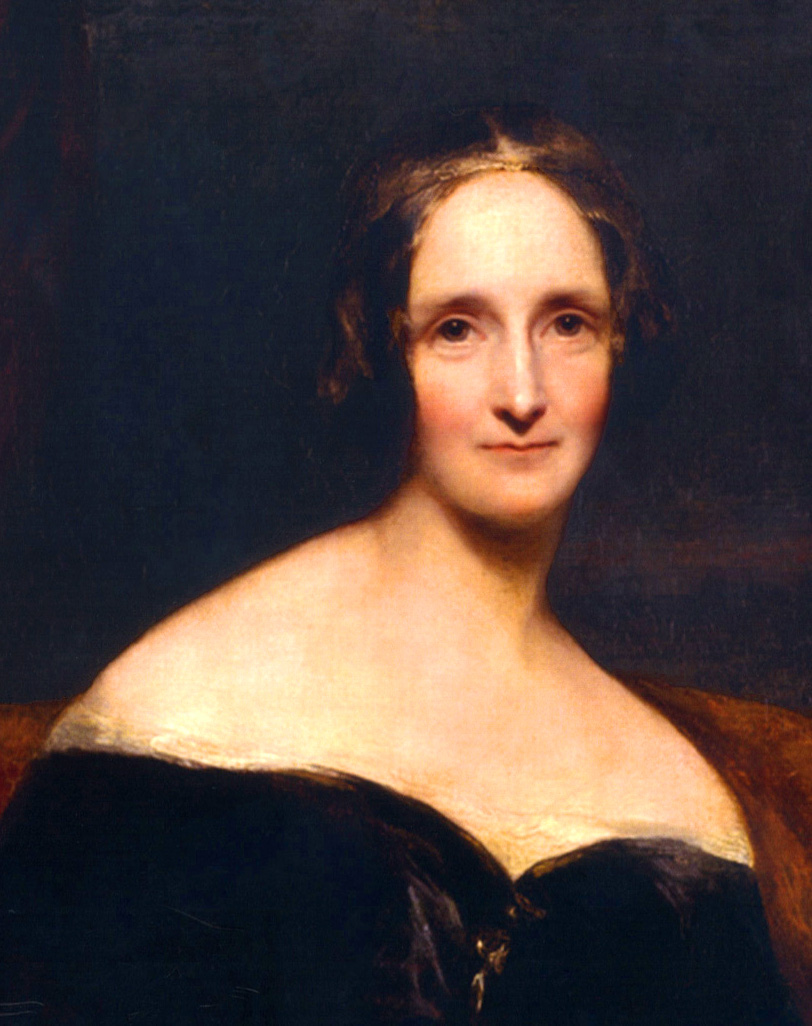
"Mary Wollstonecraft Shelley" by Richard Rothwell is licensed under CC BY-SA
