
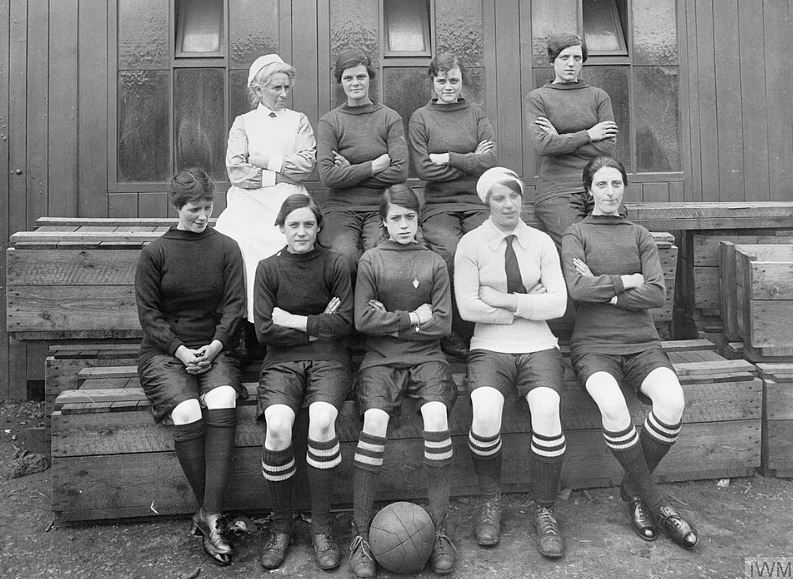
The munitionettes made the bullets, explosives, and various artillery, all while the men were abroad fighting in the war. Contrary to Sassoon’s passive interpretation of women’s role in the war, they were vital in supplying the men with the resources required to be successful in the engagement. The work load was strenuous and the women were often subject to harsh factory conditions (200+ women died from factory explosions while making munitions), which is ultimately what led them to taking on football as a pastime. During the wartime, according to London Museum, the women were encouraged to participate in this team-oriented recreational activity in order to boost morale. Not only were these women subject to deadly working conditions, but they were losing brothers, fathers, and friends to wartime casualties every day. Popularity for the sport skyrocketed as there were over 150 teams by 1921 (London Museum). However, once the men returned home from the war, public attitudes quickly returned to pre-war viewpoints, suggesting that football was a threat to women’s health. They were then required to give up their factory jobs and their pastime, taking on more domestic roles again such as retail.
““Munitionettes” & Women’s Football in the First World War.” London Museum, 2025, www.londonmuseum.org.uk/collections/london-stories/munitionettes-womens….
"The Women Work in the War Industry, 1914-1918" by British official photographer is licensed under Public Domain
