
By Caroline Pontiff
The English middle class could not afford to travel for two years like the noblemen who went on the Grand Tour, so instead they took a “picturesque tour,” which only lasted a few weeks. The ability of the middle class to vacation for that length of time was relatively new and was due to the growth of trade in the late eighteenth century. For the majority of the time that Britain was at war with France (1793–1815), the picturesque tour completely replaced the Grand Tour because of the closed borders on the Continent. Just as those on the Grand Tour created art from their experiences, so too did those who took picturesque tours. The increased travel of the British throughout Britain led to the rise of travel guides, published by local authors. The most famous of these authors was Reverend William Gilpin (1724–1804), who designed travel guides to help tourists experience the full effect of a view by guiding them on where to situate themselves within specific scenes. Gilpin also had several criteria for what could be considered “picturesque.” Literally, picturesque means “like a picture,” and the picturesque approach presented a method to viewing and painting landscapes (as opposed to land).
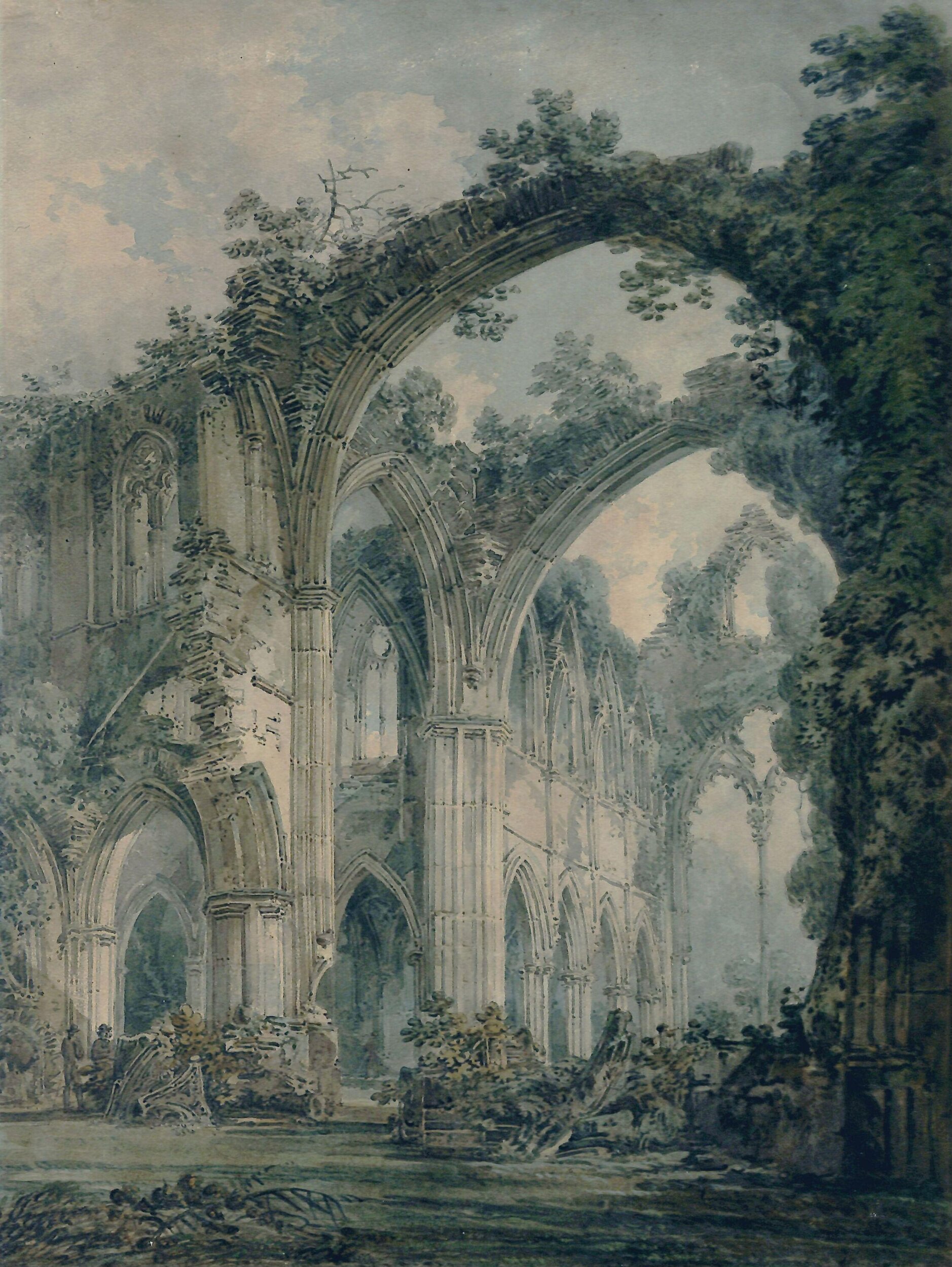
To Gilpin, a piece of art is picturesque if the background is smooth and the foreground is varied. This variation can include contrasting shapes, colors, etc., an abundance of figures (human or animal), and variations in the landscape itself (bodies of water, ruins, etc.). Additionally, Gilpin recommends that picturesque painters strive to create images that are not merely a direct replica of the view; the painters must perfect the images and leave out anything unsightly. Viewpoint is also important for creating picturesque images, as he states in Observations on River Wye. He argues that if the viewer is too far away from the scene, they will not be able to see the various details that make it picturesque, such as textures and shadows (Gilpin, 32). Gilpin also believes that even something manmade can be picturesque, such as ironworks. Of course, those ironworks must meet certain standards; they must be a “continuation” of the beauty of the landscape with “elegant lines” (37). Furthermore, a building must be designed in a way that suits the surrounding landscape, and vice versa. As Gilpin says, “The abbey, intended for meditation, is hid in the sequestered vale” (31).
The attached watercolor painting is the Interior of Tintern Abbey, Monmouthshire, painted by JMW Turner in 1794. Tintern Abbey was an important destination in picturesque travel.