
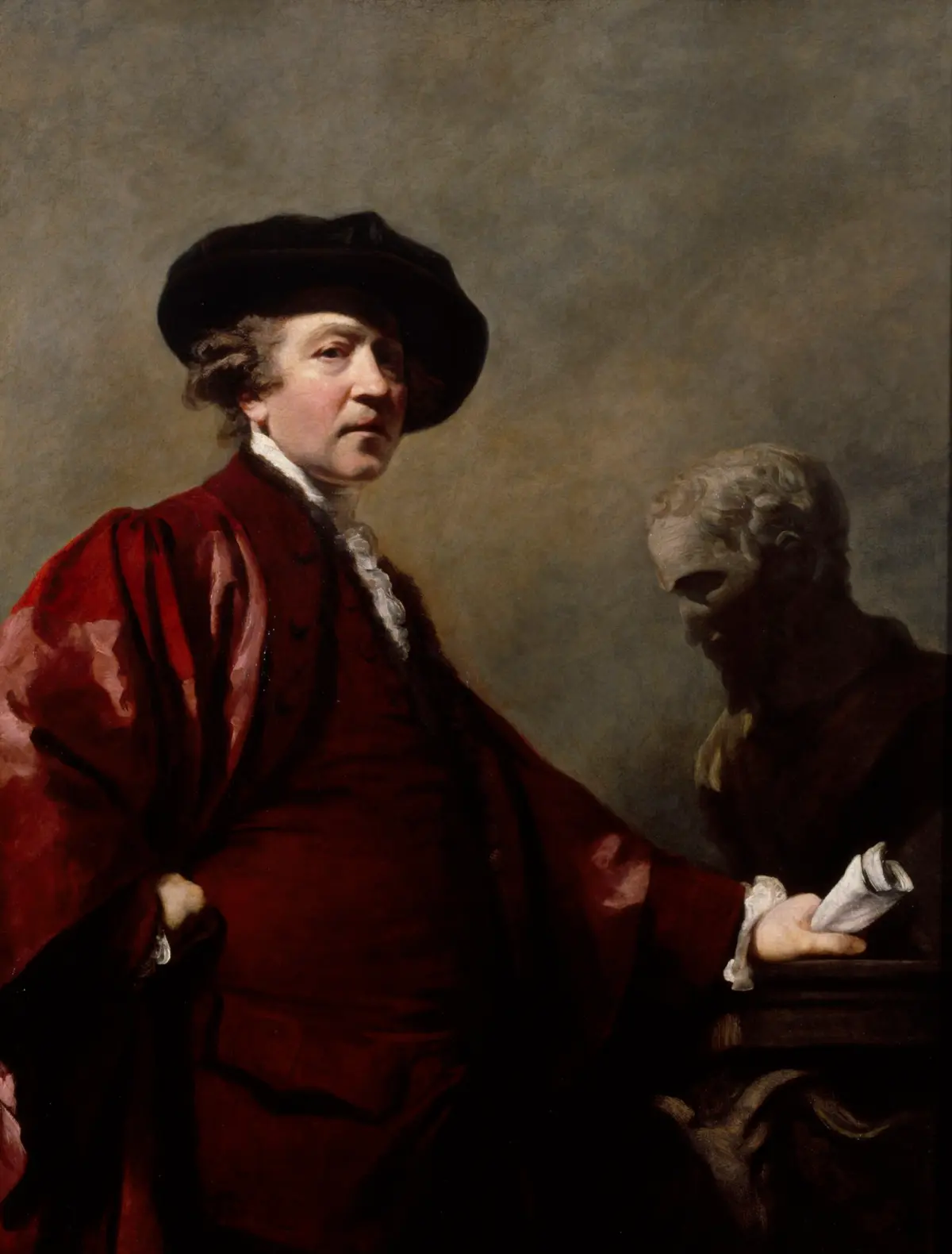
By Maggie Tregre
Addressed to members of the Royal Academy, Reynolds’ Third Discourse focuses on his ideas about what an artist should aspire to do. One of his main beliefs was that someone who is “more advanced in the art” should understand that simply copying what is in front of them is not enough to “warm the heart of the spectator” (Reynolds 52). In other words, it was not enough for the artist to make an exact copy of whatever they are painting. They needed to add something that was not there in order to achieve the Grand Style. Reynolds believed that true artistic value lies in the artist's ability to transcend mere representation by including elements that evoke deeper emotional or intellectual responses. While he believed that “lowly” art forms did require skill, he shows a bias towards those who are able to achieve this more advanced art style. Additionally, to achieve this, an artist needed to use their imagination with nature as the foundation for their work, but not the model to be precisely copied. In his own 1780 self-portrait, Reynolds almost satirizes this idea by creating a portrait of himself (seemingly a “lowly art,” since it requires the painter to create an exact likeness of the subject). However, he embellishes the portrait with elements of Rembrant’s style and a bust of Michelangelo to assert his superior artistic talent and legacy. A study of Reynolds’ own portraits raises interesting questions about this style - is Reynolds’ portrayal of himself a more advanced art, or is he just indulging himself?