
By Kimber Peters
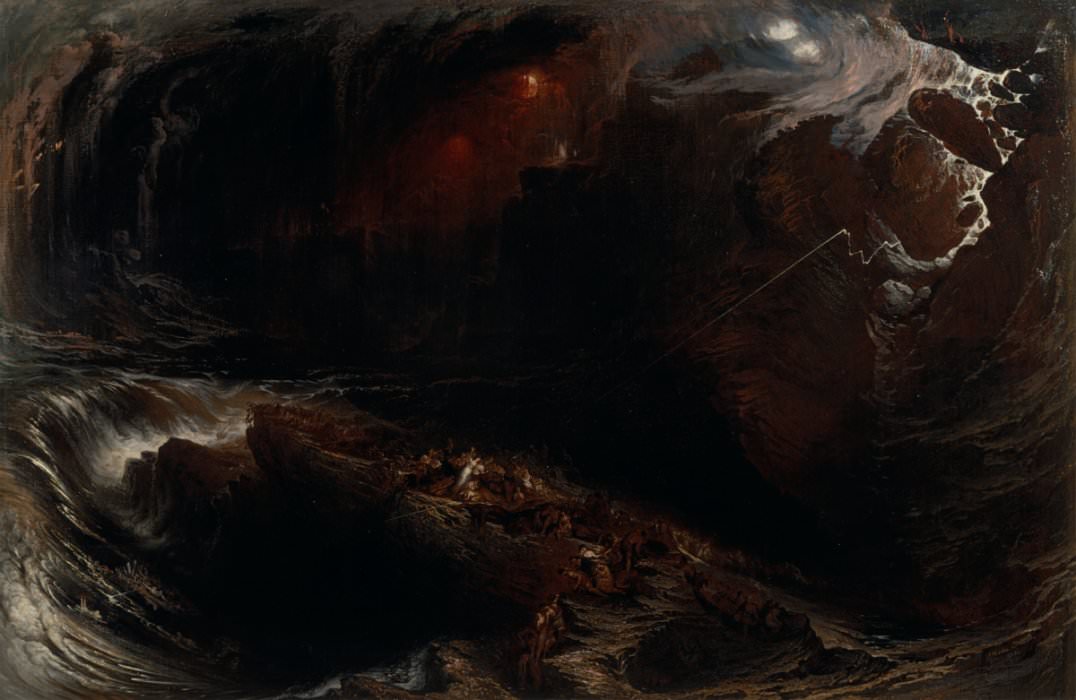
In A Philosophical Enquiry into the Origin of Our Ideas of the Sublime and Beautiful, Burke specifies different categories of the sublime. In describing the category of obscurity, Burke explains that “when we know the full extent of any danger…a great deal of the apprehension vanishes” (59) and that darkness or obscurity is necessary for making something feel very dreadful (59). An example of obscurity can be seen in John Martin’s painting, The Deluge. An initial look at the painting leaves the viewer feeling confused and disoriented. The dark colors of the painting do not aid in orienting the viewer, rather they consume the sight, causing an initial state of uncertainty. This vast, overwhelming darkness complicates the viewing experience and sparks an initial sense of terror that Burke may describe as “dark, uncertain…terrible and sublime” (60). However, to truly be sublime, The Deluge must also spark a sense of delight within its viewer. Martin accomplishes this by utilizing light to highlight the center of the painting where humans can be seen, huddled together on a ledge. This gives viewers something to help orient themselves within the painting; this can be considered the point at which most apprehension disappears. Once this occurs, viewers can appreciate the bigger picture and experience the sublime.