
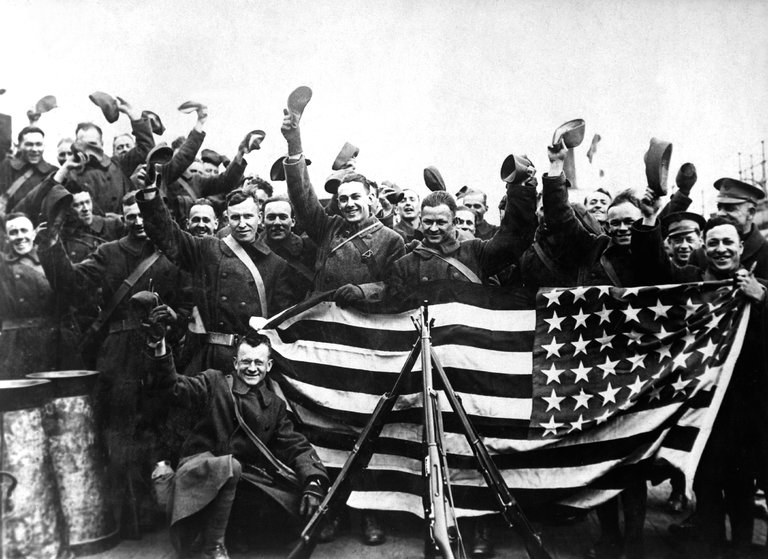
As the Great War ended, all those young men, having witnessed unimaginable horrors, were thrust back into civilian life. Among the trauma from witnessing such horrors, such as "Shellshock" (to be later diagnosed as PTSD), was Survivor's Guilt, the guilt of one man who survived while others did not. For men who spent time in those trenches with only their brothers next to them for support, watching them die while they returned home placed a great weight on the minds of many.
Any soldier who has seen combat and returned alive likely has some degree of this guilt. Any speaker in these poems writing about death and the horrors of combat can be seen through this lens. The simple, seemingly random fact that one man is alive while another dies is a brutally poignant picture of the human condition. The sentiment is not exclusive to WWI; this situation, where one man dies while another lives, can take place anywhere at any time, which is why I think it is a very valuable phenomenon to research and understand. Even if, as is most likely the case, the survivor holds no physical responsibility for the deaths of others, that inherent helplessness and desire for things to go differently is a tragic aspect of the human psyche that speaks to the bonds we form with one another.
Hale, Mike. “Review: “the Great War,” When America Took the World Stage.” The New York Times, 9 Apr. 2017, www.nytimes.com/2017/04/09/arts/television/review-the-great-war-when-am….
Sherman, Nancy. “The Moral Logic of Survivor Guilt.” New York Times, 3 July 2011, archive.nytimes.com/opinionator.blogs.nytimes.com/2011/07/03/war-and-the-moral-logic-of-survivor-guilt/.