
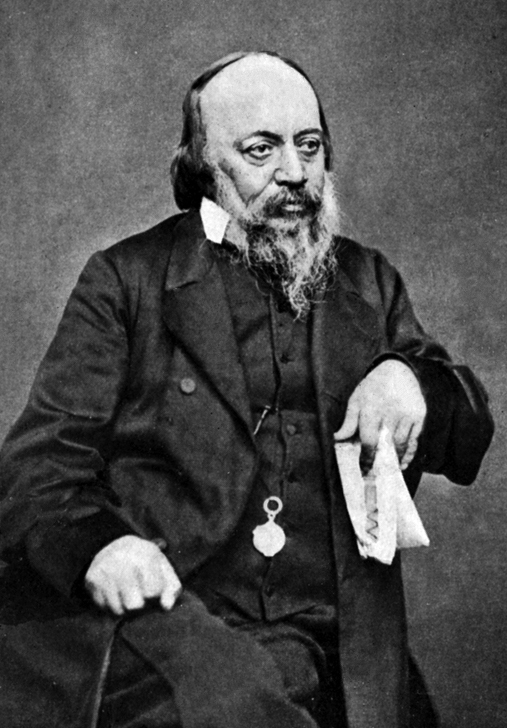
In response to the “Captain Swing” riots—a failed attempt by agricultural workers to protect their jobs—the royal government commissioned an inquiry into what are now known as the Old Poor Laws. Among those who executed the inquiry was assistant commissioner Edwin Chadwick, who was secretary to the commission and helped to compile the information. Chadwick, an editor by trade, was for a deterrent workhouse and a stricter distribution of aid to the poor.
The data collected in the commission’s inquiry was vastly skewed due to the fact that they only visited or sent out surveys to a third of the parish workhouses in the surrounding area. Additionally, only 10% of the parishes responded to the surveys (which contained confusing and sometimes unintelligible questions).
According to victorianweb.org’s Dr. Bloy, the result was a heavily biased report filled with the following moral judgments:
- paupers claimed relief regardless of their merits
- large families received the most relief, therefore improvident marriages were encouraged and this led to larger families
- women were able to claim relief for their illegitimate children, so the system encouraged immorality
- labourers had no incentive to work hard and be thrifty, when worthless idlers got more relief than could be earned by honest hard work
- employers kept wages deliberately low
- paupers had no respect for an employer when they knew that their wages would be supplemented by the parish
- men were discouraged from providing for their families and aged parents because they could 'be put on the rates'
(The 1832 Royal Commission of Inquiry)
This report is what brought on the New Poor Laws that affect the world of Oliver Twist, where the common belief is that the poor deserve their struggles because they are intentionally draining the system. It is difficult to pinpoint specific instances of when this mentality affects Oliver in the story because it is a running theme throughout the work. However, this way of thinking is easily spotted in the instances in which is combatted, such as when Rose defends Oliver by asserting that his thievery is no fault of his own, but a product of his circumstance, which she believes deserves pity and charity rather than punishment (Chapter XXX).
Works Cited:
Bloy, Marjie. Edwin Chadwick, 2020, www.victorianweb.org/history/chad1.html. Accessed 18 Feb 2021.
Bloy, Marjorie. “The Peel Web.” The 1832 Commission of Enquiry into the Operation of the Poor Laws, 2016, www.historyhome.co.uk/peel/poorlaw/plcommis.htm. Accessed 18 Feb 2021.
Bloy, Marjie. The 1832 Royal Commission of Inquiry into the Operation of the Poor Laws, 2002, www.victorianweb.org/history/poorlaw/royalcom.html. Accessed 18 Feb 2021.
Dickens, Charles. “Chapter XXX.” Oliver Twist, Project Gutenberg, 2020. http://www.gutenberg.org/files/730/730-h/730-h.htm. Accessed 18 Feb 2021.
Higginbotham, Peter. The Old Poor Law, www.workhouses.org.uk/poorlaws/oldpoorlaw.shtml#Farming. Accessed 18 Feb 2021.
Photograph of Sir Edwin Chadwick. Circa 1860. https://commons.wikimedia.org/wiki/File:Sir_Edwin_Chadwick2.jpg. Accessed 18 Feb 2021.

“Poor Law.” UK Parliament, 2021, www.parliament.uk/about/living-heritage/transformingsociety/livinglearn…)%20collecting%20information. Accessed 18 Feb 2021.