
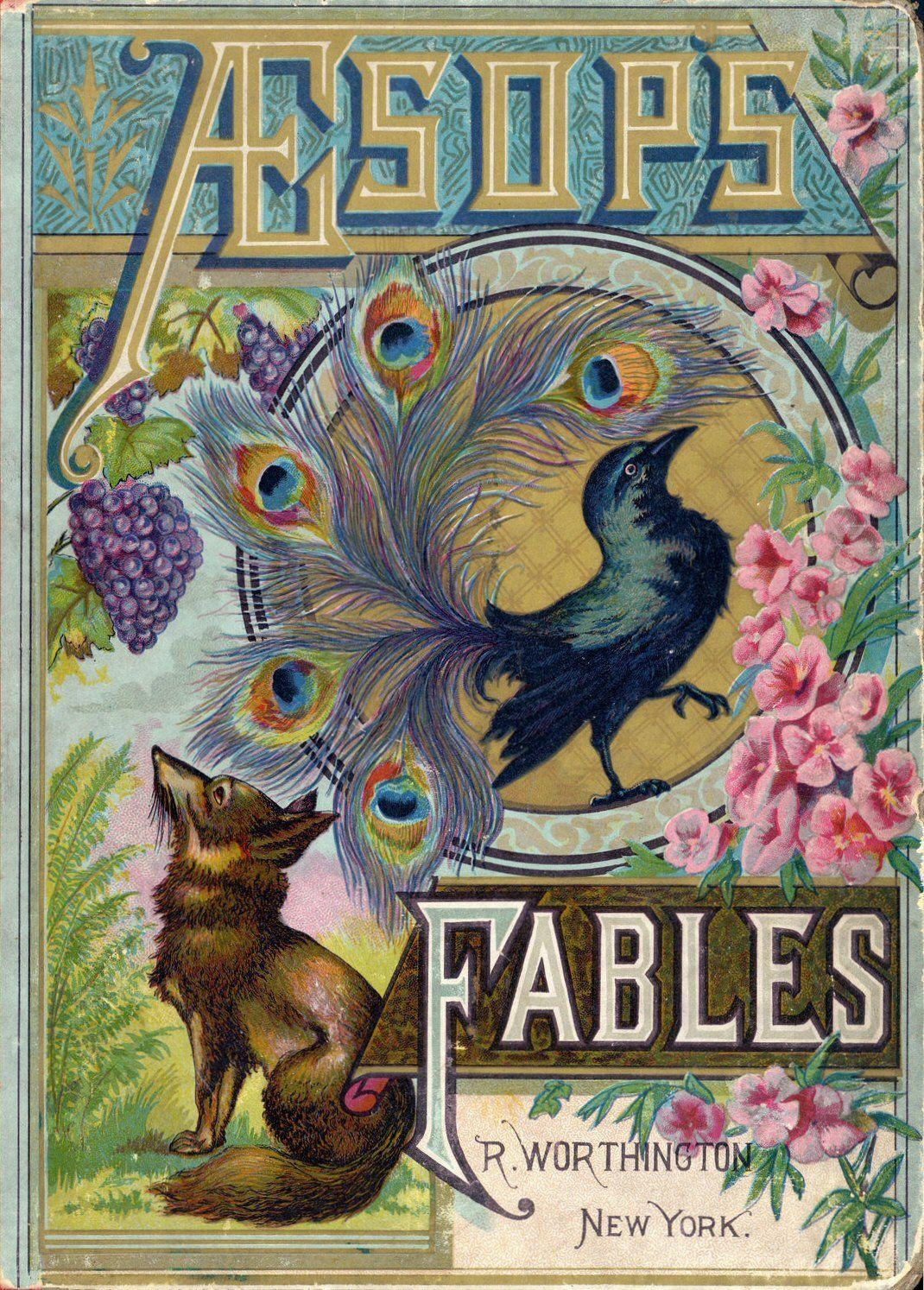
Aesop’s Fables are a collection of morality tales, where allegories using animals like frogs, hares, and foxes are told to portray a certain moral lesson upon the audience. The fables were originally transcribed by a former Greek slave in the mid to late 6th century BCE, but the stories were originally passed down in an oral tradition. Scholars believe Aesop’s Fables may have changed from when they were originally told but this particular collection has survived the many centuries following. Aesop is not credited as the author of the fable genre, as ancient Sumerian proverbs have a similar style to the fables. The original audience for the fables was children and occasionally slaves, as the Greeks would use the simple structure and rhetoric to instruct the children on reading skills and impart moral lessons at the same time.
In Mill’s autobiography, he mentions Aesop’s Fables as the first Greek book he read after learning Greek at the age of three. His mention of Aesop’s Fables introduces several observations. One, Mill’s father was extremely rigorous in pursuing Mill’s education from a young age, so it follows that he would introduce Greek in the most basic instructional way and in the manner that young Greek boys would have learned. Additionally, there is a level of irony that Mill is documenting his childhood, but the only exposure to normal childhood things, like interacting with other boys his age or reading children’s literature, is through Aesop. Because Mill lacks the typical socialization and development which accompanies childhood, he romanticizes the heroic figures of Greek and Roman history in the same way we might expect a child to idolize superheroes. The fables symbolize Mill’s untraditional childhood which he does not even recognize the absence of childhood until much later in life.
Sources:
Clayton, Edward. “Aesop's Fables.” Internet Encyclopedia of Philosophy, iep.utm.edu/aesop/.
Horgan, John. “Aesop's Fables.” Ancient History Encyclopedia, Ancient History Encyclopedia, 8 Mar. 2014, www.ancient.eu/article/664/aesops-fables/.