
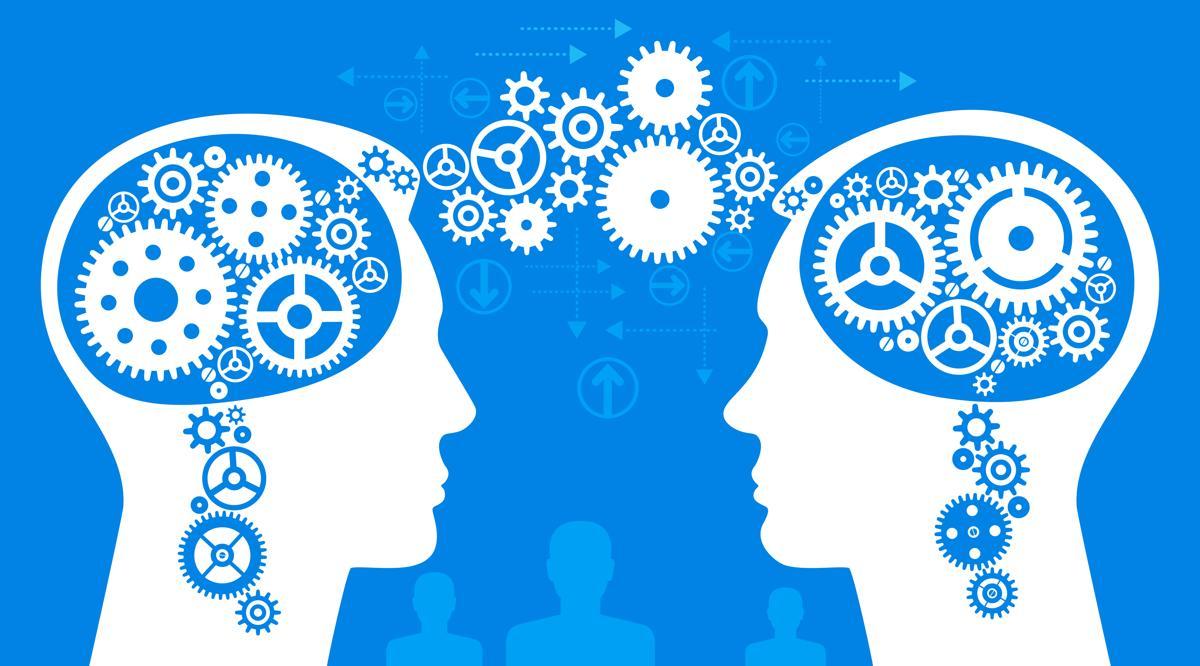
Associationism is a psychological theory that “connects learning to thought based on principles of the organism’s causal history.” In other words, the Theory of Association claims that all humans are born as “blank slates” and their knowledge only develops through the accumulation of chains of associations. This means that pairs of thought (i.e. “chains”) become associated with a person’s past experiences. For example, the amount of times if a person sees X’s and Y’s in a certain environment, will govern how often that person thinks about X’s and Y’s together as opposed to separate entities. Associationism was a way of thought accepted my many notable psychologists, philosophers, and academics alike such as David Hume, James Mill, and John Stuart Mill himself.
Associationism is readily present within Mill’s Autobiography; he cites his early education as being driven by the Theory of Associationism as his father, James Mill, was a strong believer in it. Mill later criticized this rather narrow thinking during a mental crisis depicted in Chapter V in his Autobiography. He criticisms are elucidated in the following excerpt taken from page 76:
“My course of study had led me to believe that all mental and moral feelings and qualities, good or bad, were the results of association; that we love one thing and hate another, take pleasure in one sort of action or contemplation and pain in another sort, through the clinging of pleasurable or painful ideas to those things, from the effect of education or of experience. As a consequence of this I had always heard it maintained by my father, and was myself convinced, that the aim of education should be to form the strongest possible salutary associations—of pleasure with all things beneficial to the great whole, and of pain with all things hurtful to it. This doctrine appeared to be unconquerable; but looking back it now seemed to me that my teachers’ views about how to form and maintain these salutary associations had been superficial.”
This passage is very revealing, for Mill begins to turn on the theory he had spent the whole of his life until that moment whole-heartedly believing. Hence why this is a period of Mental Crisis for him, as the title of Chapter V (“Crisis in My Mental History”) of his book suggests. Later in the text Mill returns to the theory of association with acceptance, albeit keeping in mind a broader scope of things than he had before his mental crisis. All in all, associationism plays a major role in Mill’s Autobiography.
Sources:
Mandelbaum, Eric. “Associationist Theories of Thought.” Stanford Encyclopedia of Philosophy. Stanford University, June 24, 2020. https://plato.stanford.edu/entries/associationist-thought/#WhaAss.
“Associationsim.” American Psychological Association. American Psychological Association. Accessed February 28, 2021. https://dictionary.apa.org/associationism.