


Introduction
For hundreds of years, beauty has been a large theme across famous literary and art pieces. It has been interpreted in numerous ways, focusing on the one word that can be deemed as very vague, while working to understand its depth in complex ways. The word beauty has never been static, its countless definitions and qualifications make it a flexible and ever-changing word. There seems to be a universal understanding that beauty does not have one meaning, but instead can be interpreted differently over many cultures, time periods, and societies. Studying the way that this one word has been interpreted has always been a favorite topic/theme of mine which is why I choose to study a Modernist piece by H.D. The opening lines, “Rose, harsh rose/marred and with a stint of petals,” from “Sea Rose,” by H.D., are a strong pull towards the conversation of beauty and the constantly differing definitions, opening the conversation to what makes something beautiful, in a strong and independent manner.
Through this four-piece gallery, the theme of what makes something beautiful will be explored and understood. The concept of beauty standards will be discussed with a look into a portrait painting and the delicate details behind the brush. Challenging that, and also fighting the struggle of finding beauty in what others may not be seen as beautiful will be looked into through a conversation of photographs of war. Overall, the complex concept of understanding beauty through different forms of metaphors and figurative writing will be seen through the Imagist movement and looking at another poem by H.D. and others from the category. ``Critics claim that Sea Rose “immediately reveals to the reader the necessity to look through the image to read that eternal condition.,” the eternal condition relating to beauty in its everlasting and strongest form (Gregory). The gallery is meant to challenge the thoughts on what makes someone or something beautiful, all while trying to understand the meaning(s) behind the word and where it stands in connection to literature.
Works Cited
Gregory, Eileen, et al. “Rose Cut in Rock: Sappho and H. D.’s ‘Sea Garden.’” Contemporary Literature, vol. 27, no. 4, [Board of Regents of the University of Wisconsin System, University of Wisconsin Press], 1986, pp. 525–52, https://doi.org/10.2307/1208494
H.D. “Sea Rose.” Cove, COVE Collective, 1916, https://studio.covecollective.org/anthologies/engl-2101-01-british-lite…;
Images-
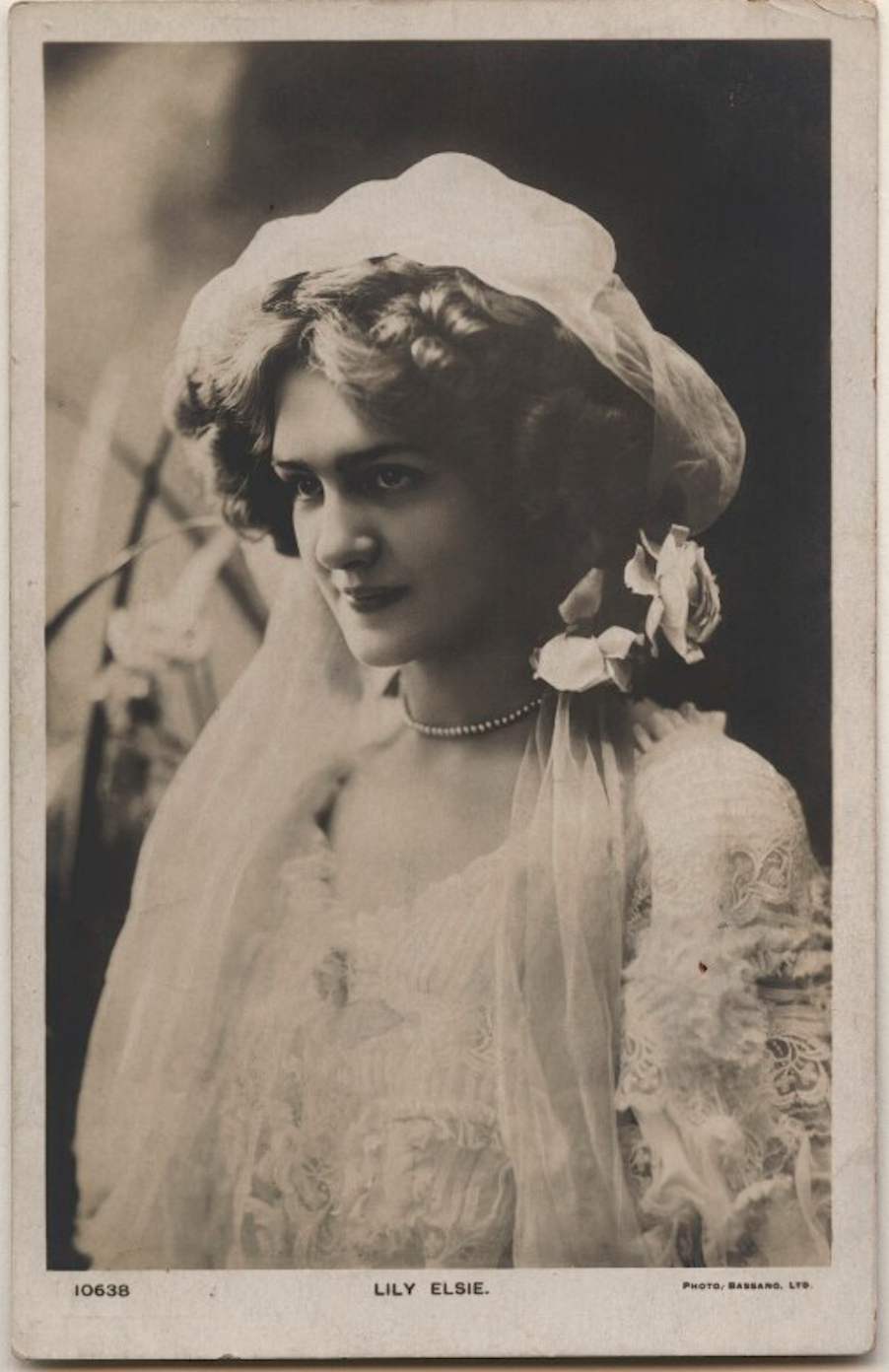
Figure 1- Ltd, Bassano. “Lily Elsie.” National Portrait Gallery, National Portrait Gallery, London, 1900's, https://www.npg.org.uk/collections/search/use-this-image/?mkey=mw247266.
This early 1900’s portrait of Lily Elsie seemed to be the perfect description of true beauty, through the image and the underlying message. Lily Elsie was a famous British actress and singer who encompasses the definition of beauty during her time. The photograph shows her posed and perfect, ready to be captured. From pearl necklaces to the tightly wound curls show the importance of tiny details within beauty. She shows the delicate and exquisite side of the female presence, which can compare to the elegant and graceful description of a perfect rose. She is displaying the beautiful standard rose described by H.D. She is seen as the top goal to meet, the level of beauty that is wanted by all, just as the rose is the form of flower wanting to be attained. She is what the rough and struggling rose, or woman, is compared to. The portrait shows a beautiful woman posed and perfected, just as society views a rose, a simply charming flower with no imperfections underneath.
Figure 2- Lewis, George P. “File:The Employment of Women in Britain, 1914-1918 Q28172.jpg.” Wikimedia Commons, 1917, https://commons.wikimedia.org/wiki/File:The_Employment_of_Women_in_Brit….

The three females pictured here could be seen as the Sea Rose. This can be seen when looking at the poem with background knowledge on the year of publication (1916) and what was happening at the time (World War 1 1914-1918). The rose H.D. is describing has been through hardships. It has not had the usual easy life of a rose, sitting pretty and perfect, but instead has experienced the hits of life and the waves of the ocean, both literally and figuratively. The women in this image can be seen the same way. They did not get to sit back and be the pretty faces of the war, but instead were given many tasks and jobs behind the scenes, while still feeling the full force of the impact of the war. “You are caught in the drift..” “You are flung on the sand…” can easily relate to having to do the dirty jobs of the war, the ones that needed to be completed, but not wanted. The sea rose has not had it easy, just as these women have been tasked with the heavy lifting and the responsibilities of keeping the war moving forward from the homelands of Britain.
Figure 3- Lowell, Amy. “A Lady by Amy Lowell - Poems | Academy of American Poets.” Poets.org, Academy of American Poets, https://poets.org/poem/lady.
“Sea Rose,” by H.D. is classified not only as a modernist poem but also is within the imagist poem family. Defined by poets.org, an imagist poem will “emphasize simplicity, clarity of expression, and precision through the use of exacting visual images.” “Sea Rose” does so with the vivid and detailed imagery used to describe the hidden beauty of the rose, or the hidden beauty in women. To get a closer understanding of what qualifies a poem as an Imagist poem, I took a look at Amy Lowell’s “A Lady,” another piece displaying the theme of beauty and the standards through detailed metaphors and imagery. While the two poems are talking about beauty in different ways, “Sea Rose” with not being the perfect image, and “A Lady” with growing old, they serve as a great comparison when looking at language. Looking at the lines “Like an old opera tune” and “Or like the sun-flooded silks / Of an eighteenth-century boudoir” we see the striking comparison the voice of the poem is trying to convey. This lady may be older and not seen as much, but in reality, she still has her charm, just an old opera song or old silk does. The “Sea Rose” may not look the same as the standard flower, but it still has beauty and strength below the surface.
Extra Quotation-
A Brief Guide to Imagism | Academy of American Poets. Poets.org, Academy of American Poets, 4 September 2017, https://poets.org/text/brief-guide-imagism.
Figure 4- H.D. “The Project Gutenberg eBook of Sea Garden, by HD.” Project Gutenberg, 1916, https://www.gutenberg.org/files/28665/28665-h/28665-h.htm#Page_12.
“Sea Rose'' is part of a collection of poems written by H.D. all following the common theme of standards and being seen as outside of the box. To better understand the poem and the message that is trying to be shared, it felt only right to include another piece from the series. The poem also follows a storyline of a flower resembling beauty, going through situations that make it seem less than appealing. Then going through the journey to officially be identified as beautiful, to finally get recognition for being captivating, but not within the standards. “Slashed and torn/but doubly rich,” speaks upon the torment and struggles this Lily has faced, which can be interpreted to whoever or whatever the reader views. Hurt and damaged, but still powerful. “Doubly rich,” touches upon being just as, or even more so, beautiful than that of a normal flower. The comparisons continue, just as they do within “Sea Rose,” creating a vivid image of standards and what it means to not fit into them.