

Sweets play a major role in Bengali culture and tradition, from festivals and weddings to general hospitality and greeting guests. The prominence of sweets in Bengali culture can be traced all the way back to ancient times when Bengal was known as “Gauda Banga,” a name that likely originated from the molasses that they harvested in the region. Since then, Bengal has lived up to its ancient name by producing such a vast array of mouth watering sweets that some even argue that “there are probably as many varieties in desserts as preparations in vegetarian food” (“Satiating Sweet Tooth, The Bong Way” 1).
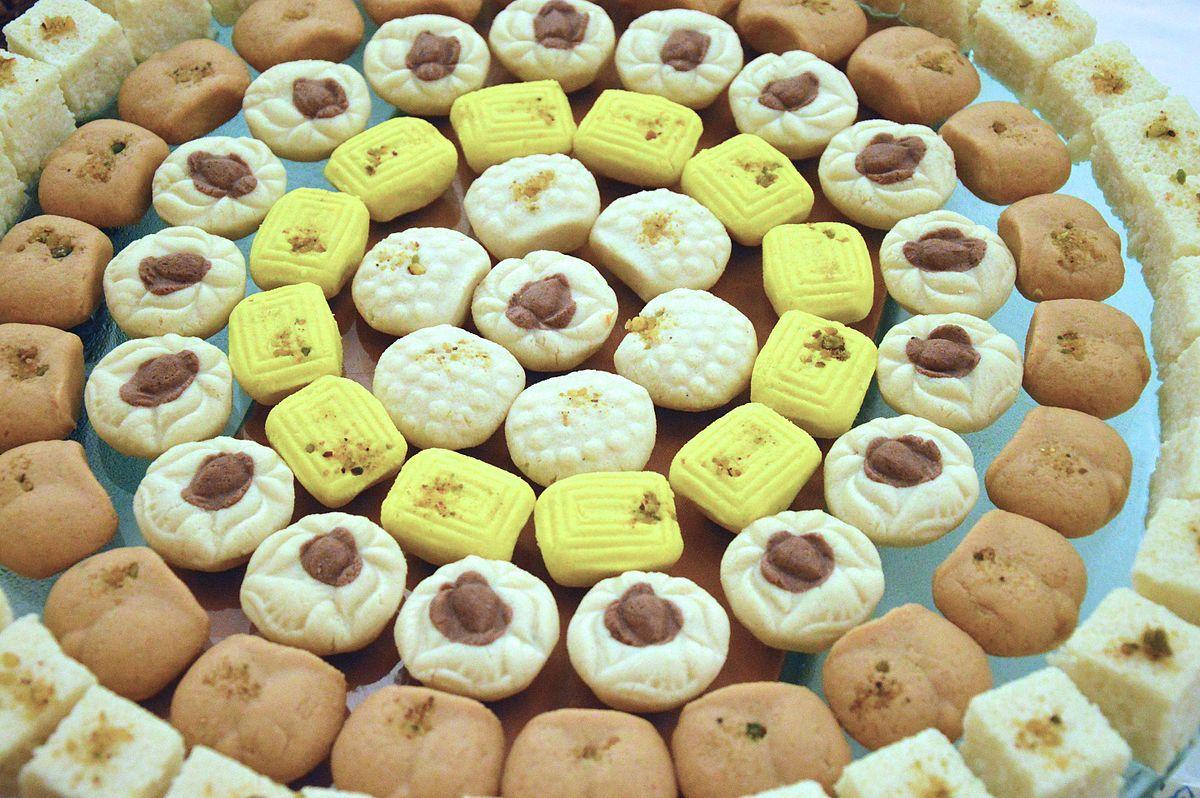
There is no shortage of sweets mentioned in Haimabati Sen’s text, with some examples including sandesh, rasogolla, sugar doilies, naru, narkel takti, kirer naru, murki, chirer moya, murir moa, palm candy, and batasa. Of particular prevalence is sandesh, which is a sweetmeat made from pure milk that comes in almost one hundred varieties, flavors, and shapes, depending on the season it is served in. Sandesh is served on a variety of occasions including Bengali New Year. The first picture shows some sandesh varieties, and the second shows other colorful Bengali sweets.
Though sweets are frequently mentioned throughout Sen’s autobiography, they are never the main focus; rather, they are a seemingly minute detail that ultimately play a valuable role in developing a well-rounded image of Bengali culture for readers. To Sen, these sweets are a standard part of her cuisine and not something she seems to pay much mind to. For readers, and particularly those who did not grow up with the same culture and cuisine as Sen, referencing sandesh and other confections in the text helps them recognize the role the Bengali sweet tooth plays in the cultural events and traditions Sen experiences throughout the course of her written life.
Sources:
Mathur, Neha. “Poila Baisakh Special Menu Plan.” Whisk Affair, 6 July 2020, www.whiskaffair.com/poila-baisakh-special-menu-plan/#:~:text=Another%20…;
“Taste Traditional Bengali Sweets When In Kolkata.” Travel Beats, IndianEagle LLC, 20 Nov. 2015, www.indianeagle.com/travelbeats/bengali-sweets-rosogolla-and-sandesh/.&…;
“The Journey & Evolution of the Iconic Bengali Sweets.” N.K. Realtors, N.K. Realtors, 12 Oct. 2018, www.nkrealtors.com/blog/journey-evolution-iconic-bengali-sweets/.
“Satiating Sweet Tooth, The Bong Way.” Deccan Herald, The Printers (Mysore) Private Ltd., 6 Nov. 2013, www.deccanherald.com/content/367382/satiating-sweet-tooth-bong-way.html.