
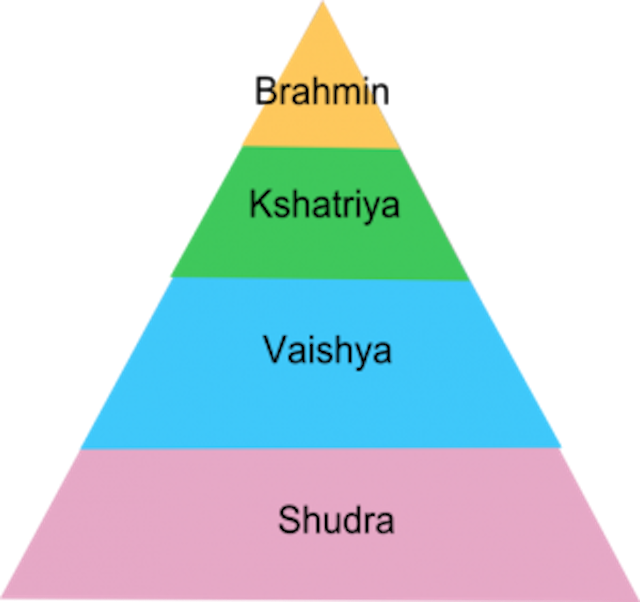
Brahmins are those in the top tier of the Hindu caste system; they are the varna of priests. It is traditional belief that they are religiously sacred in a way that members of the other castes are not. Resultantly, they perform religious duties that members of other castes do not. Due to this status and the typical education that Brahmins receive, they have historically enjoyed power even in secular realms. Though India’s constitution banned discrimination on the basis of caste in 1950, even announcing hiring quotas, their power as religious leaders, and often as intellectuals, remains supreme.
While individuals are born Brahmins,they must maintain their qualification for religious purity by observing certain codes. Most are vegetarians and are not permitted to handle impure materials including leather. The specific taboos avoided by Brahmins vary with their sect. Despite having the lowest population of any varna, Brahmins have more than two thousand branches.
Haimabati Sen describes Brahmins for both the purpose of clearly marking the class of those she encounters and to highlight her landowning family’s role in maintaining the religious upkeep of their community, even as they financially decline. While working as a doctor, Sen subtly discusses the role of Brahmins in the medical field. One of the heads of the practice is “bribed to get rid of the old brahmin.” In his place, two “brahmin boy[s]” are hired. Although the medical field is not a religious one, the cleanliness and prestige of medical work is here shown to be available to Brahmins. Sen’s account of her family’s financial burdens lists the “entertainment of brahmins who had to be paid their customary fees.” This makes evident the prestige of Brahmins who are expensive beyond their direct religious obligations, but who are essential to maintaining religious practice in Sen’s childhood community.
Sources
Because I am a Woman by Haimabati Sen, pages 5, 189
http://en.banglapedia.org/index.php/Brahman