
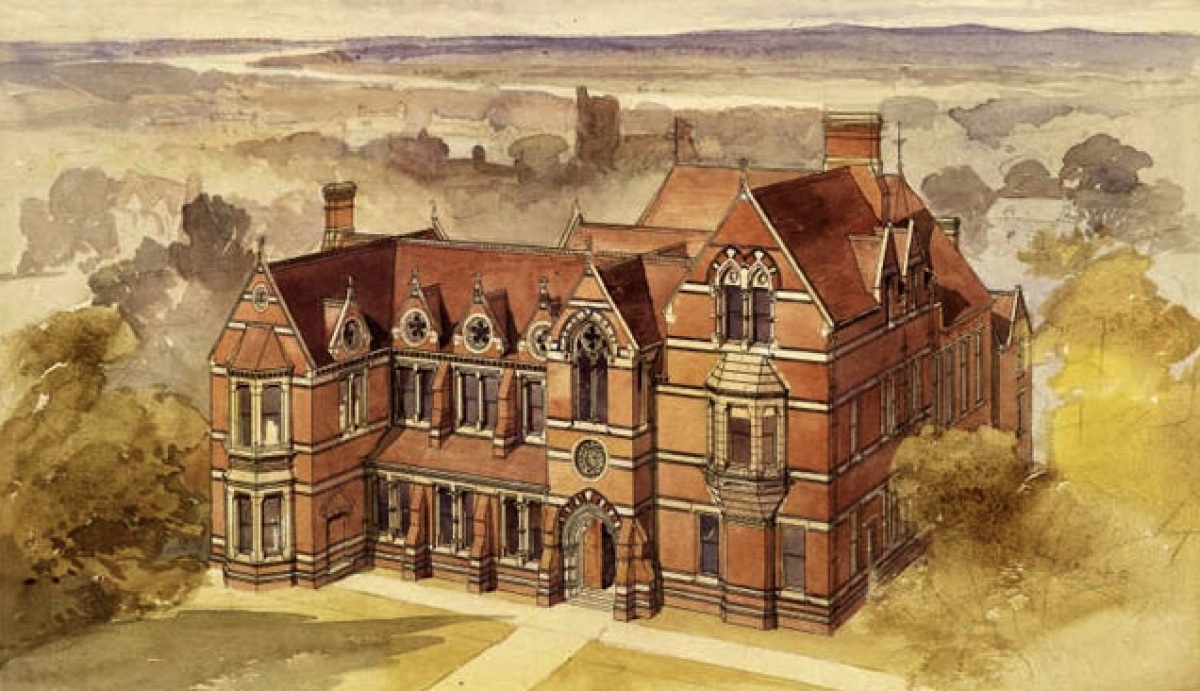
This is a drawing of the building which houses the Cambridge Union Debating Society. Meetings still take place in the same building today, albeit with some renovations.
Formed in 1815, the Cambridge Union Debating Society is, today, considered the oldest debating society in the world but, in Mill’s time, was still relatively novel. The establishment of the society emerged, in part, from the growing emphasis on debate as a practice within Parliamentary politics. The society served as a training grounds, teaching young men the procedures they would need to know in order to enter government later in life. Conversely, the society also played a role in shaping the rhetorical traditions of Parliament as it developed following reforms in 1832.
Mill describes the society as, “an arena where what were then thought extreme opinions, in politics and philosophy, were weekly asserted, face to face with their opposites…many persons afterwards of more or less note gained their first oratorical laurels in those debates” (Mill 45), underscoring how the power of the society extended far beyond university. Moreover, the influence of his observing balanced debates with opposites facing one another can be seen in Mill’s On Liberty, which argues for taking a disinterested stance in the public sphere so that one can weigh different opinions equally. Moreover, he describes his interactions with Charles Austin, a member of the Cambridge Union Debating Society, as the first time he felt himself to be “a man among men” (Mill 46). Mill’s interactions with the society, at least implicitly, shaped his conception of self and belief in egalitarianism.
Sources: