
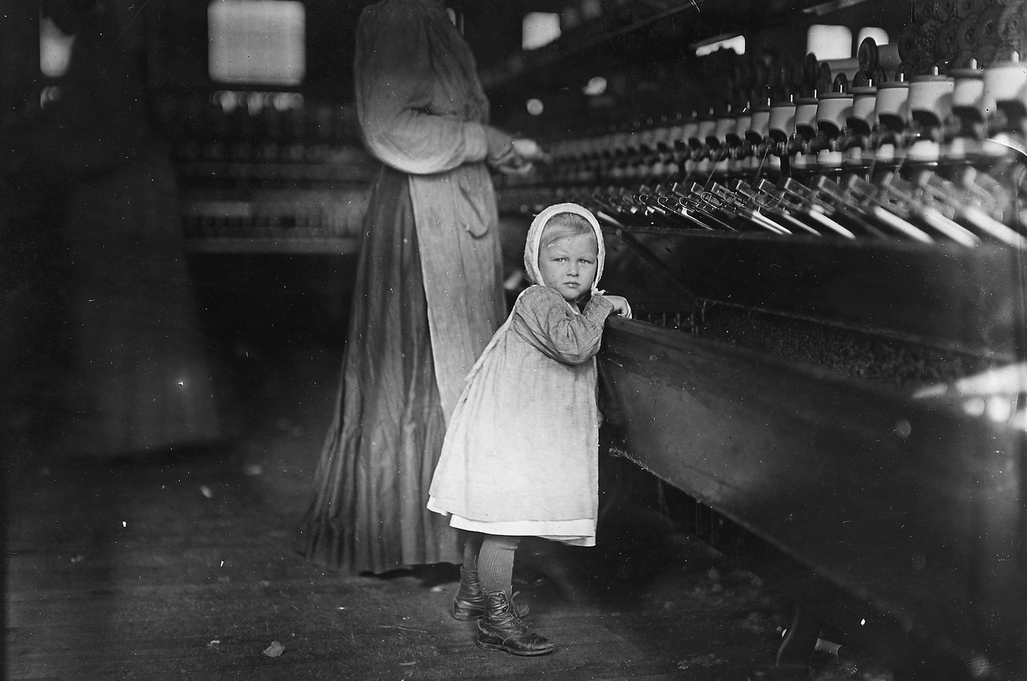
During the 19th Century, as the Industrial Revolution was on the rise, so was child labor. The Industrial Revolution introduced quicker and moe efficient ways for tasks to get done. However, many jobs were found to be easier completed with the help of little hands. Most children, starting work at around age 8 were sent to coal mines and factories where they could get into these hard-to-reach areas. Most jobs consisted of cleaning behind heavy machinery, and crawling into small spaces to collect product, or fix machines.
As this became more of a political uproar, many poets and authors had a lot to say about this topic. A more familliar poet was William Blake. In his poem "The Chimney Sweeper", he addresses the suffering and horrors of child labor in England during this time. Along with Blake, writers like Elizabeth Barrett Browning, Charles Dickens, and many others wrote poems and stories in response to the negativity that was surrounding the Industrial Revolution during this time.
Because of the backlash and turmoil that child labor was causing amongst many during this time, set laws were created in order to regulate, control, and benefit the employees of these factories and mines. Just a few of these laws included; The Mines Act of 1842, The Factory Act of 1844, and one of the most important, The Ten Hour Act of 1850. The Ten Hour Act of 1850 allowed for employees to work a maximum of 10.5 hours each day, provided with lengthy breaks, and gave Saturdays as a day off. Previously, children were working over 58 hours a week with little to no breaks at all each shift. Though this was just the start of what would create the labor laws we have today, it was definitely a push in the right direction for children of the 19th Century.
Sources:
https://www.bl.uk/romantics-and-victorians/articles/child-labour
https://www.history.com/topics/industrial-revolution/child-labor
https://www.nationalarchives.gov.uk/education/victorianbritain/industri….
https://www.poetryfoundation.org/poems/43654/the-chimney-sweeper-when-m…