
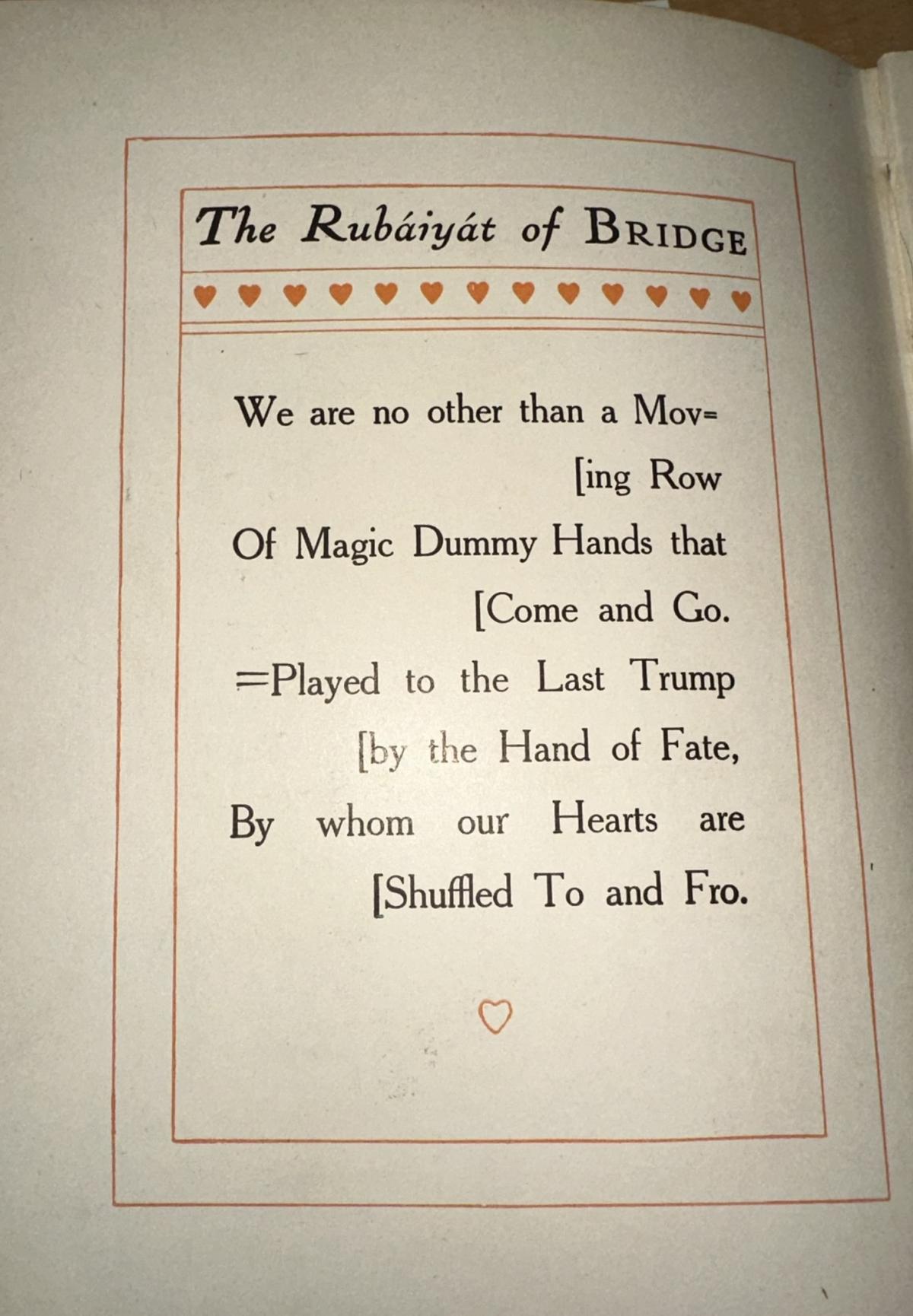
In this particular pairing of stanza and illustration, the image of a woman playing bridge while a child is placing cards down works hand in hand with the poem’s reflection on how human lives are shaped and moved by larger, unseen forces. Together, they highlight not just the inevitability of fate, but also how each generation quietly continues the “game” of life, passing down habits, roles, and traditions almost without noticing. What looks like a simple, peaceful domestic moment actually symbolizes how time keeps moving forward, how people age, and how the cycle of life keeps going. This ties into one of the Rubáiyát’s bigger ideas, that human life is fleeting, yet the patterns of existence carry on.
In the stanza itself, people are compared to “dummy hands,” like puppets or cards controlled by Fate’s hand. It’s a striking image, one that really drives home the point that, even when we feel like we’re making our own choices, much of our lives are being shaped and shuffled by forces beyond us. Whether it’s destiny, time, or the simple fact of being human in a complicated world, there are bigger things at play. No matter how intentionally we try to be, we’re constantly being rearranged in this ongoing game, just like cards in a never-ending deck.
The illustration brings this idea down to earth and adds a layer of generational meaning. The woman's game playing is focused and methodical, representing someone further along in life. She’s settled into her role, performing a task that’s been done by countless others before her. Beside her, the child is playing, imitating her posture without even realizing it. The child’s act of playing bridge becomes more than just a pastime. It’s a symbol of learning, copying, and eventually stepping into those same life patterns.
The visual connection between the two figures suggests that the child isn’t just learning to play, but is quietly absorbing a way of life. The “game” of life is being passed down, softly and inevitably, from one generation to the next. The woman’s steady, practiced movements show the patience that comes with age, while the child’s eager, hunched-over position captures the first steps of beginning to learn life’s rhythms. This contrast between the stillness of the setting and the quiet motion of the people within it underscores the passage of time in a very human, relatable way.
What’s especially powerful about this pairing of poem and image is how understated it is. There’s no dramatic event happening here. No grand declarations about fate or time. Instead, it’s the small, everyday scene that carries the weight of these big ideas. Life doesn’t usually announce when things are changing. More often, it’s in these quiet, ordinary moments that the most important shifts happen. The woman teaches without directly teaching; the child learns without even realizing it. That’s how the cycle continues.
Even though there’s no literal “hand of Fate” reaching into the scene, the influence is there. It’s in the inherited routines, the postures, the simple acts that connect one generation to the next. Fate, in this case, isn’t some looming, dramatic force, but something woven into the very fabric of daily life. It’s subtle but inescapable.
In the bigger picture, the illustration and the poem together offer a reflection on what it means to live a human life. We all come and go, but the patterns, the ways of living, the traditions, the habits, carry on. Each person contributes their small part to a larger cycle, reshaped slightly by time and context, but always guided by forces beyond any one person’s control. There’s a quiet dignity in playing your part, however small, in this ongoing “game” of life.
In the end, this pairing of stanza and illustration shows how something as simple as a card game can reflect the much larger and more complex patterns of life. Through the quiet repetition of everyday actions, like playing a hand of bridge or teaching by example, time moves forward and the cycle of life continues. Fate might be an invisible force, but its presence is felt in these small, familiar moments that shape who we become and how we pass those lessons on. The Rubáiyát reminds us that while individual lives are fleeting, the patterns we follow are enduring, carried forward by each generation in ways that feel almost effortless. This image, paired with the poem’s reflection, captures that truth perfectly. Life is both a game we play and a legacy we inherit, shuffled and redealt with every passing moment.