
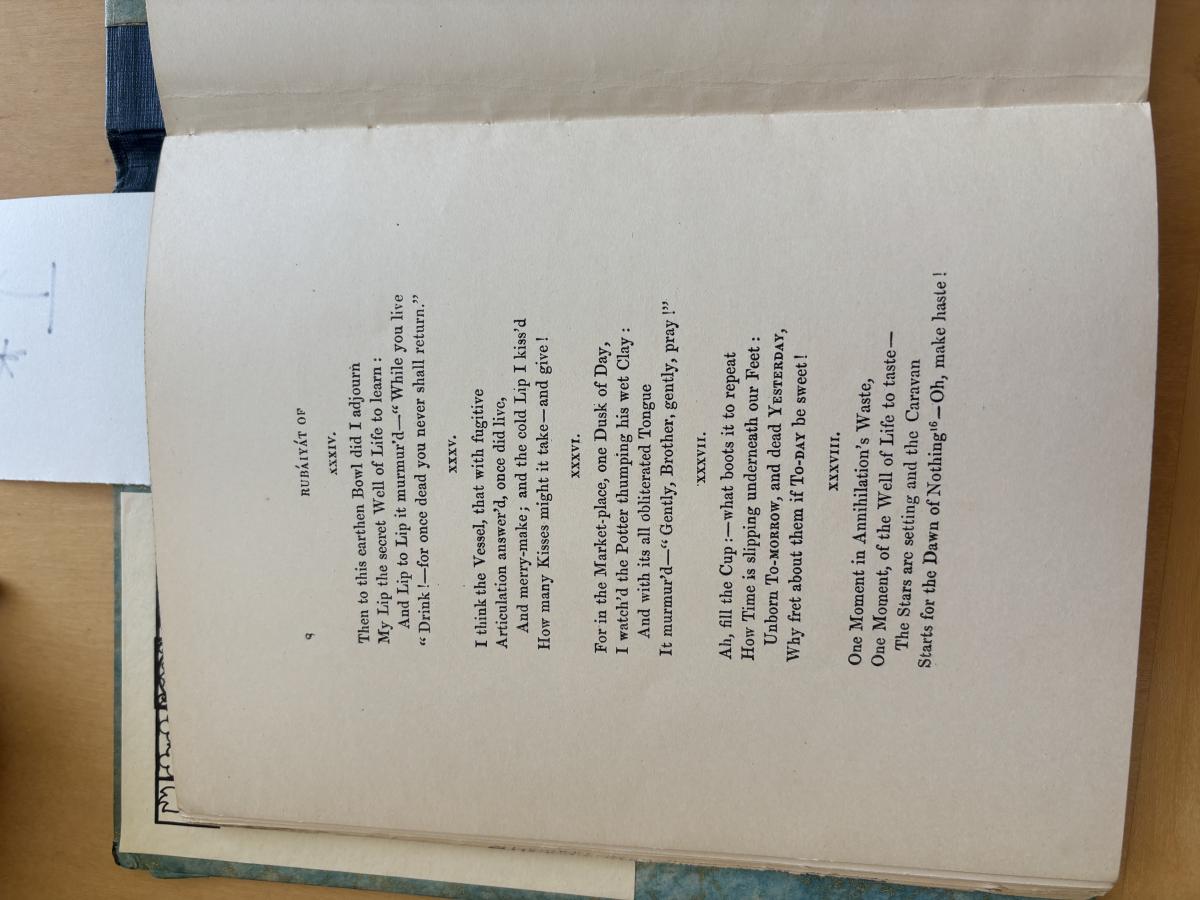

The stanza “One Moment in Annihilation’s Waste, / One Moment, of the Well of Life to taste— / The Stars are setting and the Caravan / Starts for the Dawn of Nothing—Oh, make haste!” (FitzGerald, XXXVIII) (Figure 3) shows how short and fragile life is. It urges readers to enjoy the present before it slips away. This feeling of urgency is not only found in the words, but also in the book’s physical design. The plain brown title page (Figure 2) and the more elegant blue and gold hardcover (Figure 1) work together to show two sides of life: its simple beginning and its lasting beauty. Together, the stanza and the book covers reflect a larger message in the Rubaiyat: that life is short but meaningful, and we must make the most of it while we can.
In the stanza, the speaker compares life to a short moment in “Annihilation’s Waste,” or the endless nothingness of death. The phrase “One Moment” is repeated to remind us how brief life truly is. In this moment, we get to taste from “the Well of Life,” a powerful image that shows life as something rich and refreshing, but also temporary. The metaphor suggests that we are only allowed a brief sip from this well before time runs out. The next two lines show a caravan leaving under fading stars. This image of travel represents life’s journey, but the direction is clear: we are heading toward “the Dawn of Nothing.” The word “nothing” reminds us that death is final and empty. It creates a sense of urgency and loss. The final line, “Oh, make haste!” is a call to action that people should not wait, should not waste time. The speaker is warning us to enjoy life before it’s gone.
This warning is reflected in the two covers of the book. The outer cover is beautiful: it has a rich blue and gold marbled design with bold letters. It looks like something important and lasting. It suggests that the book has great value, and that the poems inside offer wisdom worth keeping. But when we open the book, the title page is very plain. The brown paper, basic border, and simple black print remind us of something old, maybe even forgotten. It looks like something that might fall apart over time. This contrast between the rich outside and plain inside mirrors the contrast in the poem between the richness of life and the emptiness of death. Just as life may look vibrant on the surface but eventually fades, the book too reveals a simpler, more fragile core when opened.
By looking closely at both the poem and the book’s design, we can see how they work together to express the same idea. The plain title page is like the “Annihilation’s Waste”—simple, bare, and easy to overlook. The outer cover, with its bright blue and gold, stands for the “Well of Life”—full of color, depth, and beauty. The idea that the stars are “setting” and the caravan is moving forward also fits with the idea of opening the book. As we move from the fancy cover to the plain page, we are reminded that beauty and life are short. Like the speaker says, we must “make haste” before it is too late. The physical experience of handling the book mirrors the emotional journey of the poem: starting with wonder, passing through reflection, and ending in an awareness of mortality.
The stanza and the book’s covers both send a strong message about time, life, and death. The poem reminds us that life is brief but full of meaning, while the book’s design shows this through the contrast between its decorated outer cover and its simple inner pages. Together, they show that although everything fades, beauty and purpose can still be found in the short time we have. In the end, both the words and the object that holds them encourage us to live fully, to appreciate beauty while it lasts, and to move forward with intention before our own moment is gone.