
The edition that I selected was The Rubáiyát of Omar Khayyám translated into English quatrains by Edward FitzGerald. This particular edition was published in 1916 by Dodge Publishing Company. The text itself contains 101 (CI) quatrains and revisions that reflect FitzGerald’s 5th edition published in 1889.
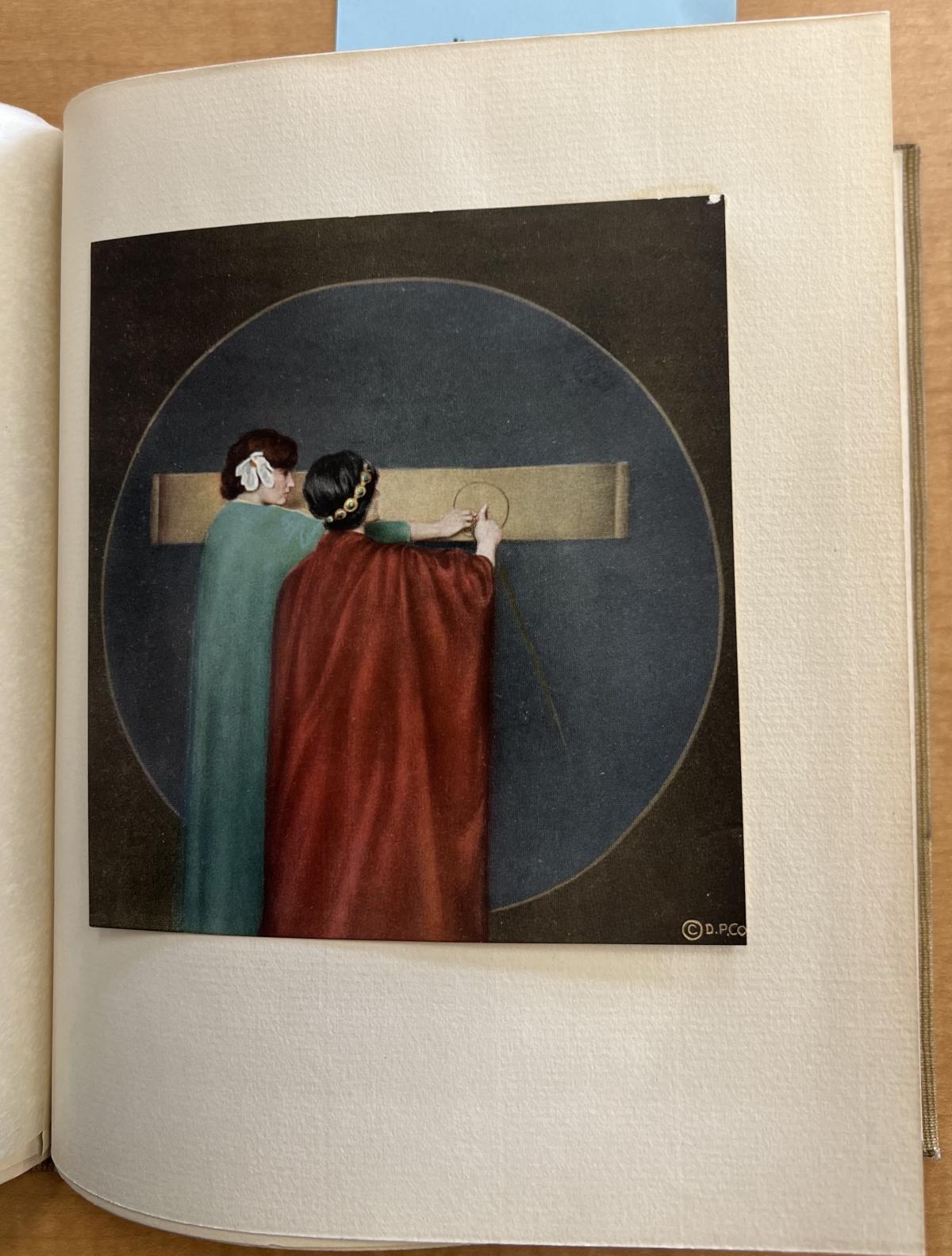
What stands out in this edition are the illustrations that are littered throughout. There is not a credited illustrator that is stated in the book and the illustrations themselves are copyrighted by Dodge Publishing Co. However, after completing some research I discovered that Adelaide Hanscom Leeson is an illustrator to the image titled “The Moving Finger writes.” It is still unclear if all of the illustrations were done by Hanscom Leeson. According to Photo Historica, she began working on photographs to illustrate for The Rubáiyát of Omar Khayyám in 1903. She saw this project as a classic literary publication and a metaphor for her time. Photo Historica also notes that in a newspaper interview Adelaide had said that she decided to illustrate The Rubáiyát because “it presented an expression of the struggle of the human soul after the truth, and against the narrowing influence of the dogmatic religions of our time.” Her work for The Rubáiyát was successful as the demand for several more editions grew. In the book that I chose, it shows a more vibrant and colored copy of her illustration. The colorful image that I have included in this exhibit depicts two women pointing to a scribe. One woman has a flower in her hair while the other woman wears a beaded headband. In the black and white version of this illustration, a sword is held in one of the woman’s hands. This is less visible in the colored version. The illustration portrays Omar Khayyám’s quatrain 51 (LI) that begins with “The Moving Finger writes; and, having writ.” In the edition, illustrations matched the content of the book and were displayed right before the quatrain with tissue guards in place.
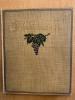
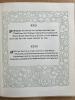
Important features of the book should also be noted. The book consists of 108 pages printed on rougher textured paper, and is rather flat yet wide in shape. The board or cover of the book is made of light tan cloth. There is black text on the spine and decorative navy lines that outline the board. What readers might come to notice or judge is a gilt text stamped on the front board/cover page. The decorative gilt of gold is added to lettering of the title of the book, and outlines the grapes and leaves below – the emblem symbolizing wine and the “fruitful grape,” an important facet in the poems. In addition, the quatrains are written in a Sans Serif font with slight, swirly drop caps (the large capital letter at the beginning of a stanza) for a decorative effect. The actual words of the poems are contained in a decorative green border of vines and leaves that seem to be stamped onto the rough, thick textured paper. The book had good hinges and appeared to have no markings or stains other than that of the library’s which said in pencil the book number and vault. With the slightest bit of edge rubbing, I could tell that this beautiful decorative book was loved by readers.
Work Cited:
“Adelaide Hanscom Leeson.” Sisters of the Lens, https://www.sistersofthelens.com/adelaide-hanscom-leeson.
“The Rubaiyát of Omar Kháyyám with Illustrations by Adelaide Hanscom Leeson.” Photohistorica, https://photohistorica.myshopify.com/products/the-rubaiya-t-of-omar-kha…;