
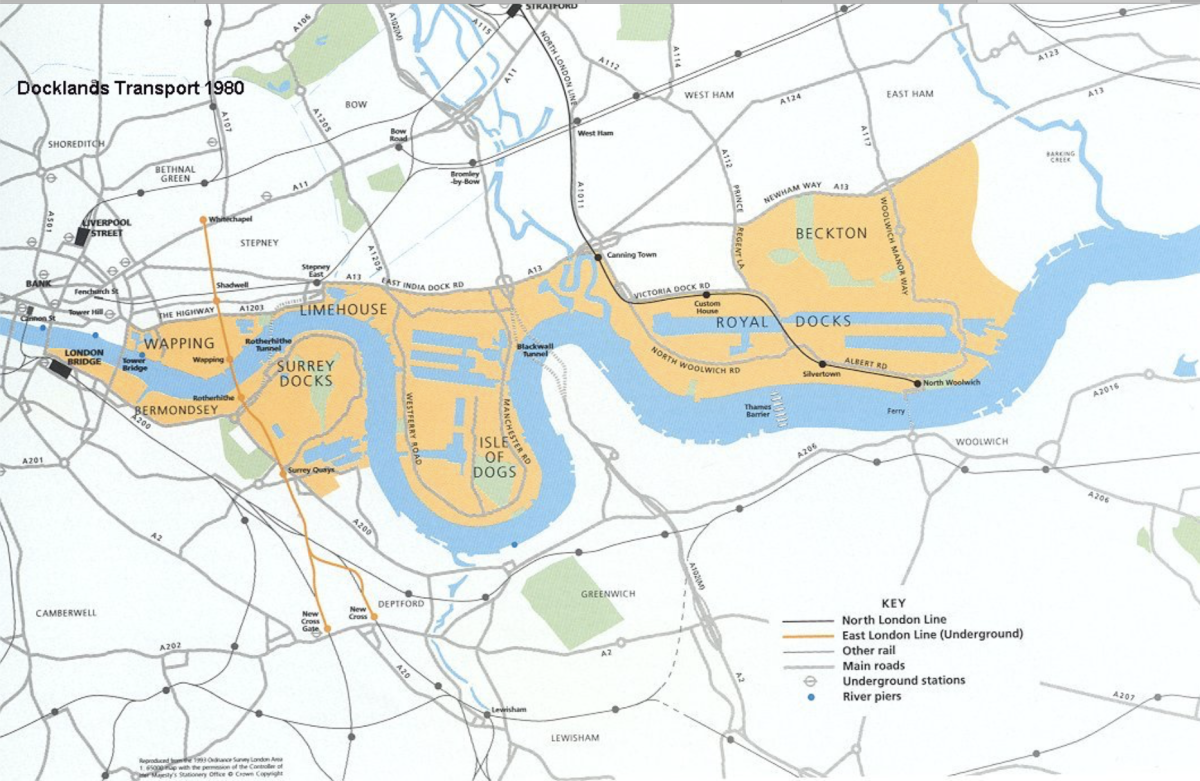
So many things are different from the time of Bleak House as London evolved and became more modernized. The main change I will focus on is the transition from docks to docklands, and the drastic expansion in London, especially in the docks. Eventually, the LDDC was established in order to oversea the dockland and encourage growth and expansion. They built a road to facilitate access to the island, but there were still problems with transport. Later, they established a railway, with connections to the existing underground network. This was working out until many companies began to move away from the city and establish along the tracks. As more buildings began to rise along the docklands, housing became a problem. There were multiple different approaches, and many residents were upset with the developments of housing as prices increased and it was harder to find housing along the dockland. This development of a more populous and more advanced dockland system was overall a good development, and helped facilitate transport and easier access to the island, but it did cause some upset residents while being developed.
Source:
Clark, John and Ross, Catherine. “From Docks to Docklands.” London: the Illustrated History. Penguin, 2011. p. 310-311.
Image:
Grant, Cynthia. “Docklands Transport 1980.” LDDC Monograph.