
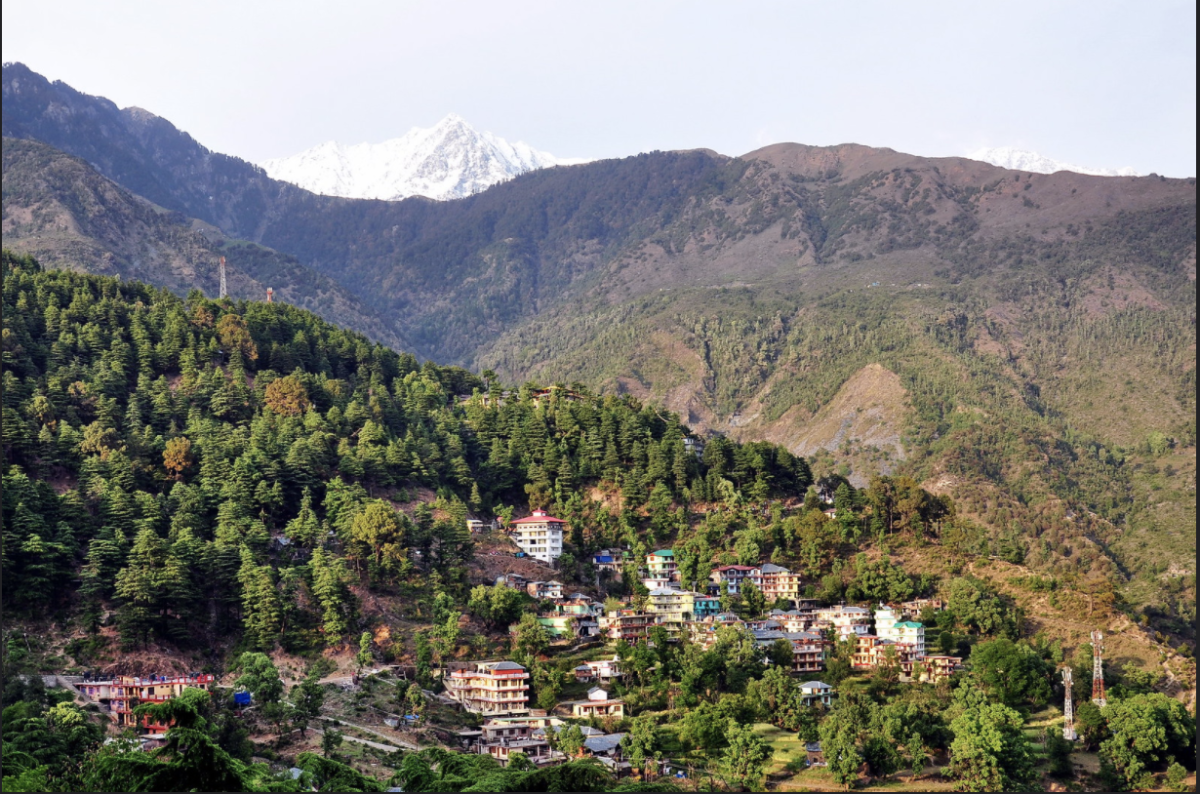
This is a photo of the Dharamshala region today.
A dharmsala, also spelled dharamshala, is the type of pilgrim’s rest house Sen describes staying in during her and her husband’s spiritual pilgrimagess. They were typically located in remote areas near pilgrimage sites and offered free room and board. The word “dharamshala” is a loose compound of “dharma” and “shala.” The concept of dharma is challenging to translate because it is more complicated than Western notions of religion. Dharma encompasses the plurality of spiritual traditions and acknowledges their constant evolution, adding complexity to the discussions of religion we’ve had concerning Sen’s transition from traditional Hinduism to a progressive religious group.
In addition to enriching ideas about spirituality, the presence of dharamshalas in the text challenges Sen’s notions of what it means to be a “householder” and heightens her sense of dependence. She laments “this perpetual movement from certainty to uncertainty seemed to be the theme of my life” (Sen 148). A life of ascetic pilgrimage takes on a quality of vagrancy and feels disempowering rather than empowering.
The instability of “home” seems to be embedded in the language of “dharamshala” itself as, today, the word mostly refers to a region of India in the Kangra Valley near Delhi where thousands of Tibetan exiles have settled. The word, thus, has multiple meanings. Interestingly, the region known as Dharamshala was annexed by the British in 1848 and intended to be used as a summer capital for workers to escape the heat, further complicating notions of ownership.
Because of its changed meaning, I could not find an accurate photograph of a dharamsala as it would have existed in Sen’s day and have instead chosen to share a photo of the region as it looks today.
Sources: