
A Disconnection
In an excerpt of Lucy: A Novel by Jamaica Kincaid, Lucy illustrates her disdain for daffodils to her friend Mariah by recalling a bitter memory from childhood. She recalls a time in her grade school where she had to recite a poem for flowers she had never seen in her life, then later had a dream about being chased by those same flowers and suffocating underneath when they caught up to her. She stated, “I felt sorry that I had cast her beloved daffodils in a scene she had never considered, a scene of conquered and conquests; a scene of brutes masquerading as angels and angels portrayed as brutes” (Kincaid 1). Lucy demonstrates a disconnect between herself and Mariah because of the daffodils that Mariah loves in her garden. She also suffers a disconnection upon reading the daffodil poetry for the first time and upon seeing the flowers at 19, which casts her personal characteristics with a gloomy disposition. Despite the excerpt capturing Lucy as someone filled with bitterness and resentment, Lucy still appreciates what Mariah has attempted to show her to broaden her perspective. In the journal “Jamaica Kincaid’s ‘Lucy’ and the Aesthetics of Disidentification”, Veronica Majerol similarly argues that “Mariah, as a privileged, liberal feminist of the First world, constantly attempts to assimilate Lucy and, in a sense, inscribe her into a narrative of immigrant inclusion and upward mobility. But, it seems that every attempt of this kind has a contradictory effect” (18). The following four images of my gallery series are a depiction of what I interpreted as Lucy’s perspective of the outside world through her cynical lens and to illustrate how shocking it is that Lucy had these feelings at such a young age. The image selections range from COVE Studio samples to exhibitions from the Metropolitan Museum of Art in New York.
Works Cited
Majerol, Veronica. “Jamaica Kincaid’s ‘Lucy’ and the Aesthetics of Disidentification.” Journal of Caribbean Literatures, vol. 4, no. 3, Maurice Lee, 2007, pp. 17–27, http://www.jstor.org/stable/40986207.
The Four Images in the Series
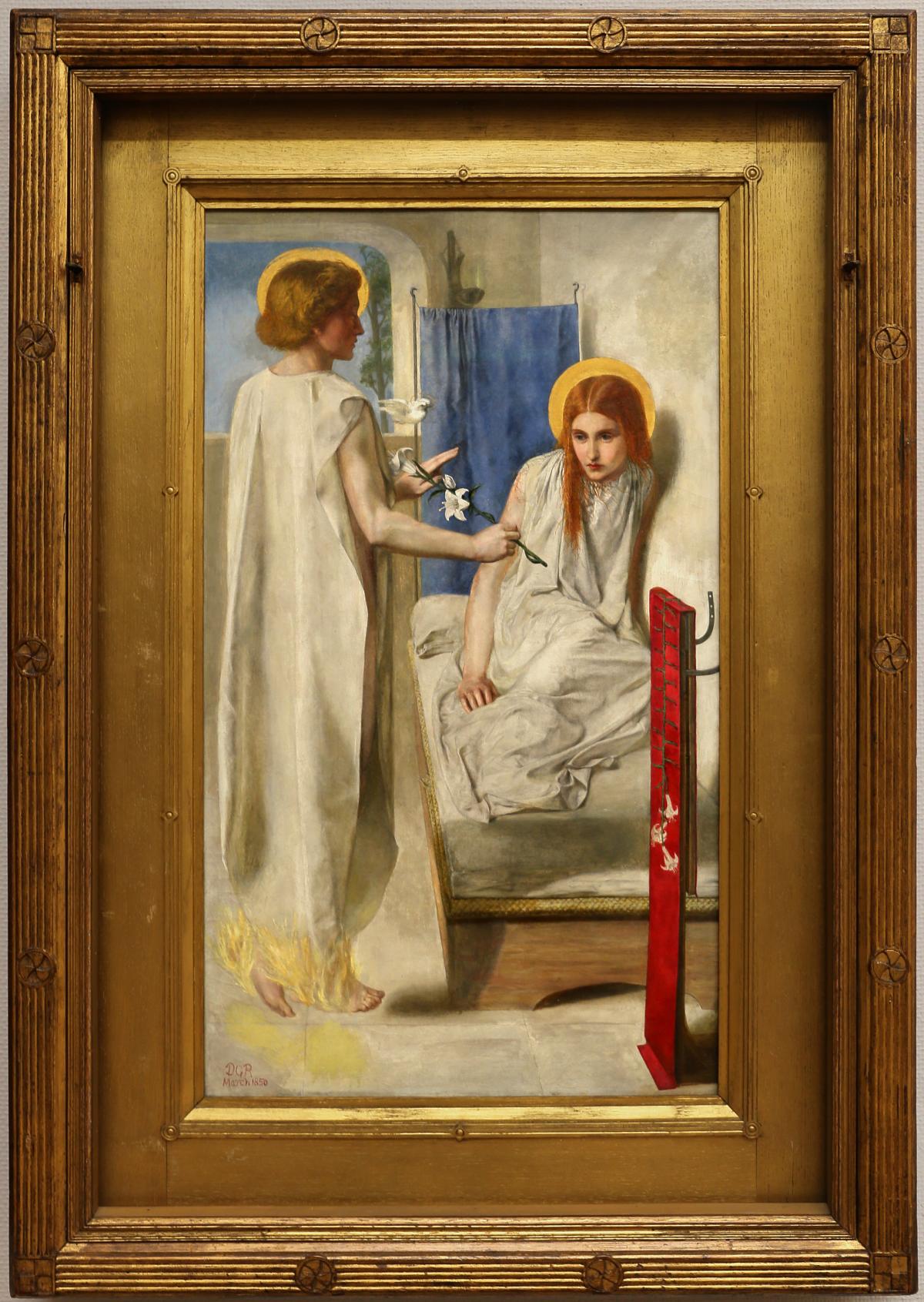
Figure 1. McGann, Jerome. "Dante Gabriel Rossetti, Ecce Ancilla Domini! (1850)." Omnibus Edition of "In an Artist's Studio. Eds. Pamela Buck, Dino Franco Felluga, Nicole Fluhr, Dominique Gracia, Jerome McGann, Melissa Merte, and Herbert F. Tucker. The COVE: The Central Online Victorian Educator, covecollective.org. [November 1, 2021].
I did not feel that it would be common to find paintings or images of women looking skeptical with flowers, so I was surprised to stumble upon this painting done by Dante Gabriel Rossetti. His sister, Christina Rossetti, was the model behind depicting the Virgin Mary. This piece is titled “Ecce Ancilla Domini”, which directly translates to “Behold the handmaid of the Lord.” The girl facing the viewer is depicted to be the Virgin Mary. I chose this piece due to the accuracy of one girl illustrating the beauty of a flower to another girl. I related this painting to the excerpt from Lucy: A Novel, where the protagonist (Lucy) is being shown daffodils for the first time at the age of 19. Mariah unveils daffodils to Lucy when she blindfolds Lucy and brings her to her favorite garden. Both the girl in the painting and Lucy eye the flowers with disdain, which is why I thought this painting was a good representation of the excerpt.
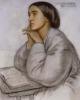
Figure 2. McGann, Jerome. "Dante Gabriel Rossetti, Christina Rossetti (1866)." Omnibus Edition of "In an Artist's Studio. Eds. Pamela Buck, Dino Franco Felluga, Nicole Fluhr, Dominique Gracia, Jerome McGann, Melissa Merte, and Herbert F. Tucker. The COVE: The Central Online Victorian Educator, covecollective.org. [November 1, 2021].
This image was created by Dante Gabriel Rossetti in 1866 as a portrait of his sister, Christina Rossetti. I chose this image as a depiction of older Lucy reflecting on her experience with daffodils as a young school girl. The image is almost entirely gray, aside from the skin color. In reference to the excerpt, the gray resembles Lucy’s grim feelings upon remembering when she had to recite poetry about daffodils and then dreamt of being buried by the same flowers. The woman in the image has a worn and weathered look while pondering about something, which is what I would imagine that Lucy looked like when recalling her memories from school.
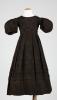
Figure 3. Dress. 1835. The Metropolitan Museum of Art. https://www.metmuseum.org/art/collection/search/159199?searchField=All&sortBy=Relevance&ft=Romantics&offset=180&rpp=20&pos=194
I chose this image because it closely resembles the age at which Lucy recited the poem in her school and had nightmares about the daffodils. The dress is from the early 1830s during the Romantic period, which means that this is likely what Lucy would have worn at the time. The brown dress has a slender fit torso with a pleated skirt starting at the sternum of the chest and has billowed sleeves, resembling a butterfly. I also chose this image to illustrate the age where Lucy developed such bitter and cynical feelings towards the flowers. The small dress is a striking contrast to the adult feelings that Lucy had, which signifies a major disconnect within Lucy to other children her age.
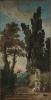
Figure 4. Robert, Hubert. The Swing. 1779. The Metropolitan Museum of Art. https://www.metmuseum.org/art/collection/search/437480?searchField=All&sortBy=Relevance&ft=The+Swing&offset=0&rpp=20&pos=1
I chose this painting because of the depiction of innocence in the swing with bystanders looking at the child as well. It appears that the sunlight is directed more at the children watching the other child on the swing, which I would relate to Lucy observing Mariah having an innocent childhood experience. It is clear that the child on the swing is having the most fun but the child is also not the focal point of the light, the children watching and not quite connecting to the enjoyment are the focal point here. Similarly, when Mariah and Lucy are teenagers, Lucy is watching Mariah experience the world with rose-tinted glasses while Lucy views the same experiences in disdain. This relates to my theme of disconnection, where both Lucy and Mariah are desperately trying to understand each others’ worlds but they cannot seem to make it work, like two mismatched puzzle pieces.