
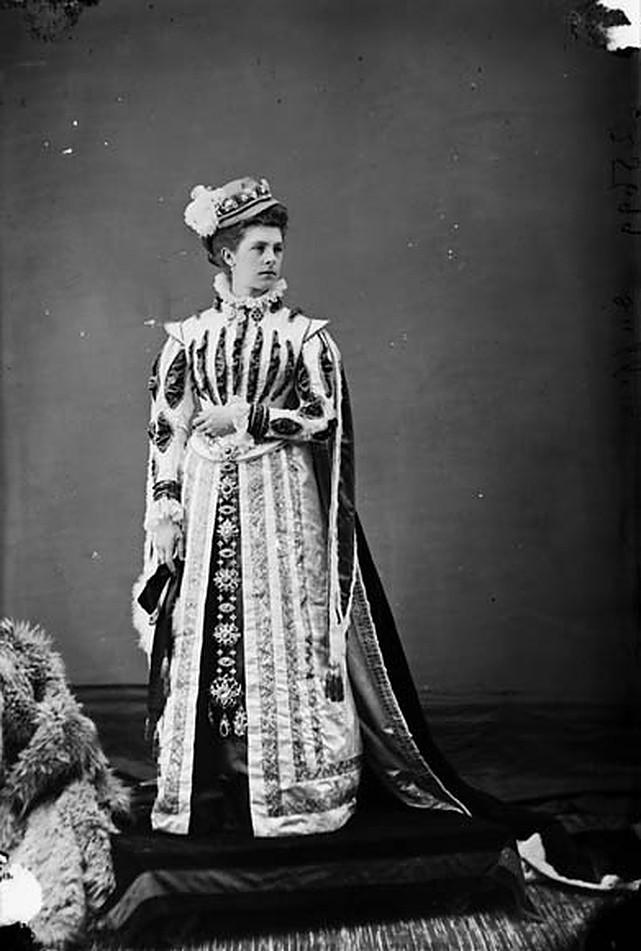
The Dufferin Fund was a national association with a central fund. In 1884, Lady Dufferin (a British peeress) visited India and saw the Indian countryside’s need for more extensive access to medical care. With the approval of Queen Victoria, the Dufferin Fund was thus created in 1885. The fund was in part created in response to the realization that Indian women needed medical care, but were prevented access due to their religious beliefs, as they could not see male doctors. Branches were established in India, and funds were used to create scholarships for women studying medicine and to build and maintain hospitals for females.
While the Dufferin Fund played an important role in providing healthcare for females in India, there were some limitations. The Dufferin Fund was created based on a simple British understanding of the complex social customs of Hindu women. For instance, it was assumed that only women of the higher castes followed purdah, or the strict Hindu rules and customs regulating male and female interaction. Although this was a misconception, the Dufferin Fund was designed only to provide care for women of the upper castes. In 1910, the Dufferin Fund was severed from Sen’s hospital for unspecified reasons. However, it is very likely that the relationship was severed due to the hospital’s treatment of women of lower castes.
Another limitation of the Dufferin Fund was that though women had very similar responsibilities as medical doctors, they were officially trained as “hospital assistants.” Despite similar duties, hospital assistants were paid significantly less (about 400 Rs less than medical doctors).
While the Dufferin Fund provided Sen with great opportunity and changed the course of her life, she was still subject to discrimination as a female doctor. In order to pass her exam, the doctors questioned her more than the male students and she always struggled with being paid less than her male counterparts.
Sources:
Forbes, Geraldine. “Medical Careers and Health Care for Indian Women: Patterns of Control.” Women’s History Review 3, no. 4 (December 1994): 515–30. https://doi.org/10.1080/09612029400200067.
Lang, Seán. “Saving India Through Its Women.” History Today 55, no. 9 (September 2005): 46–51.
Sen, Haimabati. Because I am a Woman. Edited by Geraldine Forbes and Tapan Raychauduri. New Delhi, 2011.