
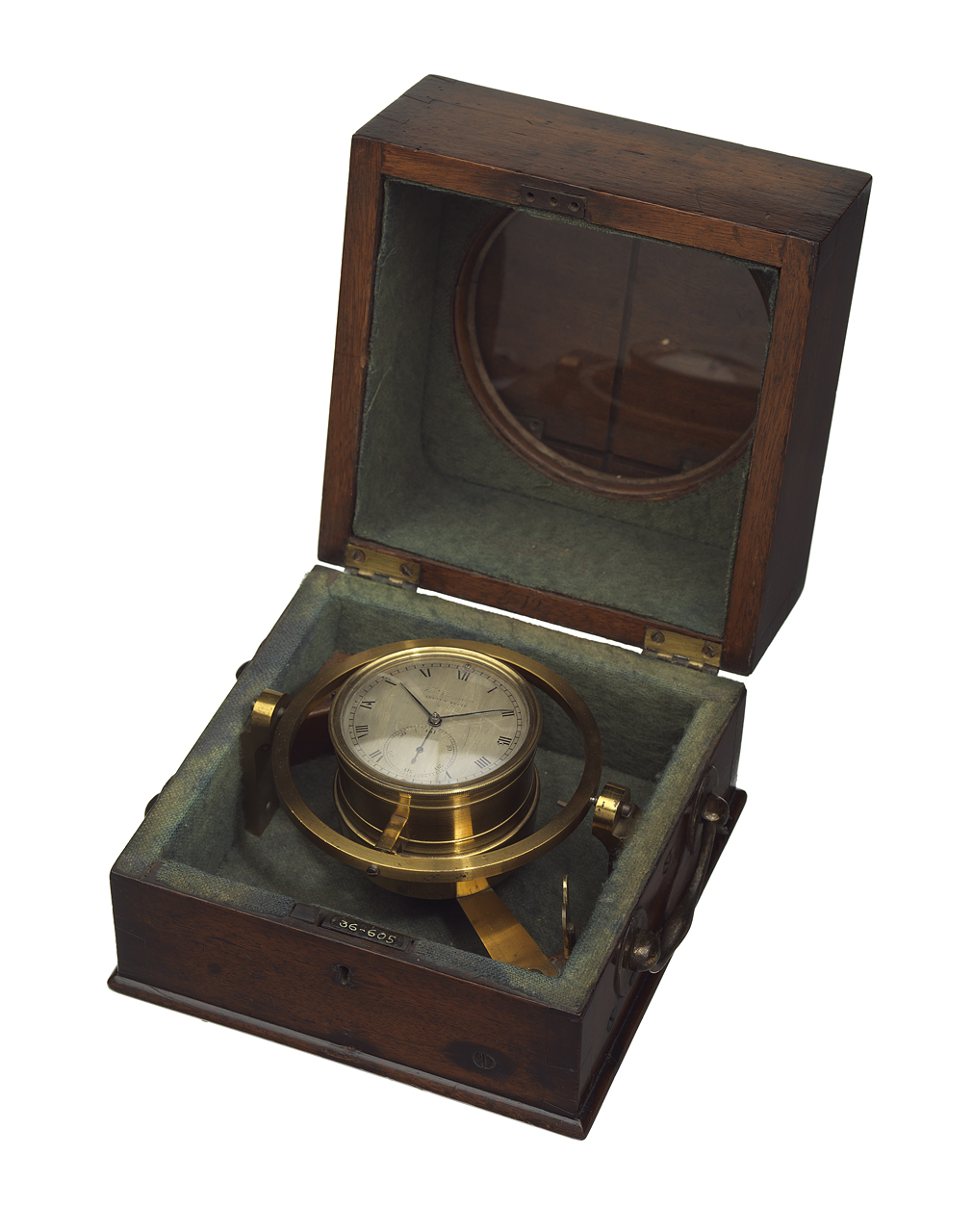

The “Earnshaw 512” is a marine chronometer, a device invented by English horologist John Harrison for determining longitude at sea. This device measures 178 x 210 x 210 mm and is currently housed at the National Maritime Museum in London. The invention of the marine chronometer arose from the offer of a substantial reward by the British Government in the wake of a 1707 naval disaster in which four ships and 2,000 lives were lost due to faulty navigation. This particular marine chronometer is a later model, developed by Thomas Earnshaw sometime around 1800, and has a curious history. The “Earnshaw 512” was a defective model assigned to the ship Thomas Grenville under Captain Manning of the East India Company. When it came to light that the chronometer was malfunctioning, and that Manning had failed to report this, it resulted in a change in legislation by the East India Company that required captains to report the condition and function of their vessel’s marine chronometer at the end of each voyage. In many ways, the Earnshaw 512 chronometer exemplifies some of the issues with the application of technology and innovation in an era of exploration and discovery.
Keywords: Exploration, Direction, Imperialism, Romanticism, Chronometer