
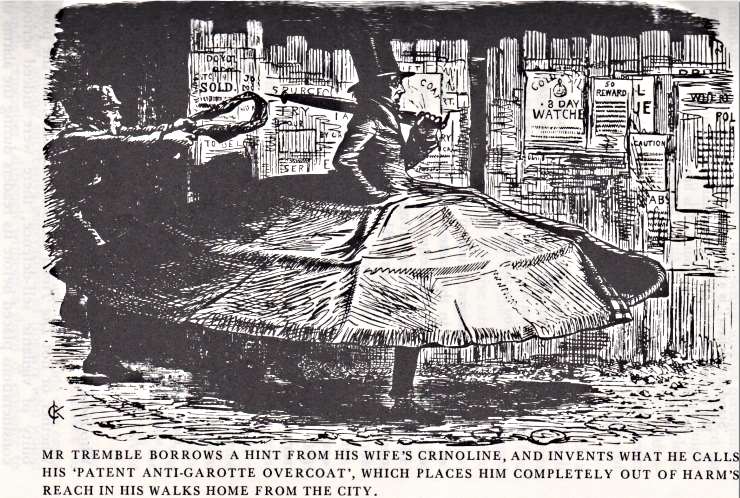
In 1862, the action of “garotting” became sensational throughout England. Garotting is an act of mugging involving strangling victims with a rope while they rob them. This was primarily introduced to England with the mugging of Hugh Pilkington in 1862, which initiated the panic as newspapers sensationalized it. A “moral debate” was sparked over whether garotting is “British or un-British,” (Bibby). Miriam Bibby states in an article, “If press reports were to be believed, the British preferred to be robbed if the robbery was preceded by a cocked pistol and a “Stand and deliver!” rendered in a fashionable accent, rather than a choke and a grunt,” (Bibby). Dickens even joined the argument and wrote an essay about the streets of London being as unsafe as the mountains of Abruzzo, and other newspapers contributed the sentiment that garotting was a foreign influence (Bibby). Miriam Bibby also describes how children glamorized it and were known to imitate the act, which is probably the result of
In 1863, the Garotters Act was passed, which reintroduced corporeal punishment for violent robbery. Moreover, the Garotting Panic led to criticism towards penal reformers. The English became terrified that crime was overtaking their streets, so the idea of a rehabilitating approach was upbraided. Additionally, the police force was criticized, leading to the dismissal of some of the police force of the Metropolitan force in the
There are many ties to Oliver Twist that extend beyond Dickens’ involvement in the debate. For starters, it is described
Works Cited
Bobby, Miriam. “The 19th Century Garotting Panic.” Historic UK, www.historic-uk.com/HistoryUK/HistoryofBritain/Garotting-Panic/.
“Criminality.” Deviance, Disorder and the
Dickens, Charles. Oliver Twist. Knopf, 1992.
“Victorian-Cartoons-Punch-1856.12.27.251.Tif.” Victorian Cartoons from Punch, punch.photoshelter.com/image/I0000DY_PKCMwnxQ.
(image sourced from Punch Magazine and found in Miriam Bibby article) – The image is a political cartoon about an overcoat that can prevent garotting.