

Character Commentary:
No wonder no one wanted women in politics! These men, such as those who agreed with Alexander Hamilton and his views of women, looked down upon us and made sure that we did not have a single say in politics! This is one of the many reasons that we women must continue forcing our way into politics, regardless of what it takes. I for one, have already begun forcing my way into politics. While these men and brain washed women continue to think of me as unfeminine, unnatural, and ungodly, I will not stop until women have the political voice we deserve. It is 2020 after all. We even have a female Vice President elect, but its as if they have never seen a woman in politics.
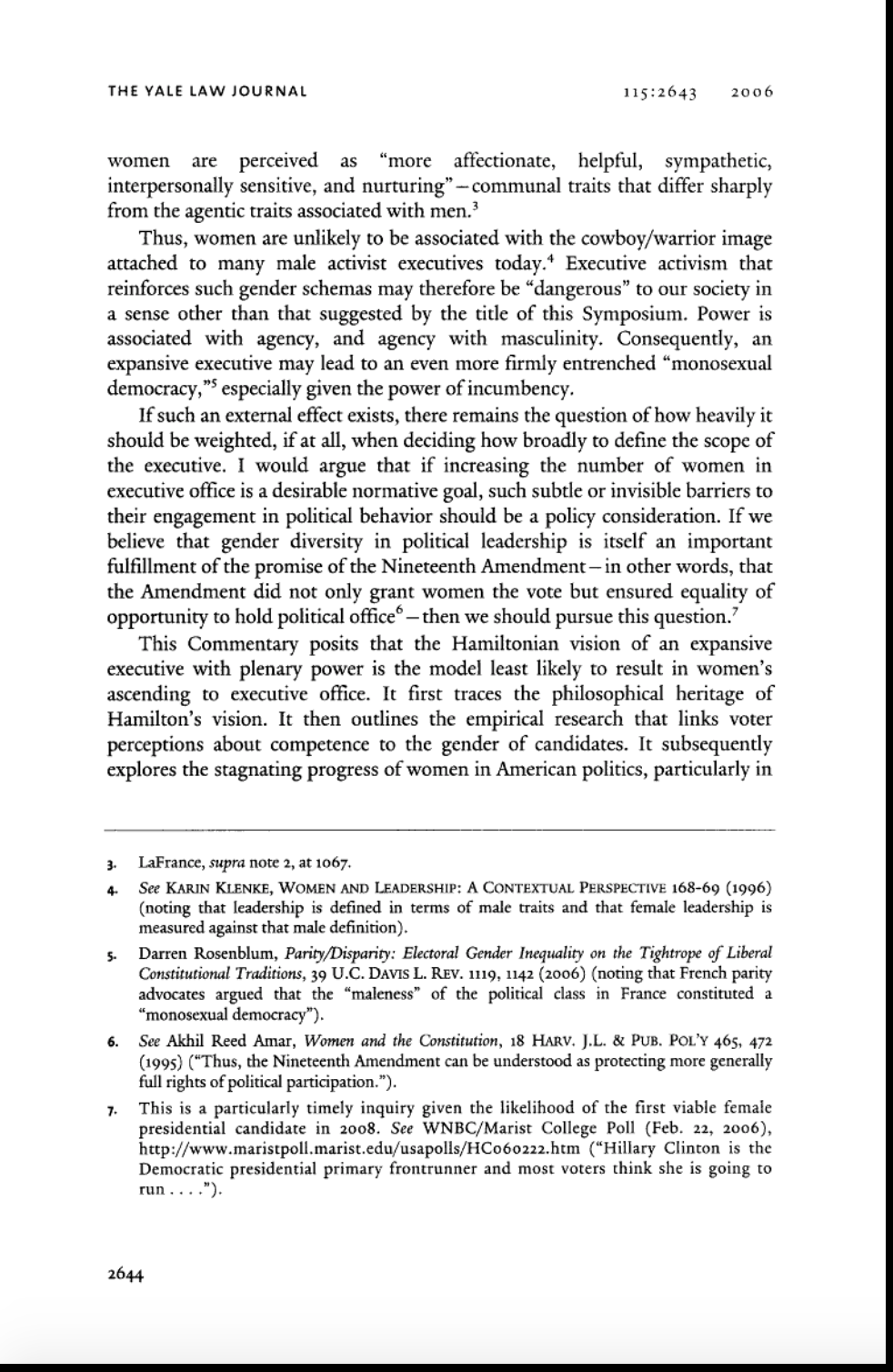
I always wanted to take part in politics, but all the history books never mentioned women having a role. Since I never saw a woman in power, I began wonder why women did not have much of a say in politics in the United States, let alone why it was un-ladylike for women to take part. Eventually I found my answer within this article. This article really enlightened me on why women are left out of politics. The Framers of the Constitution, all men, decided that women were unfit for a place in politics, so they negatively portrayed women to society in order to make sure that they never take part in politics. I find it funny how these men, especially Alexander Hamilton, deemed women too emotional for politics, but have you seen Donald Trump’s tweets? That man is an emotional train wreck.
Editorial Commentary:
This article really embodies the personality differences between men and women and why these differences distinguish who should have political power and why. While men are seen as the most desirable option for politics, many no longer think that women should be kept out of politics. It was once seen as very unconventional for someone to have these view. This this article should be read by women and not just men. While it seems to highlight the positive aspects of man and simultaneously highlight the negative qualities of women, this article has the ability to strike conversation among people, especially women. Women should begin to ask, “do our female traits really define us as unworthy for politics, or are those depicting women that way afraid of what we might do in power” or “could I see myself in politics? What do I have to offer”? With these questions rising and conversations being had, I believe that women and men will begin to rethink why women are not in politics, which can perhaps start a new revolution of women in politics, such as within the United States.
The article reveals aspects of gender that continue to define us. Whether it be one hundred years ago or today, our gender determines who society perceives us. Although we continue to define one another by gender, many go against these norms, such as the “Wild Women” who are forcing themselves into politics. While the gender roles have defined people for ages, both men and women are no longer settling for these roles. While women have been in power in various countries outside of the United States for centuries, the United States has fallen behind by sticking to the beliefs suggested in Monopoli’s article. Although the United States has progressed behind other countries like Germany and New Zealand, they are learning to shed the ideas that women should be kept out of politics and accept more women into higher political offices.
Citation:
Paula A. Monopoli. “Gender and Constitutional Design.” The Yale Law Journal, vol. 115, no. 9, 2006, p. 2643. EBSCOhost, doi:10.2307/20455710.