
Gertrude's Entry
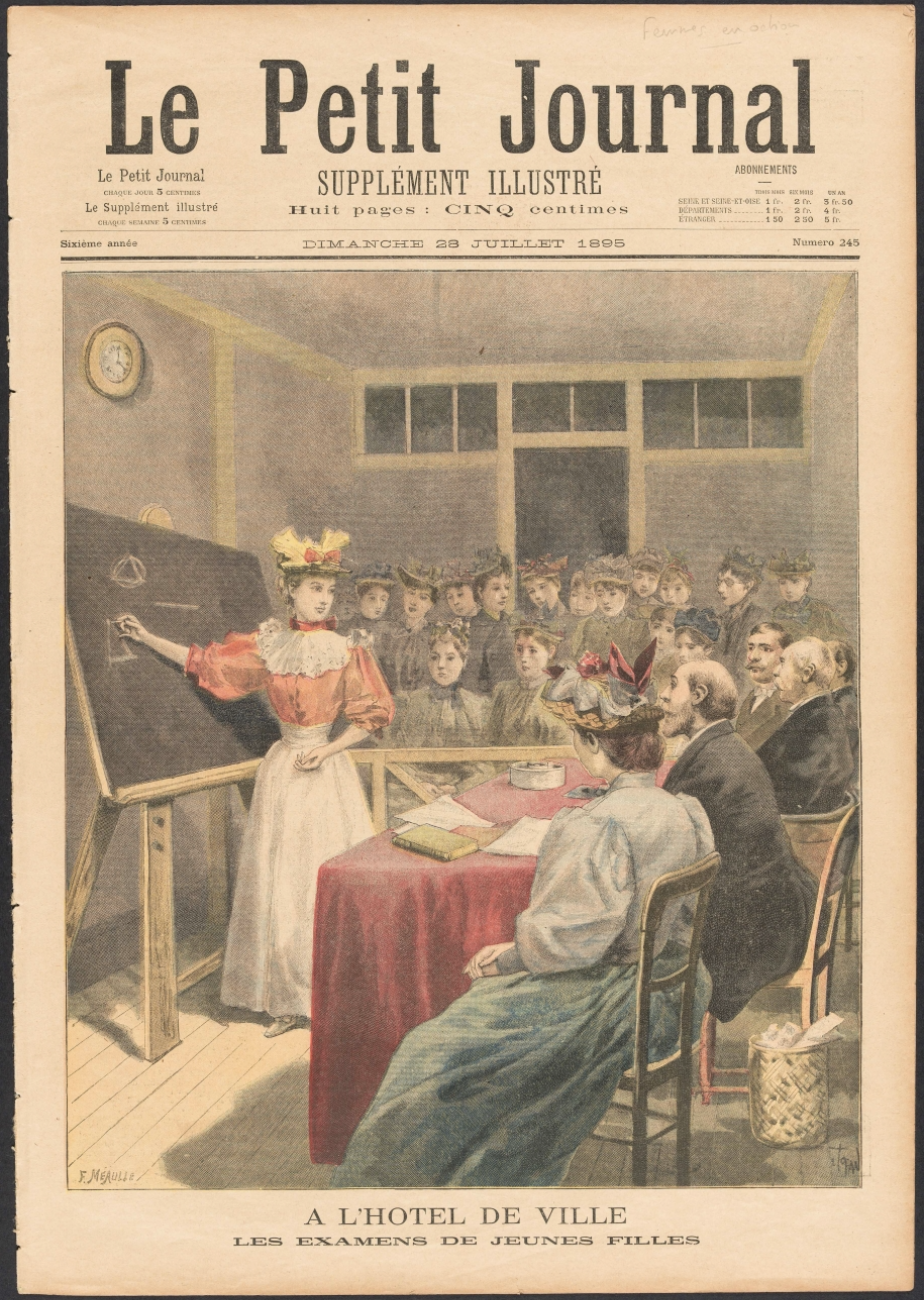
This is an image that I received from the lovely Conny Graham, who was travelling through France with her husband Mr. Graham, who believed that I could be a teacher, and I also believe that may be a possibility. They said that the traits that people define me as, such as caring, a leader, hard-working, intelligent, and a good writer would make me a good teacher, but I'm hesitant to believe them as I think they're being polite. However, taking on the motherly role for my sisters, learning about photography and art helped me realize that, as long as I put effort into what I'm learning, I would be able to be relatively successful at whatever I do. I believe this could translate into becoming a teacher, such as the woman in the photo, who I aspire to be like one day, paving the way for younger generations and sacrificing my well-being for the improvement of others, which I seem to get self-satisfaction from. Furthermore, I enjoy the opportunities to be a leader and sharing my knowledge of literature to others, and as I was to my sisters, I can be my students guide, and help them become the best of themselves. The interesting thing is, I only realized that being a teacher may be a successful career of mine, of course after Lucy and Frank get tired of the photography business, through this photo and Conny's words, which prompted me to start looking at opportunities to becoming a teacher, and the education I must follow. This may be difficult, but luckily Mr. Watergate can make ends meet for our family and the maid can assist in taking care of our child.
Historian's entry
The image that Gertrude Lorimer chooses shows the changing roles of women in Victorian society. This is because there is a women teaching a group of men, which before the New Woman came along, was unheard of. The ideas of the New Woman emerged in the late 19th century, and the ideals of the New Woman separated British society into two groups: for or against the New Woman. In The Outlandish Jane, López highlights the opposing viewpoints of society towards New Woman, where she points towards magazines and newspapers such as The Women's Penny Paper and The Englishwoman's Domestic Magazine, who held opposing beliefs on the New Woman and the importance of traditional women (López 256, 263). The New Woman represented the resistance of traditional feminine roles, and it seems as if Gertrude filled roles of both a traditional and a New Woman. As Gertrude mentioned, she took on the role of a mother to her sisters, where she becomes a more traditional woman who is a caretaker. On the other hand, Gertrude wants to take on a New Woman role as a teacher, where she would also contribute to the household. The ideals of female teachers began in the mid-1800's when a movement to create higher-level education for women began, leading to the creation of female teachers, and more specifically, public school headmistresses (Pederson 136-138). As the public system was reshaped throughout England, more jobs became available for teachers, but the job of teachers was also constantly evaluated. Schools would publicize teachers information and publicly assess their performance throughout the year, which made the job increasingly challenging, but it would also increase the status and respect of the successful teachers. Gertrude's want to become a teacher represents the changing roles in society, where it was becoming acceptable for women to take on roles outside of the house to support their family, or just bolster their professional life and status. Gertrude perfectly encapsulates the mix of traditional woman and New Woman, as earlier in her life she took on the motherly role, and continues to take on the motherly role for her new family, but she has glimpses of New Woman, such as learning photography and art, and showing interest in becoming a teacher to lead the new generation.
CANO-LÓPEZ, MARINA. “The Outlandish Jane: Austen and Female Identity in Victorian Women’s Magazines.” Victorian Periodicals Review, vol. 47, no. 2, 2014, pp. 255–73. JSTOR, http://www.jstor.org/stable/43663242. Accessed 27 Sept. 2023.
Pedersen, Joyce Senders. “Schoolmistresses and Headmistresses: Elites and Education in Nineteenth-Century England.” Journal of British Studies, vol. 15, no. 1, 1975, pp. 135–62. JSTOR, http://www.jstor.org/stable/175242. Accessed 11 Oct. 2023.
Source for image:
Fox, Sally. “Cover of Le Petit Journal Numbers 245 and 360.” Gender, Schlesinger Library on the History of Women in America, www.genderidentityandsocialchange.amdigital.co.uk/Documents/Images/sch0…. Accessed 11 Oct. 2023.