
In On Exhibit: Victorians and Their Museums, Barbara Black examines the cultural significance of Edward FitzGerald’s translation of the Rubáiyát of Omar Khayyám. Black does this examination within Victorian society, positioning the work as a central example of how Eastern texts were engaged, consumed, and ultimately appropriated by the West. Black examines how FitzGerald’s Rubáiyát of Omar Khayyám functioned not only as a cherished gift book but also as a potent symbol of Orientalist appropriation. This illuminates the layered complexities of Victorian attitudes toward the East. She highlights the Rubáiyát’s immense popularity as a collectible object, noting the elaborately designed editions, ornate bindings, and the frequent presence of personal inscriptions. These features emphasize its status as a "treasure book" (Black 61), exemplifying the Victorian impulse to accumulate, aestheticize, and display objects that conferred both cultural capital and markers of refinement.
In rendering Khayyám’s Persian verses into English, FitzGerald reshaped the original material to suit Victorian sensibilities, emphasizing themes of melancholy beauty, existential doubt, and hedonistic resignation that resonated with contemporary cultural moods. Through this act of "translation," Black contends, the Rubáiyát was domesticated into a "tamed, familiarized object," stripped of much of its foreignness and refashioned to align with the West’s desire for a manageable, consumable Orient.
The story of the Rubáiyát does not end with admiration, however. Over time, the Rubáiyát underwent another transformation as it became the object of parody. This is where this edition comes into play. Whereas earlier engagement sought to domesticate the East through aesthetic appreciation and scholarly translation, a parody represented a further step; one of playful control and symbolic diminishment. To parody the Rubáiyát was to strip it of its mystery and potential challenge. It was to render the East not merely accessible but also safely ridiculous. This edition is an example of this. This edition’s identity is a parody, and it perfectly exemplifies how the Rubáiyát is neutralized of its Eastern identities and serves as a funny collectible for Bridge players. It takes the Rubáiyát and it trivializes Khayyám’s themes by turning them into jokes about mundane topics like drinking tea, playing bridge, or daily inconveniences. This signals that the "mysterious East" had been fully neutralized. No longer something to fear, admire, or even contemplate seriously, the East became an object of amusement. In this sense, this parody edition serves as an instrument of power by laughing at the Rubáiyát, as they had so thoroughly "possessed" the Orient that they could now freely mock it.
Another compelling element of this edition that supports Black’s argument is the presence of a handwritten inscription that reads “Betty Bile” (Figure 1). This small detail invites speculation about the book’s personal history as it may have been a gift, with the giver inscribing the recipient’s name, or it could have been purchased by Betty herself, who then marked it to assert ownership. In either case, the inscription transforms the Rubáiyát from a mass-produced object into a personalized possession, which emphasizes Barbara Black’s assertion that such books were not merely read but owned, displayed, and cherished as objects of cultural and sentimental value. These inscriptions act as physical traces of the book's life beyond the shelf, suggesting its role in gift-giving rituals, self-fashioning, and the performance of literary taste. This is a form of cultural collecting that paralleled the imperial impulse to possess and domesticate the foreign.
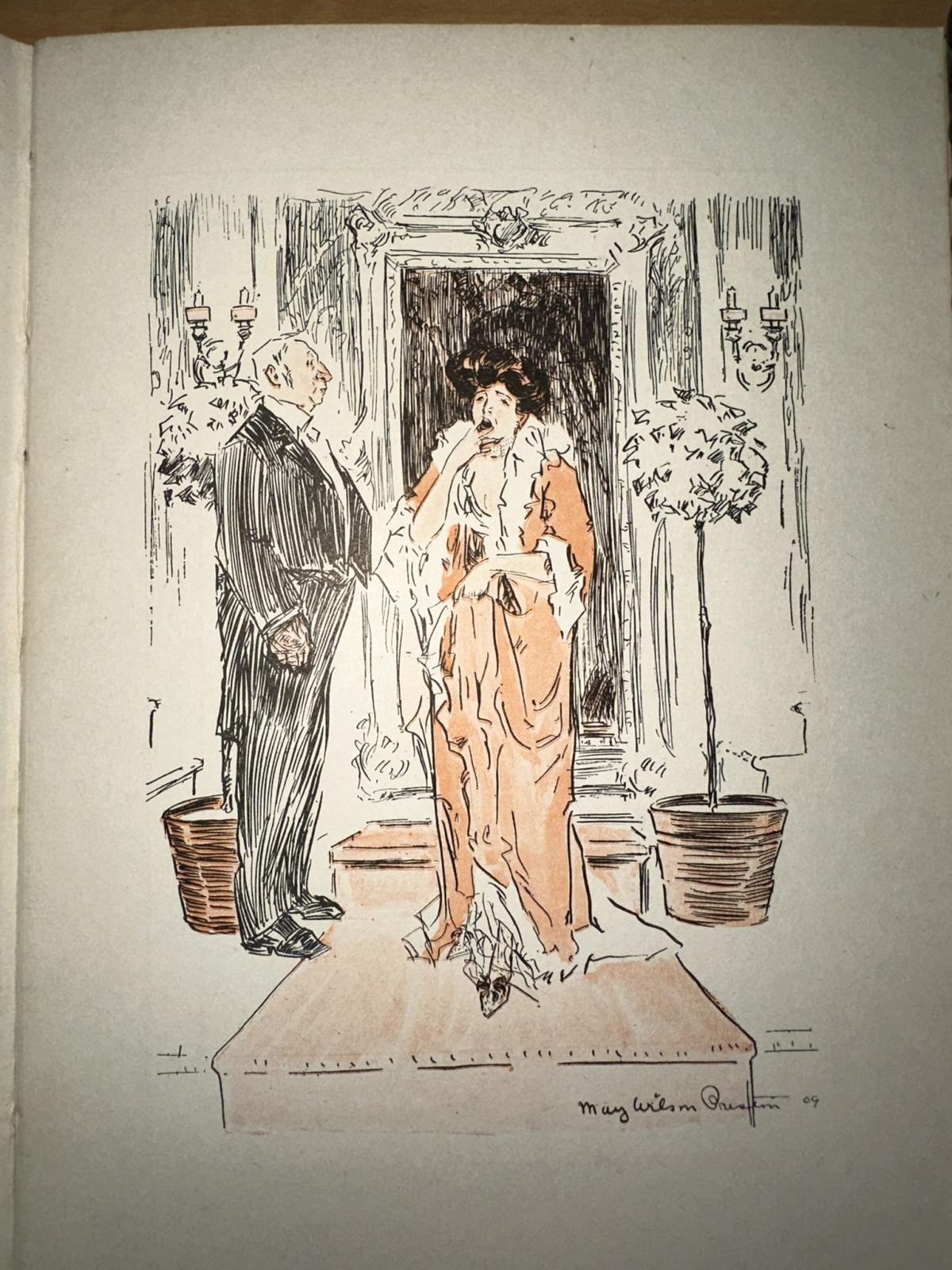
A final feature of this edition that illustrates Black’s argument is its visual content, the illustrations that accompany the text (Figures 2 and 3). Notably, these images overwhelmingly depict scenes rooted in Victorian domesticity and social ideals, rather than any authentic engagement with the poem’s Persian origins. The characters, who are often portrayed as delicate young women or thoughtful, melancholic men in European dress, embody Western notions of beauty, morality, and sentiment. There is little to no effort to render Khayyám’s world in culturally accurate terms; instead, the East is effaced or reimagined through a Victorian lens, transformed into something aesthetically pleasing and familiar. In many illustrations, for example, we see a wistful young woman in a garden or a stylized drinking scene that aligns more with Victorian romanticism than with Persian mysticism. This visual domestication of the text reflects the broader Orientalist project Black outlines.
Sources:
Black, Barbara J.. On Exhibit: Victorians and Their Museums. United Kingdom, University Press of Virginia, 2000.