

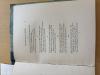
In On Exhibit: Victorians and Their Museums, Barbara Black explains how Victorian culture often treated foreign cultures as things to be collected, displayed, and admired mainly for their beauty. She argues that Edward FitzGerald’s 1859 translation of the Rubáiyát of Omar Khayyám is an example of this. According to Black, FitzGerald’s version of the poem was turned into a small, pretty gift book that people liked to collect, not because of its deeper meaning, but because it looked nice and felt exotic. She writes, “This poem’s value becomes inseparable from its pretty, crafted, possessable diminutiveness,” and that Khayyám’s poetry was “thoroughly objectified” in the process (Black 61). In other words, the Rubáiyát became more of a decorative object than a respected piece of Persian literature.
Even though the first edition of the Rubáiyát was not fancy, unlike the colorful, illustrated editions that came later, it still shows some of the same problems Black points out. FitzGerald did not try to stick closely to the original Persian poems. Instead, he picked certain verses, rearranged them, and rewrote them in a way that would appeal to English readers at the time. FitzGerald’s poetic imagery contributes to a romanticized, exotic framing of Persian culture, which Edward Said famously identified as part of Orientalism. Said described how the West portrayed the East as “a place of romance, exotic beings, haunting memories and landscapes, remarkable experiences” (Orientalism 23), and the Rubáiyát clearly fits this mold. The opening stanza sets the tone: “Awake! for Morning in the Bowl of Night / Has flung the Stone that puts the Stars to Flight: / And Lo! the Hunter of the East has caught / The Sultan’s Turret in a Noose of Light” (FitzGerald I) (Figure 1). This fantastical depiction constructs the East as a distant dreamscape, evoking mystery and beauty rather than historical or cultural specificity. Through this lens, Persian culture becomes an aesthetic object for Western consumption.
At the same time, FitzGerald’s version of the Rubáiyát is not just about pretty images or collecting exotic objects. He was clearly interested in the ideas in Khayyám’s poetry, especially the parts about doubt, fate, and the shortness of life. These ideas were bold at the time and would have challenged some of the strict religious beliefs in Victorian England. FitzGerald chose verses that show a deep, thoughtful side of Khayyám. One line near the end of the poem says, “And that inverted Bowl we call The Sky, / Whereunder crawling coop’t we live and die, / Lift not thy hands to It for help—for It / Rolls impotently on as Thou or I” (FitzGerald LII) (Figure 2). This quote shows how the poem questions the power of the universe and even mocks the idea of divine help. That is a strong statement, and it shows that the poem was more than just decoration. It also carried serious ideas that might have pushed readers to think in new ways.
Finally, the material form of the Rubáiyát, even in its first edition, played a role in shaping its reception as a collectible object. The small, elegantly designed volume invited personal ownership, aligning with Victorian conventions of gift books. This packaging emphasized portability, beauty, and intimacy, turning the text into something readers could possess and admire. The famous lines, “Here with a Loaf of Bread beneath the Bough, / A Flask of Wine, a Book of Verse—and Thou / Beside me singing in the Wilderness— / Oh, Wilderness is Paradise enow!” (FitzGerald XI) (Figure 3), contributed to this by offering a soft, idyllic vision of Persian life. The simplicity of the image made the East feel not only beautiful but also emotionally accessible, reinforcing the book’s appeal as a decorative, personal object.
The first edition of FitzGerald’s Rubáiyát both reflects and complicates Barbara Black’s argument about cultural objectification. While the translation contributed to turning Khayyám’s poetry into something collectible and aesthetically pleasing, it also reveals a deeper engagement with the poet’s themes of doubt, fate, and human longing. FitzGerald’s choices highlight the tension between cultural appropriation and genuine intellectual curiosity. His version makes Khayyám more accessible to English readers but also alters his voice and detaches the poetry from its original Persian context. By attending to the imagery, ideas, and form of the poem, we can see how translation and material design work together to reshape cross-cultural understanding.
Black, Barbara J. “Fugitive Articulation of an All-Obliterated Tongue: Edward Fitzgerald’s Rubaiyat of Omar Khayyam and the Politics of Collecting.” On Exhibit: Victorians and Their Museums , The University Press of Virginia , 2000, pp. 48–66.
FitzGerald, Edward. The Ten Thousand Dollar Rubáiyát of Omar Khayyám. Translated by Edward FitzGerald, Bernard Quaritch, 1859.