
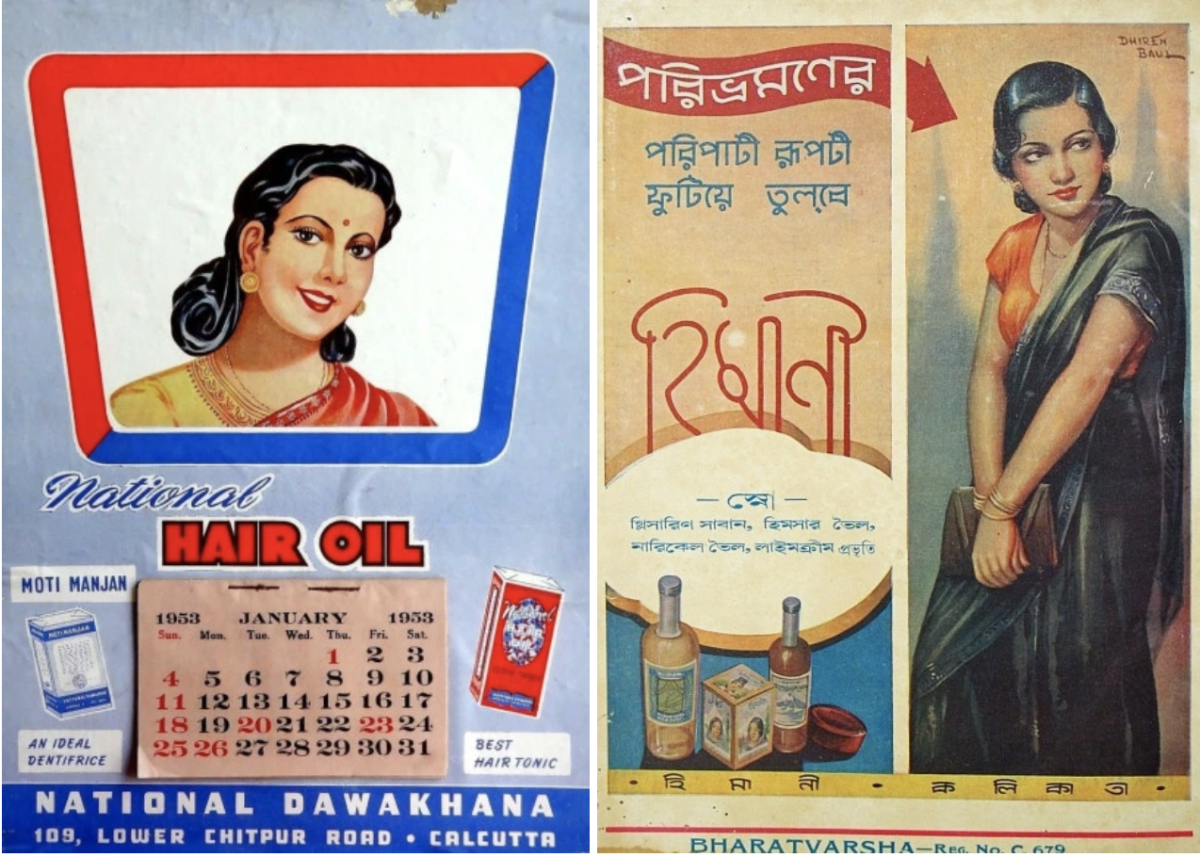
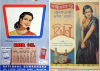
These are two advertisements for hair oil from the early/mid-20th century.
In the text, Sen mentions a number of cosmetic practices, including how she styles her hair. While primarily considered a cosmetic practice today, hair oiling emerged from the traditional medicinal system known as Ayurveda, which translates literally to “science of life.” As such, hair oiling was considered a form of nourishment in addition to a beauty practice. More generally, the use of cosmetics was not only about creating an aesthetic exterior appearance but also a way to achieve merit.
Sen takes great pride in her appearance, detailing how even in the midst of childbirth pains, she “got up and did [her] domestic chores, dressed [her] hair, washed the clothes, and came back to [her] room” (Sen 136). She specifically singles out her hair in her routine, suggesting its importance. In a span of a few pages, Sen’s child is stillborn and her family descends into poverty. She writes, “Some days we went without food, and on others had inadequate meals. I could not afford to oil my luxuriant hair. I did not talk about these things to anyone” (Sen 139). This quote implies that hair oiling is equally important to food. Her hair is a source of pride and her inability to care for it is a source of shame as she does not disclose her struggles to anyone. Coming in the wake of her stillborn child, this passage also alludes to potential anxieties surrounding her femininity and points to the role of economic class in allowing one to maintain a certain image of womanhood. As a side note, castor oil was the most commonly used hair oil, and India is still one of the main producers in the world, accounting for 90% of all castor oil exports. This fact further underscores the role of the economic in shaping social practices.
Sources: