


Description:
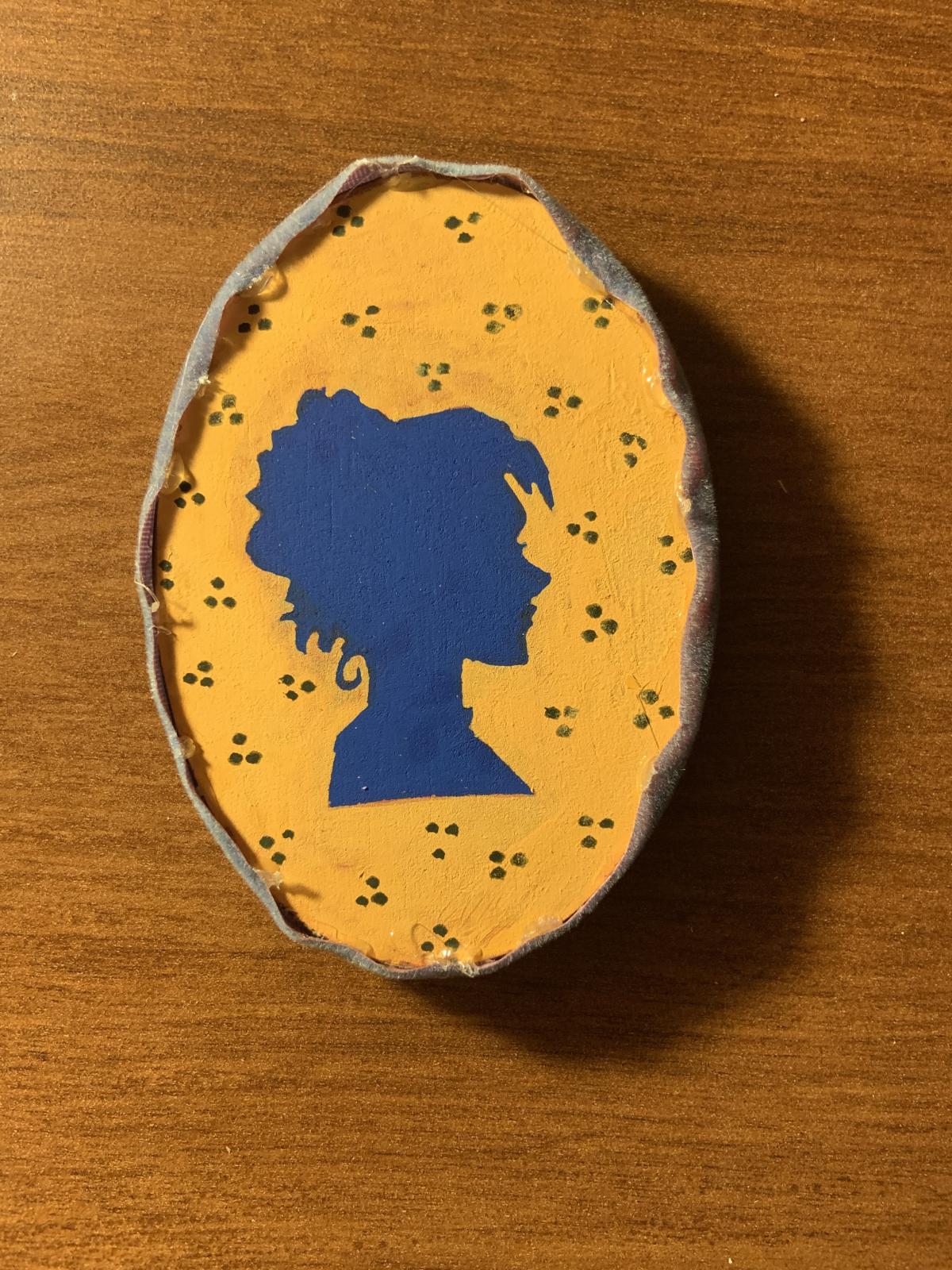
Portraiture in Regency England played a very important role in establishing class identity. The wealthy could afford large, painted portraits, while the poor couldafford no images of themselves whatsoever, and those in the emerging middle class could perhaps afford only a silhouette. The type of image a person had, therefore, was an important class signifier, and Austen uses the importance of images in her novels, especially in Emma (1815). Emma’s painting of Harriet functions as a plot device, creating ambiguity around Mr. Elton’s attachments and dramatic tension, which builds until his proposal. This painting is further representative of Emma’s attempt to elevate Harriet's position in society by trying to create a marriage between Harriet and Mr. Elton, which would significantly raise Harriet’s class status. In this exhibit, I am using two forms of imagery, the silhouette and the cameo, to discuss class differences present within Emma. I created a silhouette of Harriet to represent her comparatively lower class, because had Emma not painted her portrait, she would perhaps have only been able to afford a silhouette. The cameo, on the other hand, was a form of imagery closely associated with the wealthy and makes a brief appearance in Volume 3 of Emma. I created a cameo of Emma to show the connection between her and inherited wealth and how a material object clearly represents class differences in Regency England.
Silhouette of Harriet Smith from Emma, by Juliana Brueckner, 2025. A woman’s portrait had multiple social functions, such as showing familial connection or romantic attachment, but was most important in establishing her social status. Having an image of oneself required financial resources, indicating the wealth of the sitter, and this sort of social currency was important in a world in which image was everything. Furthermore, by creating a perfect representation of a woman in portraiture, real life women were pressed upon to also display perfection and embody the ideal woman. Emma's public image as wealthy and charming — or, to use Austen's words, "handsome, clever, and rich"— is essential in solidifying her role as the ideal woman and therefore ensures her social power in Highbury. Like many people, though, Harriet cannot afford this level of portraiture, and so a silhouette would be a more affordable and practical way of creating her image and by extension her public persona. This art form may not depict her in the ideal way, but she is not expected to be the perfect woman in the same way as Emma, because she is comparatively impoverished and does not have the same social prospects.
Silhouette Making in the Idea Lab, Photograph by Dr. Catherine Golden, 2025. I had initially intended for this silhouette to be Emma Woodhouse, and so I made my artistic decisions accordingly. Since there is no instantly recognizable version of Emma, I found an image that I thought I could feasibly draw. I had hoped to use blue and pink as my color palette: blue as a nod to the color known as Regency blue, and pink because a soft, pastel pink seemed very fitting for Emma's character. Unfortunately, the pink marker I used came out hot pink, and the colors clashed. I pivoted to a peach color, which also reminded me of the pastel Regency colors. I also added a velvet border to the silhouette for more decoration and to accentuate the figure. The other materials are acrylic paint and wood. After completing the cameo (image 6), I realized this depiction was more apt for Harriet rather than Emma, and so I decided to change the subject to Harriet.
Silhouette of Jane Austen, from The National Portrait Gallery, 1800-1815: Jane Austen's famous silhouette fits nicely into the comparison between various forms of material culture and displays of wealth. There are only two surviving images of Jane Austen: one is a watercolor done by her sister, Cassandra, and the other is this silhouette, which is only speculated to be Austen. These limited portrayals are indicative of Austen’s financial status. Her family fell on hard times, which required them to move to a less affluent neighborhood in Bath, and then eventually she moved with her mother and sister into a cottage on her brother's estate. With the family's unstable financial predicament, Austen did not have the resources to have her portrait professionally painted, resulting in these more limited representations. While she was certainly a higher class than Harriet, neither of them had an abundance of wealth, so a silhouette would have been best suited for both.
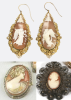
Regency Era Cameos, screenshot by Juliana Brueckner: Cameos like these were a popular form of ornamentation used in jewelry and interior design during the Regency period. They were often carved out of shell or more precious material and typically featured figures from classical myth and literature. Cameos have a long history of representing English wealth; in the late sixteenth century, Queen Elizabeth presented Sir Francis Drake with the Drake Jewel, featuring a portrait of herself and a cameo on the reverse side. As the neo-classical style became more popular in England, which we can see with the loose style of Regency fashion, cameos became especially popular. They are, therefore, an icon of English heritage and wealth and perfect for associating with a character with such an established family as Emma Woodhouse.
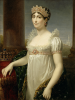
Joséphine Reine d'Italie, by Andrea Appiani, from Wikimedia Commons, 1807. Cameos were representative of the wealthy and became a popular staple of fashion among the upper echelons of society; even Napoleon's crown featured cameos, and here we see his wife, Empress Josephine, wearing several of them. This opulence stands in stark contrast with the plain black silhouette of Austen. Not only could the wealthy afford full sized portraits, but they could also adorn themselves with expensive symbols of wealth, like the cameo. If Harriet is comparable with Jane Austen, Emma would take the place of Empress Josephine. There are, of course, not entirely accurate class standings, but the comparison shows the difference of wealth and power of the two women, which is established by their depictions.
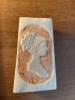
Cameo Woodcut, Photograph by Juliana Brueckner, 2025. I created a cameo of Emma to act as an inverse to the silhouette. While the silhouette was modest and practical, the cameo holds long traditions of English wealth. The Woodhouse family is the central family in Highbury, along with the Knightleys, and so is entitled to this heritage. In Volume 3 Chapter 6, Mr. Knightley provides several trinkets for Mr. Woodhouse to examine, including some cameos, which directly connects the Woodhouses with this art form. So, while cameos were not typically portraiture of actual people, it seemed fitting to create one of Emma Woodhouse to display her wealth and class as it contrasts with her friend's. Material culture was essential during this period in establishing class hierarchy, and by using objects from different classes, we can see the difference in the social worlds these women occupy.